
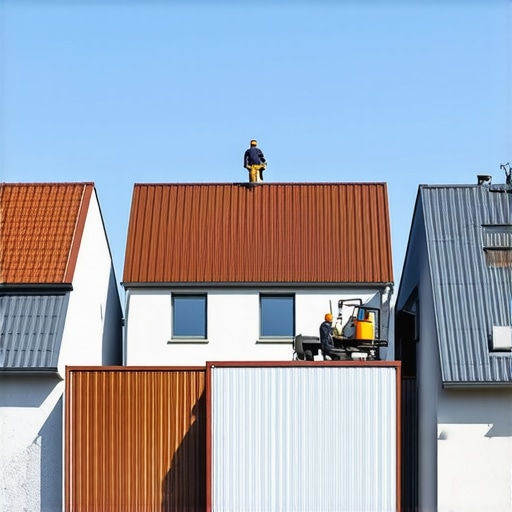
The Anatomy of an Orange Disaster: Why Your Metal Roof is Bleeding
Walking on that roof felt like walking on a dry salt cracker. Every step made a crunching sound that wasn’t the metal flexing—it was the rust flakes separating from the base layer. I knew exactly what I’d find underneath the lap seams before I even pulled my bar. When local roofers talk about metal being a ‘forever roof,’ they usually forget to mention the harsh reality of the Gulf Coast or the salt-laden humidity of the Atlantic seaboard. By 2026, we are going to see a massive wave of failures from the ‘builder grade’ thin-gauge corrugated panels installed during the mid-2010s boom. These aren’t just cosmetic eyesores; they are structural liabilities. When you see those orange streaks running down your siding, your roof isn’t just dirty—it’s oxidizing, literally returning to the earth as iron oxide powder.
“Metals should be separated by non-conductive materials to prevent galvanic action.” – International Residential Code (IRC)
The physics of this failure is a slow-motion car crash. It starts with the breakdown of the factory-applied Galvalume or galvanized coating. In a high-chloride environment, the protective zinc layer sacrifices itself to protect the steel. But once that zinc is spent, the moisture finds the raw steel. Through capillary action, water is sucked upward between the overlapping panels. It sits there, trapped, creating a micro-environment of constant dampness. This is where the red rust takes hold, eating through the panel from the inside out. By the time you see the hole from the ground, the structural integrity of that square is already compromised. Most roofing companies will tell you to just paint over it. That’s like putting a tuxedo on a corpse. You need a forensic approach to stop the rot.
Fix 1: The Mechanical Scarification and Chemical Passivation Protocol
If the rust is superficial—what we call ‘surface bloom’—you don’t need a full tear-off, but you do need more than a wire brush. Local roofers who know their salt will use mechanical scarification. This involves needle scaling or specialized grinding to get down to bright metal. You cannot leave a single spore of iron oxide behind. If you do, the rust will continue to grow under your new coating like a cancer. Once the metal is bright, we apply a chemical passivator. This isn’t just a primer; it’s a phosphoric acid-based treatment that converts any microscopic remaining iron oxide into iron phosphate, an inert, black protective layer. This stops the electrochemical dance of corrosion dead in its tracks. If your contractor shows up with just a can of Rust-Oleum, kick them off the ladder. You need industrial-grade converters that prepare the substrate for a long-term bond.
Fix 2: High-Solid Silicone Enclosure (The Fluid-Applied Membrane)
For roofs that are structurally sound but leaking at every fastener, a high-solid silicone enclosure is the surgical fix for 2026. Forget acrylic coatings; they are water-based and will eventually re-emulsify or chalk off under the brutal UV of the South. Silicone is inorganic. It doesn’t care about the sun, and it doesn’t care about ponding water. We aren’t just painting the roof; we are creating a monolithic, rubberized skin. The key is the ‘shiners’—those missed nails or over-driven screws. Every fastener head must be encapsulated in a ‘zit’ of high-build sealant before the main membrane goes down. This prevents thermal expansion from backing the screws out, a common cause of leaks in standing seam and R-panel systems. This process creates a secondary water resistance layer that can extend the life of a rusted roof by twenty years if done with the right mil-thickness.
“A roof is only as good as its flashing.” – Old Roofer’s Adage
The mechanism of failure in these systems often involves the ‘cricket’ or lack thereof. A chimney or a large vent pipe on a metal roof acts as a dam. Water piles up, finds a rusted edge, and uses hydrostatic pressure to push past the sealant. During a silicone enclosure, we rebuild these transition points. We aren’t looking for a ‘quick fix’; we are looking to change the way water moves across the surface. If you don’t address the drainage geometry, the best coating in the world will eventually fail at the seams.
Fix 3: Surgical Panel Replacement and Galvanic Isolation
Sometimes the rot is too deep. If I can put my screwdriver through the valley, the panel is toast. The third fix is strategic replacement. But here is the trap: you can’t just throw a new piece of metal against an old, rusted one without protection. That’s asking for galvanic corrosion. When two different metals—or even the same metal at different stages of oxidation—touch in the presence of moisture, they create a battery. The weaker metal is eaten away. Local roofers often miss this, leading to ‘new’ panels rusting out in half the time. We use butyl tape or high-temp ice and water shield to isolate the new steel from the old rusted substructure. We also look for ‘shiners’ in the decking. A nail that missed the purlin and is just hanging out in the attic space will collect condensation, drip back onto the underside of the metal, and start the rust cycle all over again from the bottom up.
Choosing Between the Band-Aid and the Surgery
The cost of waiting is the only thing that rises faster than the price of steel. By 2026, the labor market for skilled roofing companies is only going to get tighter. If you see the orange bleed now, you are in the window where a fluid-applied membrane can save you $20,000 over a full replacement. Once the rust reaches the ‘oatmeal’ stage where the metal loses its structural tension, you’re looking at a full tear-off, new decking, and a massive hit to your equity. Don’t listen to the ‘trunk slammers’ who promise a cheap spray job. Ask about their passivation process. Ask how they handle the capillary draw at the laps. A real pro will talk to you about chemistry and physics, not just shingles and squares. Protecting a metal roof is about managing the inevitable march of oxidation, and in our climate, that takes more than a coat of paint. It takes a forensic plan.
This post really hits the nail on the head when it comes to the inevitable rust issues with metal roofs, especially along coastal areas. I’ve seen many roofs that appear to be in decent shape from the ground but are already compromised due to moisture trapped in seams and underneath panels. The detailed explanation of the corrosion process and the importance of passivation was particularly enlightening. I had a contractor try to patch a roof with just paint, and I knew it wouldn’t hold long-term. Has anyone here found success with particular brands or types of passivators that truly prevent rust from progressing? I’m curious about what works best in real-world applications, especially in salt-heavy environments. It seems like the investment in proper treatment upfront can save a lot of money down the line, but choosing the right approach and products still feels a bit overwhelming.