
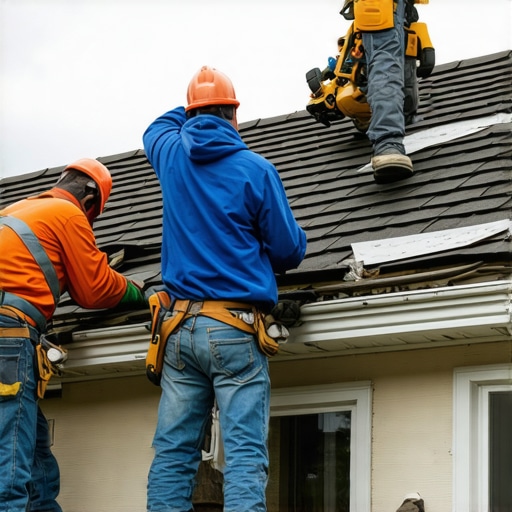
The Knock on the Door: A Storm Chaser’s Calling Card
The sound of ice hitting a roof is unmistakable—it’s the sound of thousands of tiny hammers trying to find a weak point in your home’s armor. But often, the real damage doesn’t happen during the storm; it happens forty-eight hours later when a guy in a clean polo shirt knocks on your door, claiming he can get you a ‘free roof’ because of ‘obvious hail damage.’ I’ve spent twenty-five years on roof decks from Oklahoma to Texas, and I’ve seen more homeowners get burned by these storm-chasing roofing companies than I’ve seen actual structural failures. Walking on a roof after a Dallas-area hailstorm last June, I didn’t even need to look for the bruising. I could feel it through the soles of my boots. That sickening, spongy give told me everything I needed to know: the fiberglass matting had shattered, even though the granules looked perfectly fine from the driveway.
The Physics of Failure: Why Shingles Break
To understand why most roofing fails during a hail event, you have to look at the mechanism of impact. When a two-inch hailstone hits an asphalt shingle at terminal velocity, it’s not just a surface scratch. It’s a high-energy kinetic event. The impact compresses the asphalt layer into the rigid plywood deck. If the asphalt is brittle—which happens quickly in the 140°F attic heat of the Southern Plains—it can’t absorb the energy. The fiberglass mat inside the shingle fractures. We call this a ‘star crack.’ Once that mat is compromised, water doesn’t need a hole to get in; it uses capillary action to pull moisture through the fracture and into your decking. Over the next six months, the thermal expansion and contraction of the roof will widen those cracks, leading to leaks that your insurance adjuster will later call ‘neglect’ because you waited too long to file. This is why local roofers who understand regional physics are worth their weight in gold compared to the trunk slammers who disappear once the check clears.
“The ability of a roof system to resist impact from hail is a function of the entire assembly, not just the surfacing material.” — National Roofing Contractors Association (NRCA)
The 2026 Material Truth: Three Shingles That Actually Hold Up
If you’re looking for a replacement in 2026, don’t get distracted by the pretty colors or ‘lifetime’ marketing. You need to look at the Class 4 Impact Rating. Here are the three configurations that actually survive a forensic inspection after a storm.
1. SBS Modified Bitumen (Rubberized Asphalt)
In my experience, standard oxidized asphalt is a relic of the past for hail-prone areas. The 2026 standard for high-end protection is SBS (Styrene-Butadiene-Styrene). This is asphalt that has been ‘rubberized.’ Imagine the difference between a glass plate and a rubber mat. When hail hits an SBS shingle, the material stretches and then recovers its shape. It doesn’t fracture the mat. When I tear off an SBS roof, I rarely see the circular ‘bruising’ that plagues cheaper architectural shingles. It stays flexible even when the temperature drops, preventing the thermal shock that kills most roofs in the Southwest. If your roofing companies aren’t talking about SBS, they’re selling you a disposable product.
2. High-Density Polymer Reinforced Laminates
The second contender for 2026 is the reinforced laminate. Manufacturers have started integrating a high-density polyester scrim on the back of the shingle. This acts like a safety net. Even if the asphalt layer takes a beating, the scrim keeps the shingle intact, preventing the hail from punching through to the starter strip or the underlayment. When inspecting these, I look for ‘shiners’—those missed nails that provide a direct path for water. A reinforced shingle handles the stress of a slightly misplaced nail much better than a standard shingle, which would simply tear at the nail head under high wind loads.
3. Fabric-Integrated ‘Triple-Tough’ Shingles
A new player in the 2026 market is the triple-layered architectural shingle with an integrated fabric face. These are designed specifically for the ‘Wind-Driven Rain’ codes of the Southeast but are proving incredible in hail alleys. The fabric layer prevents granule loss. Granule loss isn’t just cosmetic; those tiny rocks protect the asphalt from UV radiation. The second you lose granules to hail, the sun starts ‘cooking’ the asphalt, leading to rapid embrittlement. These shingles are heavy—sometimes 400 lbs per square—so you need to make sure your local roofers check the load-bearing capacity of your trusses before installing.
The Trap: The ‘Free Roof’ and the Insurance Adjuster
Let’s talk about the ‘Free Roof’ scam. When a storm chaser tells you they’ll ‘cover your deductible,’ they are asking you to commit insurance fraud. More importantly, they are going to cut corners to make up that money. They’ll skip the cricket behind your chimney, they’ll reuse your old rusty flashing, and they’ll use the cheapest galvanized nails they can find. I’ve seen ‘new’ roofs where the contractor skipped the ice and water shield in the valleys to save fifty bucks. In a hail event, the valley is where the most ice accumulates. If that valley isn’t protected with a secondary water resistance layer, you’re going to have rot in your fascia boards within three seasons. Dealing with an adjuster requires a forensic mindset. You don’t just show them the dents in the gutters; you show them the loss of the mat integrity. You need a contractor who can speak the language of ‘functional damage’ versus ‘cosmetic damage.’
“R905.2.4: Asphalt shingles shall be fastened to solidly sheathed decks, providing a continuous surface for the weather-resistant barrier.” — International Residential Code (IRC)
The Forensic Fix: Surgery vs. Band-Aids
If you have minor hail damage, you might be tempted to just ‘patch it.’ As a forensic investigator, I can tell you: patches are a lie. Once the granules are gone, the clock is ticking. A ‘Band-Aid’ fix with roofing cement is a temporary solution that usually traps moisture underneath, accelerating deck rot. The ‘Surgery’—a full tear-off down to the deck—is the only way to ensure that the plywood isn’t ‘oatmeal’ from years of slow seepage. When hiring local roofers, ask to see their ‘Starter Strip’ and ‘Ridge Cap’ specifications. A storm-chaser will often use cut-up 3-tab shingles for the ridge cap to save money, but those are the first things to blow off in a 60-mph gust. You want a dedicated high-impact ridge cap that can handle the uplift. Protective roofing isn’t about the shingle; it’s about the system. That includes the ventilation in your attic. A roof that is 140°F because of poor venting will fail a hail test every single time, regardless of how expensive the shingle is. Thermal expansion is a silent killer. In the desert climates of the Southwest, the daily swing from 110°F to 50°F puts more stress on the asphalt than a single hailstone ever could. Choose a contractor who talks about air flow as much as they talk about shingles. Stay vigilant, watch out for the ‘free’ offers, and remember: water is patient. It will wait for the one shiner or the one cracked mat to ruin your living room ceiling.