
The Anatomy of a Bruised Deck: A Forensic Perspective
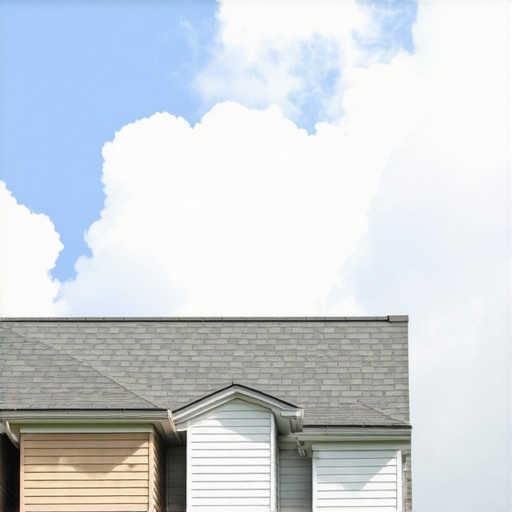
Walking on that roof felt like walking on a sponge. I knew exactly what I’d find underneath before I even pulled my pry bar out. It was a humid Tuesday in July, three weeks after a localized hailstorm had ripped through the neighborhood. From the curb, the house looked fine. The homeowner’s insurance adjuster had already been there and called it ‘cosmetic.’ But as I knelt down, pressing my thumb into a dark spot on a three-tab shingle, I felt the sickening give of fractured fiberglass. That wasn’t cosmetic; that was a death sentence for the plywood. When hail hits, it doesn’t just knock off granules. It creates a micro-fracture in the asphalt mat. Think of it like a hairline crack in a windshield—it’s only a matter of time before the pressure of thermal expansion turns that tiny tick into a gaping hole. Once the mat is compromised, water finds its way in via capillary action, creeping sideways under the shingle during the next rain, soaking the underlayment, and eventually rotting out the deck. I’ve spent 25 years watching local roofers try to explain this to adjusters who only care about the bottom line. If you’re living in the hail belt, you don’t need a roof that looks pretty; you need a roof that survives an atmospheric beating.
The Physics of Failure: Why Standard Shingles Fail in the Hail Belt
Most roofing companies will try to sell you on the cheapest architectural shingle they can source from the local supply house. In a vacuum, those shingles are fine. But we don’t live in a vacuum. We live in a region where ice chunks the size of golf balls fall from the sky at terminal velocity. A standard shingle is brittle. It’s made of oxidized asphalt that, over time, loses its oils and becomes as flexible as a saltine cracker. When hail strikes a brittle shingle, the impact energy has nowhere to go. It shatters the internal fiberglass mat. You won’t see a hole, but if you look at the underside of the shingle—the ‘forensic’ view—you’ll see a star-shaped fracture. This is where the local roofers usually lose the battle with insurance companies because the damage is invisible from ten feet away. This is why we are seeing a massive shift toward Polymer Modified (SBS) asphalt for 2026. SBS is essentially asphalt mixed with synthetic rubber. Instead of shattering, an SBS shingle ‘heals’ itself by absorbing the impact and bouncing back. It’s the difference between hitting a brick with a hammer and hitting a piece of heavy-duty rubber. One breaks; the other absorbs.
“A roof is only as good as its flashing, but even the best flashing won’t save a shattered mat.” – Old Roofer’s Adage
The 2026 Heavy Hitters: 3 Shingles That Actually Stand Up
As we move into the 2026 season, three specific products have emerged as the gold standard for homeowners who are tired of filing insurance claims every two years. These aren’t your ‘builder grade’ specials. These are engineered for impact. First on the list is the Malarkey Legacy. This is the heavyweight champion of SBS shingles. They use a proprietary blend of upcycled polymers that gives the shingle a Class 4 impact rating—the highest possible. What I love about these from a trade perspective is the ‘The Zone.’ It’s a wider nailing area that prevents ‘shiners’—those missed nails that hit the gap between the roof boards and lead to leaks five years down the road. If your local roofers aren’t hitting the nail line, the warranty is dead on arrival. The Legacy shingle is thick, heavy, and smells like fresh rubber on a hot day, which is exactly what you want to see. Second is the CertainTeed NorthGate ClimateFlex. CertainTeed has always been known for their ‘Max Def’ colors, but the NorthGate line is where the science really happens. They’ve mastered the cold-weather flexibility. I’ve seen guys try to install standard shingles in 40-degree weather and the shingles just snap like glass. The NorthGate stays pliable. This prevents the ‘hinge’ effect where wind-driven rain gets under the shingle and snaps the top of the tab because it’s too stiff to move. Third is the GAF ArmorShield II. GAF is the giant in the industry, and while I usually rag on their base-level shingles, the ArmorShield II is a different beast. It’s a SBS-modified version of their Timberline shingle. It’s designed specifically to meet the UL 2218 Class 4 impact test. When you’re dealing with roofing companies, ask them specifically if they are using the Class 4 version or the standard architectural version. The price difference per square is usually minimal compared to the deductible you’ll have to pay after the next storm.
The ‘Free Roof’ Trap and the Storm Chaser Gambit
After a big storm, your neighborhood will be flooded with ‘storm chasers.’ These aren’t local roofers. These are sales organizations with trucks. They’ll knock on your door, promise a ‘free roof,’ and tell you they can waive your deductible. Here’s a trade secret: waiving a deductible is insurance fraud in most states, and if they’re cutting corners on the paperwork, they’re cutting corners on your roof. I’ve gone behind these crews and found valleys with no ice and water shield, just cheap felt paper. I’ve found ‘shiners’ every three feet because the installers were rushing to get to the next house. A real roofing company that lives in your zip code can’t afford to do that. They have to face you at the grocery store. They know that a roof in this climate needs a proper starter strip on all eaves and rakes to prevent wind uplift. They know that a chimney needs a cricket—a small peaked structure—to divert water away from the masonry. Without a cricket, water pools behind the chimney, eventually eating through the flashing and rotting the headers. The storm chaser doesn’t care about your headers; they care about the insurance check.
“The National Roofing Contractors Association (NRCA) recommends that all steep-slope roof systems include an underlayment that is specifically rated for the local climate’s wind and moisture loads.” – NRCA Technical Manual
The Reality of Warranties: Don’t Believe the ‘Lifetime’ Hype
Every manufacturer puts ‘Lifetime Warranty’ on the wrapper of their shingles. It’s a marketing term, not a structural promise. As a forensic roofer, I’ve read the fine print. Most of those warranties are prorated after ten years and only cover ‘manufacturer defects.’ They do not cover ‘Acts of God’ like a two-inch hailstone. This is why choosing the right material—like the SBS shingles mentioned above—is more important than the piece of paper the manufacturer gives you. You want a material that prevents the leak in the first place. You also want a workmanship warranty from your local roofers. A manufacturer won’t pay for a leak caused by a nail that was driven too deep or at a crooked angle. Those ‘shiners’ are the number one cause of mystery leaks that show up three years after the roof was installed. By then, the storm chaser is three states away, and you’re left holding a bucket under your ceiling fan. When you’re vetting roofing companies, don’t ask about their sales awards. Ask about their ventilation math. Ask how many inches of net free vent area they are adding to your ridge to prevent your attic from hitting 150 degrees in August. Because if they don’t get the heat out, they’re basically baking your new shingles from the inside out, turning that expensive SBS rubber back into brittle charcoal.