
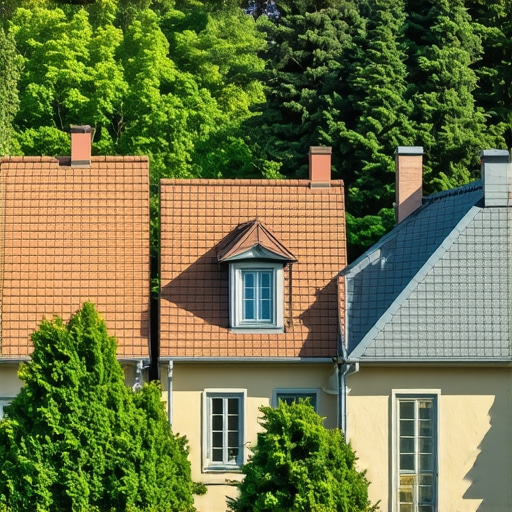
The Forensics of Curb Appeal: Why Your Roof Color Is a Financial Decision
Walking on a roof that feels like a wet sponge is a sensation a forensic roofer never forgets. I was out in a quiet cul-de-sac last November, inspecting a fifteen-year-old Colonial for a potential buyer. From the curb, the house looked majestic, but once I got the ladder up, the truth came out. The previous owner had picked a bargain-bin ‘Forest Green’ shingle back in 2010. Not only was the color dated enough to shave twenty grand off the asking price, but the material was failing because the dark pigment was cooking the inadequately ventilated attic at 150 degrees every July. That ‘sponge’ feeling? That was the plywood delaminating from the inside out because of trapped moisture and excessive heat. When you talk to roofing companies about the 2026 market, you aren’t just picking a pretty shade; you are managing a thermal envelope. Local roofers who know their salt will tell you that the right color can mask minor structural transitions while the wrong one highlights every ridge and valley like a neon sign.
“The roof covering is the primary line of defense against the elements, and its performance is significantly impacted by the attic’s thermal environment.” – National Roofing Contractors Association (NRCA)
In our region, where the freeze-thaw cycle turns small cracks into gaping maws, the physics of color matters. A shingle isn’t just a piece of asphalt; it’s a multilayered system of fiberglass mat, bitumen, and ceramic-coated granules. These granules are your UV armor. When we look at the 2026 resale trends, we are seeing a shift away from the muddy browns of the early 2000s toward high-contrast, ‘architectural’ depths. If you want to maximize your ROI, you need to understand how light interacts with your roof deck and how a ‘shiner’—a misplaced nail—can cause a leak that stays hidden until your drywall starts crying.
1. Midnight Graphite: The High-Contrast Authority
The first color dominating the 2026 forecasts is Midnight Graphite. This isn’t your grandfather’s flat black. Modern roofing involves ‘shadow lines’—extra layers of material that create a three-dimensional look. From a forensic perspective, dark grays and blacks are excellent at hiding the inevitable ‘bleeding’ of asphalt that happens as a roof ages. However, there is a catch. If your local roofers don’t install a proper ridge vent or a well-constructed cricket behind your chimney, a dark roof becomes a heat sink. In the summer, the shingles expand; at night, they contract. This thermal shock is what eventually pops the heads of your fasteners. Midnight Graphite works for resale because it provides a sharp, clean contrast against white or light-gray siding, making the house pop in real estate photography. It’s the tuxedo of roofing—timeless, but it requires a perfect fit underneath.
2. Weathered Driftwood: The Neutral Camouflage
If you are worried about the longevity of your curb appeal, Weathered Driftwood is the ‘Goldilocks’ of shingles. It’s a complex mix of grays, tans, and subtle flecks of black. Why is this a winner for 2026? Because it hides everything. Whether it’s the unsightly streaks of Gloeocapsa magma (that black algae that loves the north side of your house) or the slight sagging of an older rafter, the variegated tones of driftwood-style shingles break up the visual plane. When I’m investigating a roof failure, I often see that solid-colored shingles show every ‘fishmouth’—those tiny curls at the bottom of a shingle—while a blended driftwood pattern keeps the house looking pristine from the street. It’s a safe bet for resale because it complements almost any siding color, from brick to cedar shake.
3. Estate Blue-Gray: The ‘Designer’ Premium
For high-end homes, 2026 is seeing a surge in muted, slate-like blues. This color mimics the look of expensive natural stone without the weight or the $50,000 price tag. For a roofer, this is a ‘specialty’ install. You want your roofing companies to use stainless steel nails if you’re anywhere near salt air, as galvanic corrosion will eat through standard galvanized nails in a decade. This color works for resale because it signals ‘premium’ to a buyer. It suggests that the homeowner didn’t just take the cheapest option the insurance company offered. It shows intent. But beware: blue-toned shingles are notorious for showing ‘granule loss’ more clearly. If you see shiny spots on your roof, it means the UV protection is gone, and the sun is eating your shingles for breakfast.
“Roofing systems shall be designed and installed in accordance with this code and the manufacturer’s installation instructions.” – International Residential Code (IRC), Section R903.1
The Warranty Trap: What They Don’t Tell You
When you are looking at roofing, don’t get blinded by the ‘Lifetime Warranty’ stickers. Most of those are marketing fluff. They cover manufacturing defects, which almost never happen. What usually happens is ‘installer error.’ A guy with a nail gun goes too fast, creates a bunch of ‘shiners’ that miss the rafter, or he high-nails the shingle above the sealant strip. When the first big wind hits, the shingles flap like a deck of cards. You want a contractor who talks about the ‘starter course’ and ‘drip edge’ more than they talk about the color. A roof is a system. If the flashing around your dormer is just slapped on with a bead of caulk instead of being tucked into the masonry, it doesn’t matter if your shingles are the prettiest shade of 2026 Pewter—you’re going to have a bucket in your living room in three years. Proper roofing is about the ‘surgery’ of the tear-off, ensuring the plywood deck is sound, and the ice and water shield is pinned correctly at the eaves.