
The Forensic Scene: Walking on a Spongy Disaster
Walking on that roof felt like walking on a sponge. I knew exactly what I would find underneath before the first pry bar even touched a shingle. It was a humid Tuesday in late August, the kind of day where the air feels like wet wool. The homeowner was complaining about a small brown spot on their master bedroom ceiling, but as I stepped across the north-facing slope, the decking gave way nearly three inches under my boot. It was not a structural collapse—not yet—but the OSB (Oriented Strand Board) had reached its saturation point. This was not just a leak; it was a systemic failure of physics. When we finally peeled back the layers, the plywood was not just wet; it had essentially reverted to a pre-industrial state of mulch. The culprit? A combination of ‘shiners’—nails that missed the rafter and acted as cold-conduits for condensation—and a bottom-tier asphalt shingle that had lost its granular surfacing years ago. This is what happens when you prioritize a low bid over material science. Local roofers often see this pattern: a ‘trunk slammer’ installs a roof in two days, disappears, and five years later, the homeowner is paying me double to perform an autopsy on their house.
The Physics of Failure: Why Your Roof Actually Dies
Most homeowners think a roof is a shield. It is not. It is a shedding system. The moment you have standing water, you have a problem. We talk about capillary action in the trade—the way water can actually travel uphill. When a shingle loses its granules, the UV radiation from the sun hits the raw asphalt. This triggers a process called photo-oxidation. The asphalt becomes brittle, cracks, and then hydrostatic pressure takes over. During a heavy downpour, water weight pushes against these micro-fissures, forcing moisture into the fiberglass mat. From there, it wicks into the roof deck. Once that plywood gets a taste of moisture, it starts the slow process of delamination.
“A roof is only as good as its flashing, but its longevity is dictated by the chemical stability of its asphaltic core.” – Old Roofer’s Adage
This is why picking the right brand in 2026 matters more than ever. The climate is getting weirder, the storms are getting punchier, and your roof is the only thing standing between your family and a very expensive interior renovation. If you are looking for roofing companies that actually know their stuff, they will talk to you about the nailing zone and the polymer modification of the shingle, not just the color.
The Material Truth: Top 3 Shingle Brands for 2026
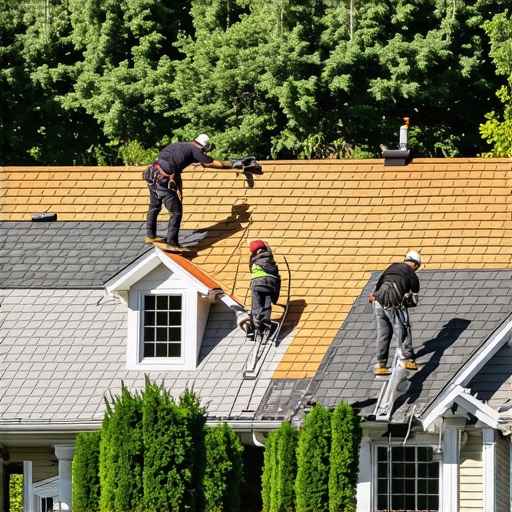
I have spent twenty-five years tearing off the mistakes of others. If I were putting my own money on a project this year, I would be looking at these three specific options. These are the brands that local roofers who care about their reputation are installing right now. [image]
1. CertainTeed Landmark ClimateFlex
This is not your grandfather’s asphalt shingle. The ClimateFlex line uses SBS-modified asphalt. SBS stands for Styrene-Butadiene-Styrene, which is essentially a rubberizing agent. In the trade, we love this stuff because it makes the shingle pliable. When a cold snap hits and the temperature drops forty degrees in three hours, standard shingles become brittle like a cracker. They crack under thermal shock. ClimateFlex expands and contracts. It also has a ‘NailTrak’ feature, which is a wide nailing zone that reduces the chance of a ‘shiner.’ If a roofer tells you all shingles are the same, they are lying to you or they haven’t been on a tear-off in a decade. The granules on these are bonded much tighter, which prevents the bald spots that lead to the ‘sponge’ effect I mentioned earlier.
2. Malarkey Legacy with Nex Polymer Modified Asphalt
Malarkey is often the ‘insider’s choice.’ They were doing sustainable, high-performance tech before it was trendy. Their Legacy line is consistently rated for Class 4 impact resistance. That means when hail hits, the shingle absorbs the energy rather than shattering. They use upcycled tires and plastic in their mix, but don’t let the word ‘plastic’ scare you. This is high-grade polymer modification that keeps the oils in the asphalt from leaching out. When those oils stay put, the shingle stays waterproof. A common failure point in valleys is when shingles become too stiff to weave properly. The Legacy shingle stays flexible even in the biting cold, ensuring your valleys stay bone-dry.
3. GAF Timberline UHDZ (Ultra High Definition)
GAF is the biggest name for a reason, but the UHDZ is their top-tier play for 2026. What sets this apart is the Dual Shadow Line and the LayerLock technology. From a forensic perspective, LayerLock is the win. It mechanically fastens the common bond, which is the area where the shingles overlap. Wind uplift is the enemy in coastal or high-wind areas. When wind gets under the ‘butt’ of the shingle, it creates a lever effect that can rip a square of roofing right off the deck. The UHDZ has a massive strike zone, making it harder for a tired installer to miss the mark.
“Fasteners shall be driven flush with the shingle surface and shall not be over-driven or under-driven.” – International Residential Code (IRC) R905.2.5
If your roofing companies aren’t using a brand with a reinforced nailing zone, they are gambling with your deductible.
The Warranty Trap: Why ‘Lifetime’ is Often a Lie
Here is the cynical truth: a ‘Lifetime Warranty’ is a marketing tool, not a performance guarantee. Most of those warranties cover ‘Manufacturer Defects,’ which are incredibly rare. Most roofs fail because of ‘Installation Errors.’ If a roofer misses the nail line—a common ‘shiner’—and the shingle blows off, the manufacturer will laugh at your warranty claim. You need to look for ‘No-Leak’ warranties that cover workmanship. Local roofers who are confident in their crew will offer a 10-year or 25-year workmanship guarantee. Also, pay attention to the ventilation. You can put the best Malarkey shingle on a house, but if your attic is 140 degrees because you don’t have a properly cut ridge vent or a cricket behind your chimney, you are cooking those shingles from the inside out. The heat causes the asphalt to ‘outgas,’ leading to premature aging and granule loss. Don’t be the homeowner who spends $20,000 on shingles and $0 on proper airflow.
Vetting Your Local Roofers
Before you sign a contract, ask to see their ‘nailing pattern.’ If they look at you like you have two heads, move on. A quality contractor should be able to explain why they use six nails per shingle instead of four in high-wind zones. Ask about the ‘starter strip.’ Cheap guys will just flip a regular shingle upside down for the first row. Professionals use a dedicated starter strip with a factory-applied adhesive to prevent the edges from lifting in a storm. Your roof is a system—starter strips, underlayment, shingles, flashing, and ventilation. If one piece is missing, the whole thing is just a countdown to a leak. Choose the right brand, but more importantly, choose the right hands to install it.