
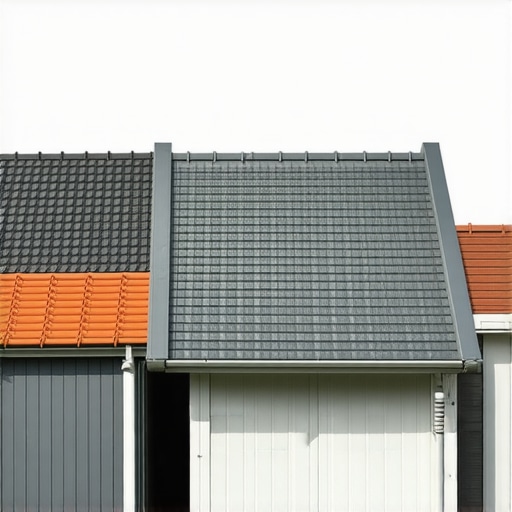
The Veteran’s Perspective on Shed Roofing
My old foreman used to say, ‘Water is patient. It will wait for you to make a mistake.’ He was usually pointing at a saturated rafter or a stained ceiling while he said it, smelling that unmistakable scent of damp insulation and mold. In my 25 years of forensic roofing, I have seen more sheds destroyed by cheap roofing companies cutting corners than by actual weather. People treat a shed as an afterthought, but it is often the hardest-working structure on your property. If you live in the North where the snow sits for three months, your shed roof isn’t just a cover; it’s a battleground. Most local roofers will try to sell you whatever is on the truck, but by 2026, the physics of material science have shifted. We are looking at higher thermal swings and more intense localized moisture. If you don’t understand the mechanism of failure, you’re just throwing money into the wind.
‘A roof is only as good as its flashing.’ – Old Roofer’s Adage
The Physics of Failure: Why Sheds Rot
Before we talk about materials, we have to talk about capillary action. Most sheds have a low pitch, often 2:12 or less. On a steep house roof, gravity does the heavy lifting. On a shed, water doesn’t just run off; it lingers. It uses surface tension to cling to the underside of shingles, creeping backward against the grade. This is how water finds a shiner—a nail that missed the rafter and hangs exposed in the attic. That cold metal nail becomes a condensation point. On a 10-degree morning, the warm air from inside the shed (yes, even sheds have micro-climates) hits that shiner, turns to frost, and then drips onto your expensive mower when the sun comes out. That is how the rot begins. If your local roofers aren’t talking about ice and water shield and proper ventilation for a 120-square-foot box, they aren’t roofers; they’re just installers.
[IMAGE_PLACEHOLDER]
Material #1: EPDM (The ‘Rubber’ Standard)
For low-slope sheds, Ethylene Propylene Diene Monomer (EPDM) is the king of the 2026 market. It’s essentially a giant, custom-fit rubber tube for your building. The beauty of EPDM is that it is a single sheet. No seams means no places for water to use that capillary action I mentioned. When I investigate a failed shed roof, it’s almost always because of failing seams in asphalt products. EPDM is chemically inert, meaning the UV radiation that bakes roofing shingles until they become brittle and lose their granules won’t touch this stuff. However, the installation is everything. You can’t just slap it down. You need a clean deck, a proper bonding adhesive, and a heavy-duty termination bar at the edges. If you see a local roofer trying to use glue in 35-degree weather without a primer, fire them on the spot. The molecular bond won’t take, and the first wind storm will peel that roof back like a sardine can.
Material #2: 24-Gauge Standing Seam Metal
Forget the cheap corrugated tin you see at the big-box stores. By 2026, the savvy homeowner is looking at standing seam. The mechanism of longevity here is the hidden fastener. Every time you drive a screw through the face of a metal panel, you are creating a future leak. Metal expands and contracts with the sun. If that panel is pinned down by a screw, the hole will eventually widen, or the rubber washer will dry-rot under the 140°F heat of a summer afternoon. Standing seam allows the panels to slide on clips. It handles thermal bridging much better than asphalt. Furthermore, in cold climates, metal sheds snow. You don’t get the ice damming that occurs when a clogged gutter holds water against the roof edge. Just make sure the roofing companies you interview are using a cricket if your shed is built against a larger structure to divert that heavy water flow away from the junction.
‘The roof covering shall be installed in accordance with the manufacturer’s installation instructions.’ – International Residential Code (IRC) Section R905.1
Material #3: Self-Adhered SBS Modified Bitumen
If you’re on a budget but still want roofing that won’t fail in three years, look at SBS (Styrene-Butadiene-Styrene). This isn’t your grandpa’s roll roofing. It’s rubberized asphalt. The ‘modified’ part means it stays flexible in the winter. Standard shingles get brittle; SBS can bend without snapping. This is vital for shed roofs because sheds move. They settle, they heave with the frost, and they rack in the wind. You need a material that has a high ‘memory’ and can heal itself around minor penetrations. Most local roofers prefer the two-ply system: a base sheet and a granulated cap sheet. This creates a redundant waterproof layer. The risk? The ‘bleed-out’ at the seams. If the installer doesn’t get the heat right (or the pressure on the peel-and-stick), the edges will lift, and that is where the ice dams will strike.
The Trap: Why Your Warranty is Likely Useless
I see it every day. A ‘Lifetime Warranty’ on the package that isn’t worth the paper it is printed on. Those warranties cover material defects, not poor workmanship. If the local roofers didn’t install a drip edge, or if they used the wrong length nails (resulting in a ceiling full of shiners), the manufacturer will laugh at your claim. Real roofing longevity comes from the system, not the shingle. You need to ensure they are using a high-temp underlayment, especially at the eaves. You want to see them installing a starter strip, not just flipping a shingle upside down. Ask about their square rate, but more importantly, ask about their flashing detail. A cheap contractor will use caulk; a forensic-grade roofer will use metal and gravity.
Final Decision: Choosing Your Protection
When you are scouting roofing companies for your shed replacement, don’t just look for the lowest bid. A shed is a small job, and many crews will rush through it to get to a larger house roof. Demand the same level of detail you would for your main residence. Check the valley areas if your shed has a complex roofline. Ensure the local roofer isn’t just over-nailing the product. The goal is to build a structure that can withstand the 2026 climate extremes—whether that’s a sudden derecho or a record-breaking blizzard. A shed roof isn’t just a lid; it’s the only thing keeping your tools from becoming a pile of rust. Pick the right material, find a veteran who knows the trade, and stop the water before it starts its patient wait.