
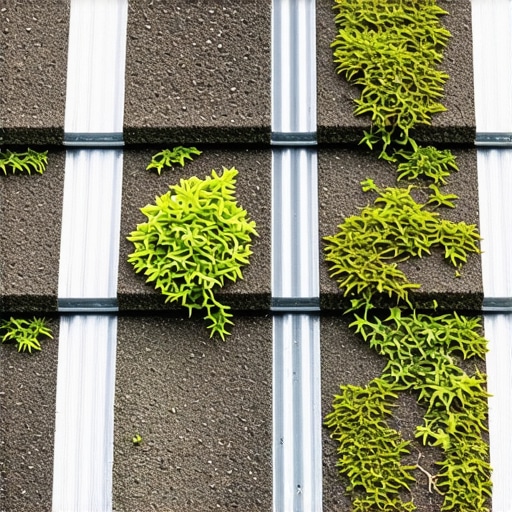
The Forensic Scene: When Your Roof Becomes a Forest
Walking on that roof in the outskirts of Bellingham felt like walking on a sodden kitchen sponge. I knew exactly what I would find underneath before I even pulled my flat bar from my tool belt. The homeowner thought they just had a ‘charming’ layer of green velvet growing on the north-facing slope. What they actually had was a biological structural failure. When I pried up a single tab of those 30-year architectural shingles, the plywood was so saturated you could squeeze water out of the grain. The moss hadn’t just sat on top; its rhizoids had burrowed into the asphalt mat, acting like thousands of tiny straws sucking moisture into the roof deck. Most roofing companies would just suggest a pressure wash, but that is like taking a lawnmower to a weed and leaving the roots—you are just making it angry. As local roofers who have seen the shift in Pacific Northwest climate patterns, we are seeing a massive resurgence in a classic solution: the 2026-spec high-purity zinc strip. This isn’t the flimsy scrap metal of the nineties. This is chemistry as a defense mechanism.
“A roof is only as good as its flashing, and its ability to shed more than just water.” – Old Roofer’s Adage
The Physics of the ‘Slow Poison’ for Moss spores
To understand why 2026 zinc strips are the gold standard for roofing protection, you have to understand the microscopic war happening every time it drizzles. Moss doesn’t need soil; it needs limestone. Modern asphalt shingles are packed with limestone filler to add weight and durability. To a moss spore, your roof is a 2,500-square-foot buffet. The first major benefit of these new zinc alloys is the Ionization Rate Optimization. When rainwater—which is slightly acidic—hits the 99% pure zinc strip installed at the ridge, it triggers a galvanic reaction. This releases zinc ions into the water film. As that water travels down the ‘square,’ it coats every shingle in a metallic salt solution. These ions are toxic to bryophytes. They don’t just kill the moss; they disrupt the cellular respiration of the spores before they can even take hold. It is a proactive chemical barrier that remains dormant until the weather demands its activation. We call it ‘passive mitigation.’ You aren’t scrubbing, you aren’t spraying bleach that kills your prize roses, and you aren’t walking on your shingles—which is the fastest way to cause granule loss and create a ‘shiner’ where a nail pops through.
Structural Longevity and the End of Capillary Action
The second benefit is something the average homeowner never considers: the elimination of micro-damming. When moss grows thick, it creates physical obstructions in the water’s path. Water is lazy; it wants the path of least resistance. If it hits a clump of moss, it moves sideways. This is where capillary action becomes the enemy. The water gets pulled under the butt joints and side laps of the shingles. Once moisture is behind the primary shedding layer, it sits against the underlayment. In our region, that moisture rarely dries out. It rots the decking, softens the rafters, and eventually leads to a ‘spongy’ roof that requires a full tear-off. By installing 2026-grade zinc strips, you are ensuring the water path remains unobstructed. Local roofers often see roofs that should have lasted 40 years fail at 15 because of organic growth. Using zinc is effectively an insurance policy for your roof’s skeleton. It keeps the shingles lying flat, ensuring the ‘starter strip’ and the ‘drip edge’ can do their jobs properly without being bypassed by water moving horizontally through a moss forest.
“The integrity of the building envelope is dictated by the chemical compatibility of its components.” – Building Science Institute
The 2026 Material Shift: Why Purity Matters
Not all metal strips are created equal. In the past, roofing companies used thin, low-grade galvanized scraps that would oxidize and stop working within three years. The 2026 standard for zinc strips involves a thicker gauge and a higher molecular purity, which prevents the ‘crusting’ that rendered older versions useless. This is the third benefit: Multi-Decade Bio-Static Efficacy. These strips are designed to slowly erode over 20 to 25 years, providing a consistent release of ions. As a forensic roofer, I’ve seen the ‘trunk slammers’ try to sell homeowners on copper strips. While copper is an effective biocide, it has a massive drawback in the Southwest and Northeast alike: it stains. You end up with dark green or brown streaks running down your beautiful grey shingles. Zinc, however, oxidizes to a dull grey that blends into the roofline. It is the invisible guardian. When we install these, we use stainless steel fasteners to avoid galvanic corrosion—the ‘silent killer’ of roof penetrations. If you use a standard galvanized nail on a high-purity zinc strip, the two metals will fight, and the nail will dissolve, leaving a hole that invites a leak right at your ridge line. That is the kind of detail a budget contractor will miss every single time.
The Trap of the ‘Lifetime’ Warranty
Every roofing company loves to talk about ‘Lifetime Warranties.’ But read the fine print. Almost every major shingle manufacturer has a clause that excludes damage caused by ‘organic growth’ or ‘lack of maintenance.’ If moss lifts your shingles and causes a leak, your warranty is worth the paper it’s printed on—nothing. Using zinc strips is the only way to satisfy the ‘maintenance’ requirement without hiring a guy to climb a ladder and scrape your roof every two years. It preserves the ‘granule surfacing’ that protects the asphalt from UV radiation. Without those granules, the sun cooks the asphalt, turning it brittle until it cracks like an old saltine cracker. In my twenty-five years, I have never seen a roof fail because it was ‘too clean.’ I have, however, seen thousands fail because a homeowner ignored a little bit of green. Don’t wait until you’re looking at a $30,000 replacement bill. The physics of zinc is cheaper than the labor of a tear-off. Get the strips, save the deck, and keep the forest in the yard where it belongs.