
The Silent Assassin in Your Attic
My old foreman used to say, ‘Water is patient, but heat is a silent assassin with a long memory.’ He’d stand on a ridge in the middle of a scorching July afternoon, sweat dripping off his nose onto the blistering granules, and point at a warped shingle. ‘That’s not a product failure,’ he’d growl. ‘That’s a ventilation crime.’ Most roofing companies want to sell you a new layer of asphalt and get out before the check clears. They don’t want to talk about the physics of the attic. But after twenty-five years of performing forensic teardowns, I can tell you that the 2026 generation of solar vents isn’t just a gadget—it’s the first real defense we’ve had against the thermal destruction of our homes. When we talk about local roofers, we usually talk about shingles and nails, but the real war is fought in the two feet of space between your ceiling and the roof deck.
The Physics of the 160-Degree Oven
In the Southwest, your roof isn’t just sitting there; it’s being bombarded. UV radiation is relentless, and thermal shock—the rapid heating of the day followed by the cooling of the night—tears at the molecular structure of your roofing materials. When the air in your attic becomes stagnant, it reaches temperatures upwards of 160°F. This heat doesn’t just stay in the attic. It undergoes a process called thermal bridging, where the heat radiates downward into your living space, forcing your AC to work until it dies an early death. But more importantly for the roof, that heat cooks the shingles from the inside out. It dries out the volatile oils in the asphalt, making them brittle. Once those oils are gone, the granules fall off, the mat cracks, and the next wind storm turns your roof into a pile of expensive debris.
“The attic ventilation system shall provide a minimum of net free ventilating area of 1 square foot for each 150 square feet of attic floor area.” – International Residential Code (IRC) R806.2
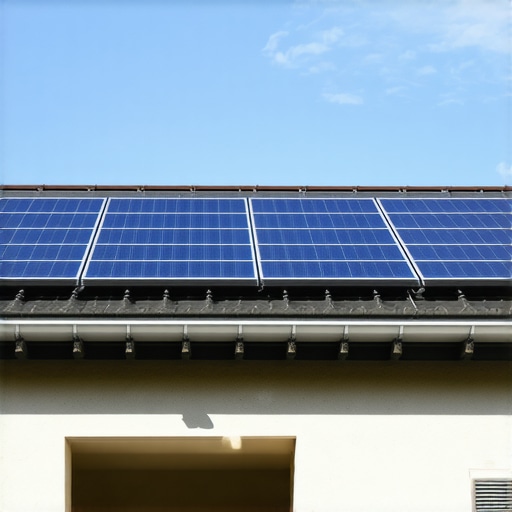
Standard static vents—those plastic or metal hats you see sitting near the ridge—rely on the stack effect. Hot air rises, and theoretically, it should just drift out. But in the real world, without a significant wind to create a pressure differential, that air just sits there. This is where the 2026 solar vents change the math. We aren’t just letting air escape; we are mechanically forcing it out without a cent of electricity from the grid.
Benefit 1: Active Vacuuming of Thermal Energy
The first major benefit of the 2026 solar vent models is the move to brushless DC motors paired with high-efficiency monocrystalline panels. Older models were noisy and prone to dying after a couple of seasons of desert heat. The new tech uses a smart-thermostat logic board that doesn’t just turn on when it’s hot; it ramps up speed based on the delta between the intake air and the exhaust temperature. Local roofers who know their salt are installing these because they move nearly 1,800 cubic feet of air per minute (CFM). Imagine a vacuum cleaner attached to your roof, constantly sucking the hot, pressurized air out of the attic. By maintaining a continuous flow, the roof deck—that plywood or OSB under your shingles—never reaches the ‘char point’ where it becomes brittle. When the decking stays structurally sound, the nails (or ‘shiners’ if the crew was lazy) stay seated, and your roof stays on during a haboob.
Benefit 2: Eliminating the Micro-Climate of Decay
You might think that in a dry climate, moisture isn’t an issue. You’d be wrong. Every time you shower, cook, or even breathe, moisture-laden air drifts upward. In an unventilated attic, this moisture hits the underside of the roof deck during the cool night hours. It condenses. Over time, this repeated wetting and drying cycle causes the plywood to delaminate. I’ve walked on roofs that felt like walking on a sponge—not because of a leak from the outside, but because the attic had created its own internal weather system. The 2026 solar vents feature integrated humidity sensors. Even if the temperature is fine, if the humidity spikes, the fan kicks in. This prevents the ‘wafer’ effect where your decking becomes so soft you could stick a screwdriver through it with one finger. Roofing companies that skip this step are essentially building a ticking time bomb for the homeowner.
Benefit 3: Extending the Life of the Asphalt Mat
The third benefit is purely financial. Asphalt shingles are rated by years, but those ‘Lifetime Warranties’ are heavily caveated. If you read the fine print, the warranty is often voided if the ventilation doesn’t meet specific standards. By installing high-output solar vents, you are literally cooling the shingles from the bottom up. This prevents the ‘blistering’ effect where the trapped gases inside the shingle expand and pop, leaving a circular hole in the granules. When you keep the shingles cool, they remain flexible. Flexible shingles can handle the expansion and contraction of the roof’s valley and ridge without cracking. It’s the difference between a roof lasting 12 years or 25 years. Local roofers who care about their reputation will tell you that the best roof is the one that doesn’t need to be replaced because it was engineered to breathe.
“A roof is only as good as its flashing and its ability to breathe.” – Old Roofer’s Adage
The Trap of the ‘Trunk Slammer’
Don’t fall for the cheapest bid from a ‘trunk slammer’ who says you don’t need fancy vents. They’ll slap on a few squares of 3-tab shingles, miss the cricket behind your chimney, and leave you with a roof that will bake itself to death in five years. You need a contractor who understands the physics of airflow. When you’re looking at roofing companies, ask them about the ‘Net Free Area’ and how they calculate intake versus exhaust. If they can’t answer, walk away. The 2026 solar vents are a tool, but like a hammer, they have to be used right. You need enough soffit intake to balance the exhaust. If you don’t have enough intake, that powerful solar fan will start pulling air from inside your house—sucking the air-conditioned air you paid for right through your light fixtures and into the attic. That’s a system failure, not a benefit. A true professional will balance the system so your house stays pressurized and your attic stays cool.