
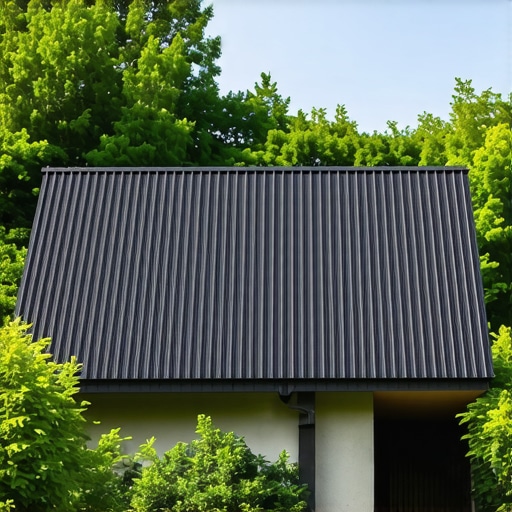
The Myth of the Thirty-Year Shingle
You look up at your house and see a sea of grey grit. That’s not just aging material; that’s your investment washing down the downspouts every time a storm rolls through. Most homeowners are sold a bill of goods by roofing companies promising three decades of protection from a standard architectural shingle. In reality, in our climate where the sun beats down with relentless UV radiation and the humidity sticks to the rafters like a wet blanket, you’re lucky to get fifteen years before the granules bald and the fiberglass mat starts to curl. I’ve spent twenty-five years climbing ladders and peeling back the lies of cheap installs. I’ve seen what happens when you prioritize a low bid over physics. 2026 metal shakes aren’t just a trendy upgrade; they are a fundamental shift in how we protect a structure from the inevitable entropy of the elements.
The Forensic Scene: Walking on a Sponge
Walking on that roof felt like walking on a sponge. I knew exactly what I’d find underneath before I even pulled my bar. It was a coastal property where the local roofers had used standard galvanized nails—shiners everywhere—and the salt air had eaten them into rusted nubs within seven years. The water wasn’t just leaking; it was being pulled through capillary action under the courses, saturating the decking until the OSB had the structural integrity of a wet cardboard box. As I stood there, the smell of fermented wood and mold wafted up through a cracked vent. It was a total failure of the envelope. This is why the engineering behind the 2026 metal shake systems matters. They aren’t just sitting there; they are actively managing water and air in a way that traditional materials simply cannot comprehend.
“A roof is only as good as its flashing, and its ability to shed water without relying on sealants that fail under UV exposure.” – Old Roofer’s Adage
Benefit 1: Aerodynamic Interlocking and Uplift Resistance
When we talk about roofing in high-wind zones, we’re talking about pressures. Most people think a roof blows off because the wind ‘grabs’ a shingle. In reality, it’s about the pressure differential. 2026 metal shakes utilize a four-way interlocking system that creates a unified structural plane. Unlike old-school panels that rely on exposed fasteners—which are just future leak points—these shakes use a hidden fastener clip that allows for thermal expansion without stressing the metal. When the wind hits a ‘square’ of these shakes, it doesn’t find an edge to lift. The physics of the ‘cricket’ and the ‘valley’ are integrated into the profile, ensuring that wind-driven rain is forced back out toward the drip edge rather than being driven up and over the top of the underlayment. We are seeing uplift ratings that can withstand 160 mph gusts, which is the difference between keeping your rafters and watching your living room turn into an indoor pool.
Benefit 2: Thermal Decoupling and the Radiant Barrier Effect
In the heat of July, your attic can easily hit 140°F. If you have asphalt, that heat is being conducted directly through the shingles, through the felt, and into your plywood. This causes thermal shock. The 2026 metal shake technology incorporates an ‘above-sheathing ventilation’ (ASV) design. By creating a small air gap between the metal and the deck, we achieve thermal decoupling. The heat is reflected by the PVDF coatings—high-end resins like Kynar 500—and then any heat that does pass through is carried away by the convective airflow in that gap. This isn’t marketing fluff; it’s thermodynamics. You are effectively putting a sunshade over your house. This prevents the ‘baked’ attic syndrome that kills your HVAC efficiency and rots your decking from the inside out due to condensation cycles.
“The roof shall be covered with approved roof coverings secured to the building or structure in accordance with the provisions of this code.” – International Residential Code (IRC), Section R903
Benefit 3: The End of the Granule Loss Cycle
Every time you see those little rocks in your gutter, your roof is getting thinner. Asphalt is a petroleum-based product that begins to off-gas the moment it’s installed. It becomes brittle. 2026 metal shakes, specifically the new aluminum-zinc alloy variations, are chemically inert in comparison. They don’t dry out. They don’t crack. They don’t support the growth of Gloeocapsa Magma—that black algae that makes your house look like a haunted mansion. Because these shakes are stamped with deep wood-grain textures and coated with stone-infusions or high-performance polymers, you get the aesthetic of a heavy-split cedar shake without the fire hazard or the rot. From a forensic standpoint, when I inspect a metal roof after ten years, I’m looking for mechanical damage, not material degradation. The material stays the same; the only variable is the install.
The Warranty Trap and Selecting Your Contractor
Don’t let a salesman flash a ‘Lifetime Warranty’ in your face and think you’re covered. Most of those warranties are prorated and only cover material defects, not the ‘shiners’ or the ‘buckled’ valley flashing caused by a lazy crew. When you are vetting roofing companies, you need to ask about their experience with ‘flashing’ and ‘underlayment’ systems specifically for metal. A metal roof is a system, not a product. If they don’t know the difference between a synthetic high-temp underlayment and standard #30 felt, kick them off your property. You want a pro who understands that the perimeter is where the battle is won or lost. The 2026 shakes require precision at the eaves and the rakes. If the local roofers you hire are trying to use caulk instead of custom-bent metal transitions, they are setting you up for a forensic nightmare in five years. You’re paying for the engineering; make sure the labor is up to the task. If you don’t invest in the ‘surgery’ now, you’ll be paying for the ‘autopsy’ later.