
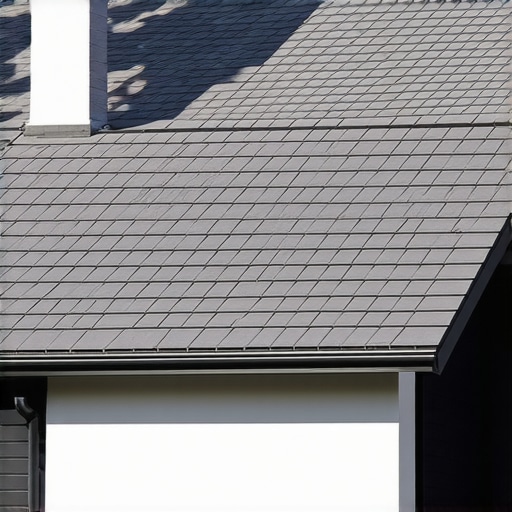
The Sun is a Slow-Motion Sledgehammer
I’ve spent the better part of three decades crawling through 160-degree attics and peeling back shingles that felt more like burnt potato chips than roofing material. My old foreman used to say, ‘The sun isn’t just shining on that roof; it’s eating it alive, one UV ray at a time.’ He wasn’t wrong. In our line of work, we don’t just see a roof; we see a thermal battlefield. If you’re living in a region where the summer sun turns your driveway into a griddle, you’ve probably noticed your AC unit screaming for mercy by mid-July. That’s usually when homeowners start calling local roofers, hoping for a magic fix. Most roofing companies will just sell you the same old asphalt technology developed in the 1970s. But the 2026 generation of cool roof shingles is a different beast entirely. We are moving away from the era of ‘just keep the water out’ and into the era of ‘keep the heat at bay.’ As a forensic roofer, I’m less interested in the curb appeal and more interested in the molecular degradation of the asphalt mat under extreme thermal stress.
“A roof is only as good as its flashing.” – Old Roofer’s Adage
1. Mitigation of Thermal Shock: Preventing the ‘Thermal Yawn’
When you look at a roof, you see a static object. When I look at it, I see a living, breathing, expanding, and contracting skin. In high-heat environments, shingles undergo what we call ‘thermal shock.’ During the peak of the day, that dark asphalt surface can reach temperatures 60 to 90 degrees higher than the ambient air. When a sudden afternoon thunderstorm hits, or when the desert sun drops behind the horizon, the temperature of that shingle plunges. This causes the shingle to contract rapidly—a phenomenon I call the ‘thermal yawn.’ This repetitive stretching and shrinking eventually leads to the asphalt becoming brittle. You start seeing cracks, and that’s when the ‘shiners’—those missed nails that were already a problem—start to weep water. The 2026 cool roof shingles use advanced elastomer-modified asphalt and specialized granules that reflect a massive percentage of infrared radiation. By keeping the surface temperature closer to the ambient air temperature, we significantly reduce the delta between hot and cold. This prevents the microscopic tearing of the asphalt mat, which means the shingle stays flexible longer. A flexible shingle is a waterproof shingle. When a roofing company tells you a roof will last 30 years, they’re usually lying if they aren’t account for thermal shock.
2. Micro-Ceramic Granule Longevity and UV Repulsion
Let’s talk about the granules. Most people think they’re just there for color. They aren’t. Those tiny rocks are the UV armor for the underlying asphalt. Once those granules fall off—what we call ‘granule loss’—your roof is on its deathbed. Traditional granules absorb heat. The 2026 cool roof technology employs micro-ceramic coatings with high Solar Reflectance Index (SRI) values. Instead of the granule absorbing the photon and turning it into heat energy that melts the asphalt binder, the granule acts as a microscopic mirror. This isn’t just about white shingles anymore; the physics has evolved so that even darker shades can reflect a significant portion of the spectrum. When I perform a forensic audit on a failed roof, I often find ‘oatmeal plywood’—sheathing that has literally begun to delaminate because the shingles above it were so hot they cooked the wood. By using shingles that repel UV rather than soak it up, you are preserving the structural integrity of your entire roof deck, from the cricket behind your chimney to the valley where the water flows heaviest.
“Design for the cold, but build for the heat; for the sun is the patient thief of structural integrity.” – Modern Architectural Axiom
3. Reducing the ‘Heat Flux’ and Attic Bypass Degradation
The third benefit is one the roofing companies rarely mention because they don’t understand the physics of an attic. It’s called ‘Heat Flux.’ This is the rate at which heat energy moves through the roofing material, the underlayment, the plywood, and into your insulation. Even if you have ‘R-49’ insulation, if your shingles are 170 degrees, that heat is eventually going to migrate into your living space. Furthermore, that heat degrades your attic bypasses—the gaps around pipes and wires. In my 25 years, I’ve seen countless cases where excessive attic heat has caused the rubber boots around plumbing vents to dry out and crack in just five years. These ‘2026 cool roof’ materials act as a primary thermal barrier. By reducing the heat flux, you aren’t just saving 15% on your cooling bill; you are extending the life of your HVAC system and your internal components. Local roofers who know what they’re doing will tell you that a cool roof is the first line of defense for your entire home’s ecosystem. When the shingles stay cool, the plywood stays stable, the nails stay tight, and you don’t end up with a sponge for a roof. Don’t let a ‘trunk slammer’ convince you that a standard shingle is ‘just as good.’ In the heat, physics doesn’t take a day off.