
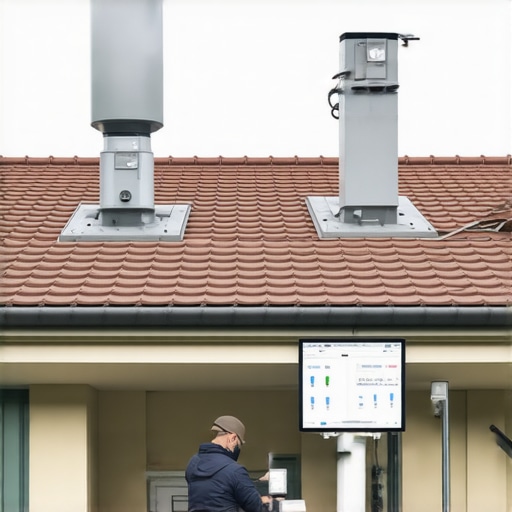
The Autopsy of a ‘Perfect’ Roof
The homeowner stood in his kitchen, staring at a brown ring forming on the ceiling above his expensive granite island. Outside, the rain was a steady, rhythmic thrum. Inside, his blood pressure was rising. He’d hired one of the local roofers just three years ago. The shingles looked fine from the ground—no missing tabs, no obvious storm damage. But when I climbed up there, I didn’t need a ladder to tell him the bad news. Walking on that roof felt like walking on a sponge; my boots sank slightly into the deck, a telltale sign that the OSB underneath had lost its structural integrity. I knew exactly what I’d find underneath: a slow, agonizing rot caused by a vapor barrier failure that no human eye could have detected from the surface. In 2026, the game has changed. Progressive roofing companies are no longer just nailing down shingles and crossing their fingers; they are installing integrated smart sensors that act as an early warning system for the skeletal structure of your home.
The Physics of the Hidden Leak: Why You’re Already Too Late
By the time water hits your drywall, the battle is usually lost. Water is a patient, persistent intruder. It utilizes capillary action—the same physical property that allows a paper towel to soak up a spill—to pull moisture upward, against gravity, into the overlaps of your shingles. In colder climates like the Northeast, this is exacerbated by the freeze-thaw cycle. When snow melts on your roof but freezes at the cold eaves, it creates an ice dam. This pool of water sits behind the ice, and under hydrostatic pressure, it finds every ‘shiner’—those missed nails that missed the rafter and sit exposed in the attic space. “A roof is only as good as its flashing,” as the old roofer’s adage goes, but even perfect flashing can’t stop the internal condensation caused by poor attic ventilation. This is where 2026 technology steps in. Smart sensors embedded in the valley or near the cricket behind a chimney can detect a 1% increase in wood moisture content long before a drip ever forms.
“The primary purpose of a roof is to shed water, but its secondary, more difficult job is to manage the vapor drive from the heated space below.” – International Residential Code (IRC) Commentary
How 2026 Sensor Technology Works in the Field
Modern roofing is moving toward ‘Active Envelopes.’ These sensors aren’t bulky boxes; they are thin, conductive strips or LoRaWAN-enabled probes tucked under the underlayment during a square-by-square installation. They monitor two things: moisture and thermal bridging. When a ‘shiner’ starts to rust, it creates a microscopic change in the electrical conductivity of the surrounding wood. The sensor logs this. Most roofing companies now offer monitoring packages where an alert is sent to your phone—and theirs—the moment the attic humidity exceeds a certain threshold. Imagine getting a call from local roofers saying, ‘Your ridge vent is obstructed, and your plywood is at 18% moisture,’ before you even see a stain. That is the difference between a $500 maintenance call and a $25,000 full-deck replacement. We are talking about forensic-level data that identifies ‘thermal bypasses’—areas where your home’s warm air is escaping into the attic, causing the underside of the roof deck to sweat like a cold beer on a July day.
The Band-Aid vs. The Surgery
Most ‘trunk slammer’ contractors will tell you to just throw some caulk on a leak. In the trade, we call that a ‘tail-light warranty’—as soon as you see their tail-lights leaving your driveway, the warranty is over. If you have a leak, you don’t need a tube of Geocel; you need to understand the physics of why the system failed. Did the ice and water shield delaminate? Is the drip edge installed behind the gutter instead of over it? Sensors provide the ‘why.’ For example, in high-wind zones, sensors can detect the subtle vibration of shingles lifting—’fluttering’—which breaks the sealant strip. Once that seal is broken, the shingle is just a piece of paper waiting to be blown off. By using smart tech, roofing experts can pinpoint the exact square that needs repair, rather than guessing and tearing up perfectly good sections of the roof.
“Water is the most common cause of building element failure. If you don’t control it, it will control your bank account.” – National Roofing Contractors Association (NRCA) Manual
The Cost of Waiting: A Financial Autopsy
If you ignore the warnings, the degradation is exponential. A damp roof deck attracts black mold, which loves the starch in the plywood glue. Within two seasons, that ‘sponge’ feeling I described earlier becomes a reality. The local roofers you hire will then have to charge you for a ‘re-deck,’ which involves tearing off every sheet of wood and starting from the rafters. It’s messy, it’s loud, and it’s entirely preventable. The 2026 approach to roofing is about longevity. It’s about ensuring that your ‘Lifetime Warranty’—which is often just a marketing gimmick buried in fine print—actually means something because the roof was never allowed to fail in the first place. You wouldn’t drive a car for 20 years without a dashboard oil light; why would you live under a roof for 30 years without a moisture alert? Don’t wait for the ceiling to cry. High-tech monitoring is the only way to stay ahead of the inevitable physics of water and wind.