
The Knock on the Door and the Mirage of the ‘Free’ Roof
It starts with a knock. Usually about forty-eight hours after the sky stops screaming and the wind dies down. A guy in a clean polo shirt with a clipboard tells you he was ‘just in the neighborhood’ and noticed some suspicious patterns on your shingles. He offers a free inspection. He’s a storm chaser, and in 2026, these guys have gotten high-tech, but their game remains the same. They want your insurance check, and they don’t care if your roof actually needs replacing or if they’re just slapping a band-aid on a gunshot wound. Most homeowners see a roof that isn’t actively leaking into the kitchen and think they dodged a bullet. They’re wrong. Storm damage isn’t always a missing sheet of plywood or a tree limb through the rafters. Often, it’s a silent, microscopic failure of the roofing system’s chemistry.
The Forensic Scene: Walking the Sponge
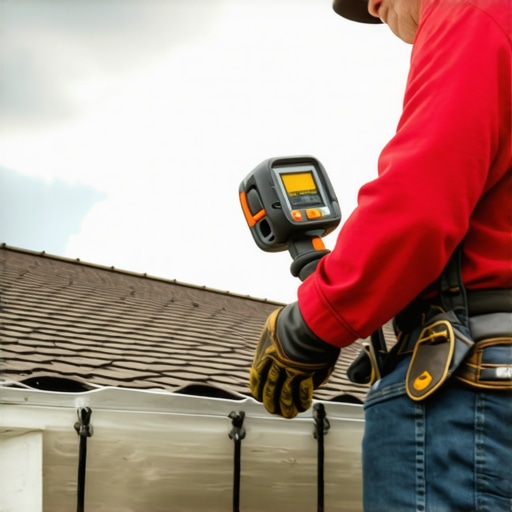
Walking on that roof felt like walking on a trampoline, even though from the curb, the shingles looked pristine. I knew exactly what I’d find underneath. This was a house in the coastal belt, where the humidity sits at 90% and the wind-driven rain hits like a pressure washer. The owner thought the roofing companies were exaggerating. I climbed up there with a moisture meter and a thermal camera. To the naked eye, the granules were intact. But the ‘feel’—that soft, give-and-take under my boots—told me the structural integrity of the decking had been compromised by months of slow-bleed moisture. When we finally tore it off, the OSB was black with rot. The storm six months prior hadn’t ripped shingles off; it had simply vibrated the starter strip enough to break the thermal seal, allowing water to wick upward against gravity through capillary action.
The Physics of the Invisible Failure: Why Your Roof is Lying to You
Most people think wind damage means shingles flying through the air like playing cards. In reality, the most dangerous damage is ‘uplift fatigue.’ As wind rushes over your ridge vent, it creates a low-pressure zone—a vacuum effect. This vacuum tries to suck the shingles right off the deck. Even if the nails hold, the shingle itself stretches. This stretching creates micro-fractures in the fiberglass mat. Once that mat is cracked, the waterproof asphalt coating begins to delaminate. You won’t see this from the ground. You won’t even see it from a ladder. But the next time it rains, that shingle acts like a sieve rather than a shield. Local roofers who actually know their trade look for the ‘broken bond line.’ This is where the factory-applied sealant strip has been compromised by wind oscillation. Once that bond is broken, it never reseals properly on its own. It becomes a flapping hinge that invites wind-driven rain to travel ‘uphill’ under the course above it.
“The primary purpose of a roof is to shed water; however, the secondary purpose of the entire roofing assembly is to manage the pressures exerted by wind and thermal expansion.” – International Residential Code (IRC) Commentary
The 2026 Toolset: Drones, AI, and Thermal Forensics
In 2026, the best roofing companies aren’t just looking for bruised shingles; they are using high-resolution thermography. When the sun hits your roof, different materials hold heat differently. Wet insulation or damp plywood stays cool longer than dry materials. By flying a drone with a FLIR sensor over a roof at dusk, we can literally see the ‘ghost’ of the storm. We see the blue cold-spots where water is trapped between the underlayment and the deck. This is ‘invisible’ damage that an insurance adjuster might try to ignore, but the physics don’t lie. If you have a ‘shiner’—a nail that missed the rafter and is sticking out in the attic—it acts as a thermal bridge. In the winter or during a high-humidity storm, that cold nail head becomes a condensation point, dripping water onto your ceiling even if the roof itself didn’t ‘leak’ in the traditional sense.
The Trap of the ‘Lifetime Warranty’
Don’t get me started on the marketing nonsense of the ‘Lifetime Warranty.’ Most of those documents are written by lawyers to ensure the manufacturer never pays a dime. They cover ‘manufacturing defects,’ not the fact that a ‘trunk slammer’ used four nails per square instead of the required six, or that they didn’t install a proper cricket behind your chimney. A cricket is a small peaked saddle construction that diverts water away from the chimney’s backside. Without it, water pools, sits, and eventually eats through the flashing. When a local roofer inspects for storm damage, they aren’t just looking at the shingles; they are looking at the ‘valleys’ and the ‘flashing.’ If your valley is filled with debris and the storm pushed water over the side of the flashing, your ‘lifetime’ shingle won’t save your drywall.
“A roof is only as good as its flashing; the shingle is merely the aesthetic skin over a complex water-management system.” – Old Roofer’s Adage
The Surgery vs. The Band-Aid
When we find this invisible damage, you have two choices. You can ‘caulk and walk’—which is what the cheap contractors do—or you can perform the necessary surgery. Real roofing involves checking the ‘drip edge’ and ensuring the ‘ice and water shield’ (even in warmer climates, this is used for high-risk leak areas) was installed correctly. If the storm broke the seal on your shingles, you can’t just glue them back down and call it a day. The integrity of the asphalt is gone. In the Southwest, we see ‘thermal shock’ where the shingles expand in 110-degree heat and then rapidly contract during a desert thunderstorm. This causes the granules to ‘slough off’ into the gutters. If your gutters are full of colored sand after a storm, your roof just lost five years of its life, even if every shingle is still in place. That is functional damage, and in 2026, you need a contractor who can document that granule loss as a loss of the ‘shedding layer’ to get your insurance claim approved.
How to Pick a Contractor Who Won’t Disappear
The ‘storm chasers’ will be in the next state by the time your ‘shiner’ starts dripping or your fascia boards start to rot. To find actual local roofers who care about forensic integrity, ask them about ‘attic bypasses’ and ‘intake ventilation.’ If they only want to talk about the color of the shingle and the insurance check, kick them off your property. A real pro will crawl into your 140-degree attic to look for ‘daylight’ or water stains on the rafters. They’ll check your ‘starter strip’ and ensure your ‘hip and ridge’ caps are rated for the same wind speed as the rest of the field. Don’t let the 2026 tech dazzle you into forgetting the basics. Roofing is still about a guy with a hammer, a sharp eye for physics, and the honesty to tell you that a ‘repair’ is just a slow-motion disaster. Protect your deductible, document the ‘invisible’ moisture with thermal imaging, and never trust a roof that feels like a sponge.