
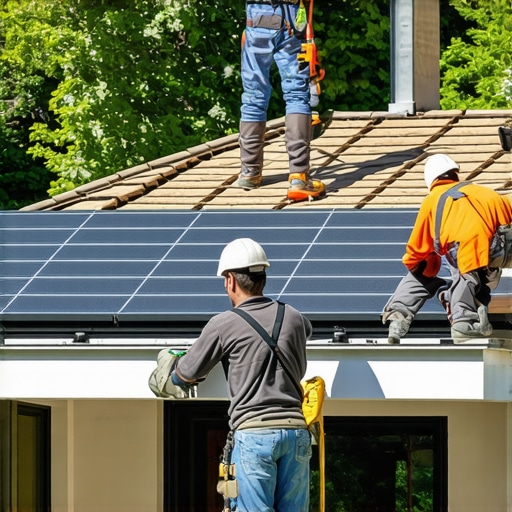
The Day the Roof Turned into a Sponge
Walking on that roof felt like walking on a wet sponge. I knew exactly what I’d find underneath before I even pulled my first pry bar. It was a high-end build, less than five years old, but the plywood had the structural integrity of wet cardboard. Why? Because the original crew didn’t understand vapor drive in our freezing climate. They thought they could slap on standard shingles and walk away. That failure is exactly why we are seeing the rise of 2026 bio-insulation panels. Local roofers are being forced to evolve because the old way of thinking—treating the roof as just a lid rather than a complex thermal lung—is costing homeowners a fortune in rot and mold. Most roofing companies are still stuck in 1995, but the physics of 2026 are already here.
The Molecular Reality of Bio-Insulation
When we talk about bio-insulation panels, we aren’t just talking about ‘green’ marketing. We are talking about high-density, organic-based substrates—often mycelium or compressed agricultural fibers—engineered to outperform traditional polyiso boards. In a cold climate, the enemy is the thermal bridge. Every time a roofing nail penetrates a standard rafter, it creates a tiny highway for heat to escape and cold to enter. Bio-insulation panels act as a continuous thermal break. To understand the mechanism, you have to zoom in on the cellular structure. Traditional foam is a closed-cell trap; bio-panels are often semi-permeable, meaning they allow the house to ‘breathe’ out moisture while keeping the heat trapped inside. This prevents the dreaded condensation cycle that happens when warm interior air hits a cold roof deck. If your local roofers aren’t discussing the perm rating of their insulation, they are setting you up for a forensic nightmare a decade down the line.
“The building envelope must be designed and constructed with a continuous air barrier to control air leakage into, or out of, the conditioned space.” – International Residential Code (IRC), Section N1102.4
Why Most Roofing Companies Fail the Installation
The problem with 2026 bio-panels isn’t the material; it’s the ‘trunk slammer’ installing it. These panels require precision. If a crew leaves a shiner—that’s a nail that misses the rafter and hangs out in the attic space—it becomes a literal magnet for frost. In our climate, that frost melts in the spring, dripping directly into your bio-insulation. Unlike fiberglass, which just gets wet, bio-panels are designed to manage a specific amount of moisture, but they aren’t a bucket. If the valley isn’t flashed with a heavy-duty ice and water shield that integrates perfectly with the panel edge, capillary action will draw water sideways under the shingles. Water is patient; it will find the one 1/16th-inch gap your contractor left because he was in a hurry to get to the next job. You see it all the time with low-bid roofing: they skip the cricket behind the chimney or use cheap galvanized nails that corrode when they react with the organic compounds in newer bio-materials.
The Thermal Shock Factor in Modern Roofing
We often ignore the sheer violence a roof endures. In a single 24-hour period, a roof surface can swing from 140°F in the direct sun to 50°F at night. This causes massive expansion and contraction. Standard asphalt shingles on a poorly insulated deck will ‘cook’ from the inside out. By using bio-insulation panels, local roofers are effectively decoupling the roof’s exterior temperature from the interior structure. This reduces thermal shock. When the shingles aren’t being baked by trapped attic heat, the granules stay embedded longer, and the mat doesn’t become brittle. This is the difference between a roof lasting 25 years or failing at 12. Most roofing companies will sell you a ‘Lifetime Warranty,’ but read the fine print. Those warranties almost never cover ‘thermal degradation’ caused by improper ventilation or insulation. They are marketing documents, not performance guarantees.
“A roof should be viewed as a system, not a collection of individual components. The interaction between insulation, ventilation, and the membrane is what determines longevity.” – National Roofing Contractors Association (NRCA)
How to Spot a Professional Bio-Insulation Install
If you’re hiring for a 2026-spec install, watch the details. Are they using stainless steel fasteners to prevent galvanic corrosion with the bio-substrates? Are they sealing every joint in the insulation panels with high-perm acoustic sealant? If they just butt the panels together and hope for the best, they’re leaving a thermal bypass. A professional crew will treat every square of that roof like a laboratory. They’ll be obsessed with the air barrier. They won’t just throw shingles over the panels; they’ll ensure there’s a micro-ventilation layer if the specific bio-panel calls for it. This prevents the ‘oatmeal plywood’ syndrome I’ve spent my career investigating. The reality is that roofing is no longer just about keeping the rain out; it’s about managing the invisible movement of heat and vapor. If your contractor looks at you like you have three heads when you ask about the ‘R-value per inch’ or ‘vapor permeability’ of their bio-panels, find a new contractor. The cost of a cheap roof is always paid later, with interest, in the form of structural repairs and mold remediation.
This post highlights some crucial aspects of modern roofing that often get overlooked in the industry. I agree that precision in installation, especially when working with advanced bio-insulation panels, is absolutely vital. On the job sites I’ve worked with, I’ve seen how small mistakes like leaving a shiner or not flashing properly can lead to major issues down the line, like frost infiltration and mold growth. It really emphasizes the importance of hiring experienced, detail-oriented professionals who understand these newer materials. I’ve also noticed that a lot of local roofers still shy away from discussing vapor permeability and R-values in depth—probably due to lack of training or familiarity with these bio-materials. What strategies have others found effective in convincing traditional contractors to adopt these advanced techniques? It seems like the industry needs a shift in mindset to truly benefit from these eco-friendly, durable solutions.