
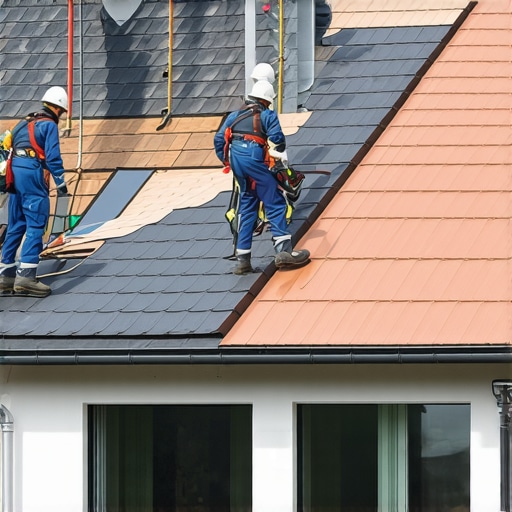
The Midnight Drip: A Forensic Autopsy of the Modern Roof
It usually starts with a sound. Not a roar, but a rhythmic, persistent tink, tink, tink against the drywall of your bedroom ceiling at 2:00 AM. You hope it’s just the house settling, but deep down, you know. By morning, there’s a tea-colored stain spreading across your white paint like an incoming tide. You call one of the many roofing companies promising a quick fix, and they talk to you about the latest 2026 Hydro-Shield technology. But as someone who has spent twenty-five years peeling back layers of rotten cedar and soggy OSB, I can tell you that tech is only as good as the hands that install it. Walking on that roof felt like walking on a sponge. I knew exactly what I’d find underneath: a catastrophic failure of physics disguised by high-end marketing.
The Physics of Failure: Beyond the Shingle
When we talk about roofing, homeowners think about shingles. Pros think about water management. In the Northeast, where the wind-chill can turn a gutter into an ice-block overnight, the enemy isn’t just rain; it’s the phase change of water. Hydro-Shield tech in 2026 is designed to be a molecularly bonded hydrophobic barrier, but let’s zoom in on the mechanism of a leak. Water is lazy, but it’s also incredibly patient. It uses capillary action—the ability of a liquid to flow in narrow spaces without the assistance of, or even in opposition to, external forces like gravity. If your local roofers didn’t provide a 4-inch overlap on the underlayment, water will literally climb uphill under the shingle during a wind storm. I’ve seen it happen on a dozen jobs this year alone. The Hydro-Shield coating might shed water on the surface, but if the flashing is tucked wrong, that water is directed straight into your fascia boards.
“A roof is only as good as its flashing.” – Old Roofer’s Adage
The forensic scene I encountered last week in a high-end suburb was a classic example. The homeowner had paid for a top-tier replacement two years ago. On the surface, it looked perfect. But underneath? The plywood was so soft you could poke a finger through it. Why? Because the installers relied on the “self-healing” properties of the Hydro-Shield membrane to seal around shiners. A shiner is a nail that missed the rafter, sticking through the roof deck into the cold attic air. In our climate, that cold nail becomes a condenser. Warm, moist air from the house hits that nail, turns into a drop of water, and drips. Over a thousand nails, that’s a gallon of water a day. No amount of high-tech coating fixes a lack of ventilation.
The Hydro-Shield Illusion vs. The Trade Reality
By 2026, roofing companies have shifted heavily toward synthetic underlayments that claim to be 100% waterproof. They are—if they’re installed in a vacuum. But roofs live in the real world of thermal expansion and contraction. On a July afternoon, your roof deck can hit 160°F. By 3:00 AM, it might drop to 65°F. That 100-degree swing causes the wood, the nails, and the shingles to move. If your contractor used cheap galvanized nails instead of stainless or high-grade hot-dipped ones, the Hydro-Shield membrane eventually loses its grip on the nail shank. This creates a microscopic gap—a highway for hydrostatic pressure to push moisture into the deck. Water is patient. It will wait for you to make a mistake.
The Ice Dam Nightmare: A Climate-Specific Curse
In the North, we deal with the specific hell known as the ice dam. This isn’t just a “roof leak”; it’s a structural assault. When heat leaks from your attic (usually through an attic bypass like a poorly sealed recessed light), it melts the bottom layer of snow on your roof. That water runs down to the cold eaves and freezes, creating a dam. Behind that dam, a pool of water sits. This is where Hydro-Shield tech is supposed to shine. 2026 standards require this membrane to extend at least six feet up from the eave. But here’s the rub: if the roofing companies don’t install a cricket—a small peaked structure behind a chimney or large vent—the water will still find a way to stagnate. I’ve seen $50,000 roofs fail because the crew skipped a $200 cricket. They trusted the tech to do the job of the geometry.
“The building envelope must be viewed as a continuous system, where the roof is the primary defender against the elements.” – NRCA Technical Manual
The Band-Aid vs. The Surgery
When I’m called in for a forensic inspection, I often have to give the bad news: the “repair” you bought last year was just a Band-Aid. Smearing a gallon of Henry’s bull-pete (roof cement) over a valley isn’t roofing; it’s art supplies. A valley is where two roof slopes meet, and it’s the highest-volume water channel on your house. In 2026, we use woven or open valleys with specialized Hydro-Shield liners. If your local roofers just overlapped shingles without a metal liner or a reinforced membrane, that valley will fail within seven years. The “surgery” involves tearing it back to the deck, checking for rot, and installing a proper Ice & Water shield. It’s expensive, it’s loud, and it’s the only way to sleep when the rain starts.
The Trap of the Lifetime Warranty
Don’t get me started on warranties. In 2026, every roofing company offers a “Lifetime Warranty.” Read the fine print. Most of those warranties are prorated, meaning they lose value every year. More importantly, they don’t cover workmanship. If the shingle didn’t fail, but the guy who installed it was distracted and put the nail an inch too high, the manufacturer will laugh you out of the room. You aren’t buying a product; you’re buying a system. The Hydro-Shield tech is the material, but the system is the labor. I tell my clients to look for the guy who talks about R-value and soffit-to-ridge ventilation, not the guy who just shows you a glossy brochure of shingles.
A Final Warning from the Deck
If you’re looking at your roof and wondering if it’ll last another season, do this: wait for a heavy rain and go into your attic with a flashlight. Look at the valleys and around the chimney. Look for the tell-tale white tracking of dried minerals or the dark stains of active rot. If you see water, don’t wait. The cost of a square (100 square feet) of roofing is nothing compared to the cost of replacing a mold-infested structural header. 2026 tech has given us better tools, but the physics of a dry house haven’t changed since the 1800s. Gravity always wins. Keep your crickets clean, your ventilation open, and for heaven’s sake, make sure your roofer knows how to use a hammer, not just a caulk gun.