
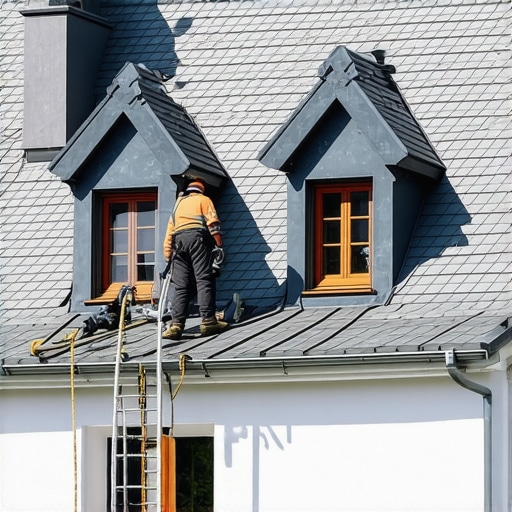
The Curse of the Second Empire: Why Your Mansard is Failing
Walking on that roof felt like walking on a sponge. I knew exactly what I would find underneath before I even pulled my first shingle. It is a specific kind of give, a rhythmic bounce that tells a forensic roofer the deck has lost its structural integrity. In this case, it was an old Victorian in a damp corridor of the Northeast where the humidity hangs heavy and the winters bite hard. The homeowner thought they just had a few loose shingles. The reality? The entire transition line where the steep slope meets the flat upper deck had become a slow-motion waterfall for the last five years. Most local roofers won’t tell you the truth: Mansard roofs are architectural prima donnas. They look grand, but they fight physics every second of their existence. If you do not understand how water moves through capillary action at the pitch transition, you are just throwing money into a gutter.
The Physics of the Transition: Where 2026 Tech Meets 19th-Century Problems
The primary reason roofing companies fail at Mansard projects is the transition. You have a near-vertical lower slope—the decorative part everyone sees—and a nearly flat top deck that no one sees. Water hits that top deck, gains momentum, and then hits the change in pitch. If the flashing isn’t perfect, hydrostatic pressure pushes that water backward, up under the shingles of the vertical wall. It is not a leak; it is an invasion. We are seeing 2026 contractors moving away from old-school lead and toward integrated membrane systems. I have seen guys try to caulk their way out of a bad transition. Caulk is a lie. It’s a temporary bandage that dries out under UV radiation and cracks within two seasons. Proper roofing involves a mechanical bond, not a chemical one. You need a custom-bent metal drip edge that allows the upper membrane to overlap the lower shingles by at least eight inches.
“A roof is only as good as its flashing; the materials themselves are secondary to the integrity of the joints.” – Old Roofer’s Adage
Material Truths: Asphalt, Metal, and the 2026 Standard
When you are dealing with a Mansard, you are essentially roofing two different buildings. For the lower, steep section, asphalt is common, but it’s risky. On a 12/12 pitch or higher, gravity is your enemy. If your local roofers aren’t using a six-nail pattern and hand-sealing every single tab, those shingles are going to slide. In the heat of July, the asphalt softens, and the weight of the shingle pulls against the nail head. This leads to a ‘shiner’—a nail that’s been exposed—which becomes a direct conduit for water. Modern 2026 crews are increasingly using poly-slate or high-definition metal panels that mimic the look of slate but weigh a fraction of the cost. These materials don’t suffer from the same thermal expansion issues that cause asphalt to buckle on vertical runs. For the top deck, the 2026 standard has shifted entirely to high-grade PVC sealants and heat-welded membranes. Forget about ‘torch-down’ rubber; that’s a fire hazard and it doesn’t hold up to the ponding water often found on these old structures.
The Ventilation Trap: Why Your Attic is Rotting from the Inside
The biggest secret roofing companies hide is that your roof might be rotting from the inside out. In a Mansard, the attic space is usually cramped or non-existent (the ‘knee wall’ problem). In cold climates, warm air from your house leaks into those tiny cavities. Without massive airflow, that moisture hits the cold underside of the roof deck and turns into frost. When it thaws, it looks like a leak, but it’s actually a ventilation failure. You start seeing signs of attic mildew, and suddenly your 25-year shingles are failing at year seven because the plywood is delaminating from the heat. In 2026, we solve this with ‘smart’ intake vents at the soffit and power-venting at the peak. You have to move the air, or the roof will cook itself. If a contractor doesn’t mention ‘R-value’ or ‘Baffle vents’ when quoting your Mansard, show them the door. They are just shingle-slappers, not roofers.
“The building envelope must be viewed as a single thermal system; any break in insulation or ventilation leads to accelerated material degradation.” – International Building Code Commentary
The Warranty Scam: Don’t Get Fooled by ‘Lifetime’ Labels
I’ve spent 25 years watching roofing companies disappear when a warranty claim actually hits the desk. A ‘Lifetime Warranty’ on a shingle only covers the material, not the labor to fix the mistake. And guess what? Materials rarely fail; installations do. If your roofer leaves a ‘shiner’ or fails to install a proper valley gap, the manufacturer will void your warranty the moment they see a photo of the error. In 2026, the real pros are using digital smart audits to document every single ‘square’ of the install. They want proof that the ice and water shield was applied correctly around the dormers. They want proof that the starter strip was nailed to code. If your contractor isn’t providing a digital map of the job, they are hiding something. You aren’t paying for shingles; you are paying for the peace of mind that comes from knowing the ‘cricket’ behind your chimney was flashed with more than just a prayer and some black goop.
How to Pick a Contractor Who Won’t Disappear
When you start calling local roofers for your Mansard, ask them one question: ‘How do you handle the transition between the steep and the flat?’ If they say ‘flashing and caulk,’ hang up. If they talk about heat-welded transitions, deck-leveling, and LIDAR-based quotes, they might actually know what they are doing. The cost of a Mansard roof is always higher because the risk of failure is higher. You are dealing with complex geometries that require a master’s touch. I have seen too many homeowners choose the low bid only to call me three years later when their dining room ceiling is on the floor. Don’t be that person. Invest in the forensic-level detail now, or pay for the forensic-level repairs later. A roof isn’t just a lid; it’s a complex ventilation and drainage machine that keeps the rot away from your family. Treat it like one.