
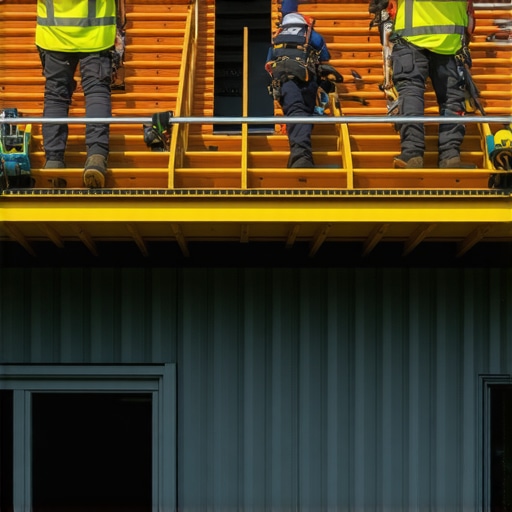
Beyond the Shingle: The Invisible Skeleton of Your Roof
When most homeowners talk about roofing, they are really talking about shingles. They care about the color, the texture, and the curb appeal. But as someone who has spent over a quarter-century dissecting failed structures, I can tell you that the prettiest asphalt in the world won’t save you when the wind starts howling at seventy miles per hour if the bones underneath are garbage. In 2026, the game is changing. Local roofers are finally being forced to look at the roof as a structural system rather than just a waterproof lid. We are seeing a massive shift in how roofing companies approach the securing of roof joists and trusses, moving away from ‘just enough’ to ‘over-engineered survival.’ It’s about time.
The Wisdom of the Old Guard
My old foreman used to say, ‘Water is patient. It will wait for you to make a mistake.’ He was right, but he forgot to mention that wind is violent. It doesn’t wait; it takes. I remember him standing on a steep 12/12 pitch in the middle of July, sweat dripping off his chin, pointing at a single shiner—a nail that missed the rafter and was just hanging out in the air. ‘That’s not just a leak point,’ he’d growl. ‘That’s a failure of integrity.’ That lesson stuck. A roof is a series of connections, and in 2026, those connections are being scrutinized more than ever before.
“A roof is only as good as its flashing—and the structure that supports it.” – Old Roofer’s Adage
The Physics of Failure: Understanding Wind Uplift
To understand why modern roofing companies are obsessed with joist security, you have to understand the physics of uplift. Most people think a roof fails because the wind pushes it down. The opposite is true. As wind hits the windward side of your home, it accelerates over the peak, creating a low-pressure zone on the leeward side. This creates a vacuum effect. It literally tries to suck the roof off the walls. This is where the mechanism zooming comes in. We aren’t just talking about a roof ‘blowing away.’ We are talking about the failure of the continuous load path. The force travels from the roof deck, through the fasteners, into the joists, down the hurricane straps, into the wall studs, and finally to the foundation. If any link in that chain is weak, the whole system collapses. If your local roofers aren’t talking about hurricane ties and structural screws in 2026, they are living in the 1980s.
Securing the Joist: The 2026 Standard
In the past, a couple of toe-nails were considered sufficient for securing a joist to a top plate. Today, forensic investigation proves that’s a recipe for disaster. Professional roofing companies are now utilizing advanced structural fasteners that offer significantly higher shear strength. We are seeing a move toward Simpson Strong-Tie HDU series or equivalent lateral tension ties that create a mechanical bond far superior to a simple 10d common nail. This is especially critical in the ‘Tropical Zone’ where wind-driven rain and high-velocity hurricane zones (HVHZ) dictate code.
“Structural connectors shall be sized and installed in accordance with the manufacturer’s specifications to ensure the transfer of loads from the roof to the foundation.” – International Residential Code (IRC) Section R802.11
The Role of Adhesives and H-Clips
It’s not just about the big metal brackets. The micro-level security of the roof deck itself plays a role in how the joists perform. By 2026, many high-end roofing companies are using structural adhesives on the top chord of the joists before the plywood or OSB is even laid down. This ‘glue-and-screw’ method turns the entire roof plane into a monolithic diaphragm. This reduces thermal bridging and prevents the ‘creaking’ sound you hear during temperature swings—the sound of wood expanding and contracting against nails. We also use H-clips between the sheets of decking. While they seem small, they provide a necessary gap for expansion while ensuring that the load of a heavy snow-pack or a technician’s boot is shared across multiple joists, preventing a localized collapse.
The Trap of the ‘Lifetime’ Marketing
Don’t get me started on ‘Lifetime Warranties.’ Most roofing companies use them as a shield to hide mediocre craftsmanship. They’ll give you a piece of paper that says the shingles will last fifty years, but they won’t tell you that the valley is flashed with cheap coil stock or that your joists are pulling away from the ridge beam. A warranty is only as good as the company’s willingness to answer the phone in ten years. When you are vetting local roofers, ask them about their framing experience. If they tell you ‘we just do shingles,’ walk away. A true professional understands that the shingles are just the skin; the joists are the skeleton. You can’t have a healthy body with a broken back.
The Cost of Cutting Corners
I’ve walked onto too many ‘forensic scenes’ where a three-year-old roof was failing. You can smell it before you see it—the damp, musty scent of rotting Douglas fir. Usually, it starts because someone missed a cricket behind a chimney, or they didn’t account for capillary action drawing water sideways under a shingle and onto an unsealed joist. Once that joist gets wet, it softens. Once it softens, the fasteners lose their ‘bite.’ Suddenly, your structural integrity is gone, and you’re looking at a five-figure ‘surgery’ to replace the bones of your house. This is why 2026 roofing standards emphasize Secondary Water Resistance (SWR). We are sealing the joists and the seams of the deck so that even if the shingles blow off, the house stays dry and the structure stays sound.
Choosing Your 2026 Contractor
When you interview roofing companies, don’t just ask about the price per square. Ask about their joist-to-plate connection strategy. Ask about their fastener schedule. If they look at you like you have three heads, they aren’t the pros you need. You want the guy who geeks out over shear loads and uplift ratings. You want the guy who is tired of fixing other people’s mistakes. That’s the guy who will make sure your roof is still there after the next big one hits.