
The Anatomy of a Failing Rake: A Forensic Perspective
Walking on that roof felt like walking on a sponge. I knew exactly what I’d find underneath. It was a three-year-old roof in a high-wind corridor, and the homeowner couldn’t understand why the ceiling in his master bedroom looked like a topographical map of a swamp. The shingles were top-tier, the underlayment was synthetic, but the gable trim—the rake edge—was a disaster. Local roofers often treat the gable as an afterthought, a piece of ‘jewelry’ to hide the raw edge of the plywood. In reality, that trim is the front line of defense against wind uplift and lateral moisture migration. When I pulled back the first few inches of the rake, the plywood didn’t just break; it crumbled like wet cake. This wasn’t a material failure; it was a physics failure.
The Physics of Edge Failure: Beyond the Surface
When wind hits the side of a house, it doesn’t just stop. It accelerates upward and creates a vortex at the roof edge. This is basic aerodynamics, yet most roofing companies install gable trim as if they are working in a vacuum. In the 2026 standard, we look at ‘Mechanism Zooming’—how water molecules behave at the interface of metal and asphalt. Through capillary action, wind-driven rain is forced between the shingles and the metal trim. If that trim isn’t properly hemmed and integrated with a high-performance starter strip, the water travels sideways. Gravity doesn’t matter when you have a 40mph gust pushing water uphill. The water finds the ‘shiner’—that missed nail located just half an inch outside the drainage plane—and follows it straight into the roof deck.
“A roof is only as good as its flashing.” – Old Roofer’s Adage
The 2026 Standard: The Continuous Cleat System
Gone are the days when banging three nails into the face of a piece of drip edge was considered ‘professional.’ By 2026, the elite roofing companies have pivoted to continuous cleat systems. Instead of face-nailing, which creates a thermal expansion nightmare, a heavy-gauge cleat is fastened to the fascia. The gable trim then hooks onto this cleat. This creates a tension-fit that can withstand significantly higher uplift pressures without the metal buckling or ‘oil-canning.’ This also eliminates the need for exposed fasteners. Every hole you put in a piece of metal is a potential leak point twenty years down the line when the neoprene washer fails and the sun has baked the life out of the surrounding sealant.
Material Selection: Why Gauge Matters More Than Brand
I see local roofers using 28-gauge or even 30-gauge trim because it’s cheap and easy to bend. That’s not roofing; that’s origami. For a 2026-standard gable, we demand at least 24-gauge steel or heavy-duty aluminum. The thickness of the metal determines its ability to resist the ‘vibration fatigue’ that occurs during seasonal storms. When thin metal vibrates, it loosens the fasteners. A loose fastener is a ‘shiner’ waiting to happen. Furthermore, the chemistry of the metal matters. In coastal environments, we see galvanic corrosion where stainless nails touch galvanized trim. It eats the metal from the inside out until there’s nothing left but a streak of rust and a hole in your defense.
“The most common source of residential roof leaks is not the field of the roof, but the edges and penetrations.” – NRCA Manual
The Forensic Fix: The Surgery of the Gable
[IMAGE_PLACEHOLDER]
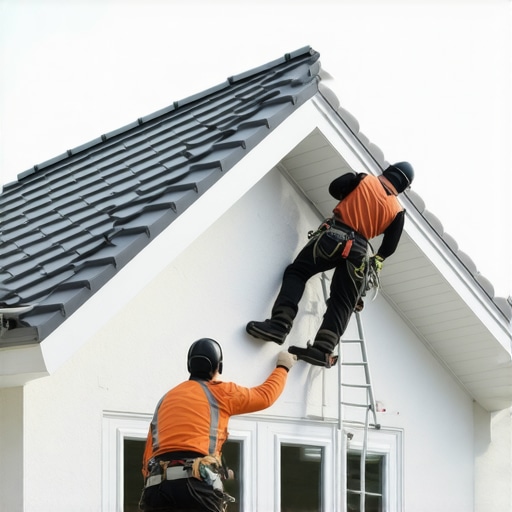
When we perform ‘surgery’ on a failed gable, we don’t just slather it in caulk. Caulk is a band-aid on a bullet wound. The correct fix involves stripping the shingles back at least two feet from the rake. We inspect the deck for rot, replace the ‘oatmeal’ plywood, and install a dedicated ice and water shield that wraps over the edge of the fascia. This creates a secondary water barrier. Only then do we install the new 2026-spec gable trim with a wide-flange design. This ensures that even if water gets past the metal, it hits a waterproof membrane instead of raw wood. We then integrate a starter course that is specifically designed to bond with the metal trim using a polyether-based sealant that remains flexible even when the attic temp hits 140°F.
How to Vet Local Roofers for Your 2026 Project
If you are interviewing roofing companies, ask them one question: ‘How do you secure your gable trim against wind uplift?’ If they say ‘nails every twelve inches,’ show them the door. You want to hear about continuous cleats, wind-load ratings, and integrated starter strips. A ‘square’ of roofing is easy to lay down; it’s the edges, the valleys, and the crickets that separate the veterans from the trunk-slammers. Don’t be fooled by a ‘Lifetime Warranty.’ A warranty is just a piece of paper if the installer didn’t understand the capillary action of wind-driven rain. You are paying for the physics, not just the shingles. In the high-heat environments of the Southwest or the damp corridors of the North, the rake edge is where your roof lives or dies.