
The Blinding Glare of 60-Mil Regret
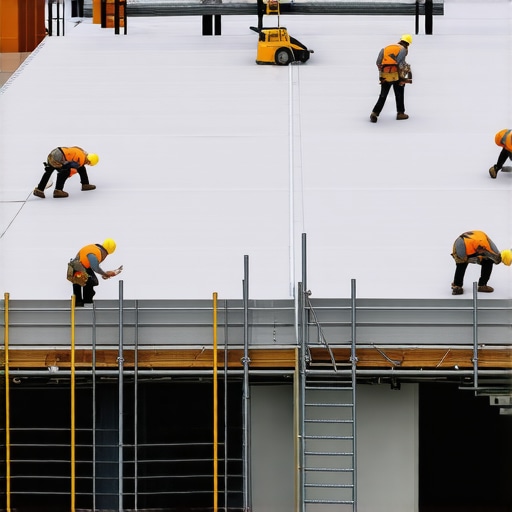
You stand on a five-acre warehouse roof in the middle of a Phoenix July, and the first thing that hits you isn’t the heat—it’s the glare. That white TPO membrane reflects 80% of the sun’s radiation, but if you look closer at the welded seams, you start to see the truth. The industry is currently flooded with local roofers who bought a robot welder and think they’re commercial experts. They aren’t. They’re just installers, and there’s a massive difference between installing a roof and engineering a waterproof system that survives a decade of thermal shock.
My old foreman used to say, ‘Water is patient. It will wait for you to make a mistake, and then it will wait for the wind to push it through that mistake.’ He was right. In the 2026 landscape, roofing companies are moving faster than ever, often at the expense of the chemistry that makes Thermoplastic Polyolefin (TPO) work. When you’re talking about a 500-square job, a single degree of temperature fluctuation in the hot-air welder can be the difference between a monolithic bond and a cold weld that pops the moment the first monsoon hits.
[IMAGE_PLACEHOLDER]
The Physics of the ‘Cold Weld’ and Capillary Treachery
Let’s look at the mechanism of failure. Roofing isn’t just laying down a carpet. TPO is a layered product: a base layer, a polyester scrim for reinforcement, and a top weather-resistant cap. When roofing companies run their robotic welders too fast to keep up with a tight schedule, they fail to achieve true molecular fusion. This creates a ‘cold weld.’ To the naked eye, the seam looks closed. But the bond is brittle. As the building expands and contracts—what we call thermal cycling—that seam begins to ‘fish-mouth.’
Once a seam fish-mouths, hydrostatic pressure isn’t your only enemy. You have to worry about capillary action. This is the physical phenomenon where water is literally sucked into tiny crevices against the force of gravity. It travels under the membrane, soaks the polyisocyanurate insulation boards, and turns your high-R-value investment into a soggy sponge. By the time you see a drip in the warehouse, you’ve likely lost 40% of your thermal efficiency because wet insulation doesn’t insulate; it conducts.
“A roof is only as good as its flashing, and TPO is only as good as its molecular bond.” – Modern Forensic Roofing Axiom
The Southwest Survival Guide: TPO in the Desert
In regions like Las Vegas or Scottsdale, the roofing environment is a brutal laboratory. We see 140°F surface temperatures during the day dropping to 60°F at night. This constant movement causes ‘bridging’ at the wall flashes. If your local roofers didn’t use a heavy-duty termination bar or failed to properly fasten the membrane at every transition, the TPO will pull away from the wall. I’ve seen 80-foot runs of membrane tight as a drum string because the installers ignored the expansion coefficients of the material.
Another common failure point in large-scale TPO jobs is the ‘shiner.’ That’s trade talk for a fastener that missed the narrow margin of the purlin or the structural deck. On a massive TPO project, you’re looking at thousands of plates and screws. If the crew is sloppy, you end up with ‘deck-flutter.’ When the wind kicks up, the membrane lifts like a giant sail, pulling against those fasteners. If they aren’t backed into the steel correctly, they’ll back out, eventually poking a hole right through the membrane from the bottom up. It’s a slow-motion murder of a multi-million dollar asset.
The Warranty Trap: Marketing vs. Reality
Most roofing companies will sell you on a ’20-year No Dollar Limit (NDL) Warranty.’ Here is the cynical truth from 25 years in the dirt: that warranty often doesn’t cover ‘consequential damages.’ If the roof leaks and ruins $500,000 worth of electronic inventory, the manufacturer might send a guy to patch the hole, but they aren’t writing a check for your inventory. You need to look at the mil thickness of the top ply. Manufacturers have been thinning out the ‘weathering layer’ to keep costs down. A 60-mil TPO sounds thick, but the part that actually fights the UV rays is only a fraction of that. In the desert, UV degradation will eat a cheap TPO membrane until it’s as brittle as a potato chip in under 12 years.
“Proper drainage is the first law of roofing; if the water stays, the roof goes.” – International Residential Code (IRC) & Commercial Standards
If your local roofers didn’t account for ‘ponding water,’ you’re in trouble. TPO is rated for standing water, but ‘rated’ and ‘survives’ are two different things. Standing water magnifies UV rays like a magnifying glass, accelerating the breakdown of the polymers. You need crickets—sloped structures built into the roof—to divert water toward the scuppers and drains. If I walk onto a roof and see bird baths after a rain, I know the roofing contractor cut corners on the taper system.
Selecting a 2026 Contractor Who Actually Knows Physics
When interviewing roofing companies for a large-scale TPO replacement, stop asking about the price per square. Start asking about their ‘test cut’ protocol. A legitimate foreman will perform a test weld every morning and every afternoon to calibrate the robot welder to the current humidity and temperature. If they aren’t ‘peel testing’ their welds, they are guessing. And guessing on a 100,000-square-foot roof is a recipe for a forensic investigator like me to come out and tell you that you need a total tear-off in five years. Look for contractors who understand ‘Secondary Water Resistance’ and who don’t just use ‘caulk’ as a primary sealant. Caulk is a band-aid; a heat-welded flashing is surgery. You want the surgeon, not the guy with a bandage.