
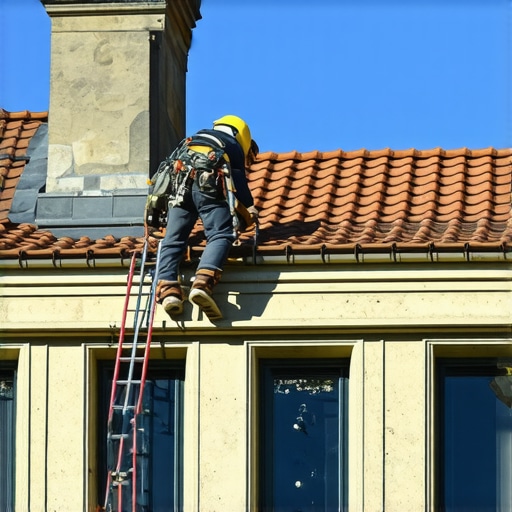
The Forensic Scene: Walking on a 19th-Century Sponge
Walking on that roof felt like walking on a sponge. I knew exactly what I’d find underneath before I even pulled my first pry bar. It was a mid-19th-century Federal-style home in the Northeast, and the owner was complaining about a ‘small damp spot’ in the attic. When I got up there, the slate was rattling like loose teeth, and the structure beneath was screaming. The previous roofing companies had treated this historical gem like a suburban tract home, slapping modern synthetic underlayment over 150-year-old skip sheathing without a second thought. The result? A trapped micro-climate that turned the original hemlock rafters into something resembling wet cardboard. This is the reality of roofing in 2026: we have the technology to make a roof last forever, but we often lack the trade wisdom to let the building breathe.
The Physics of Historical Failure: Why Old Buildings Reject New Tech
Historical sites operate on a different set of physical rules than your neighbor’s 2020 colonial. In a traditional 1800s structure, the attic was a transitional space—not a conditioned one. When modern local roofers try to ‘improve’ these buildings with high-R-value spray foam or airtight vapor barriers, they often trigger a catastrophic forensic failure. This is called thermal bridging. In the dead of a New England winter, warm air from the living space leaks through attic bypasses—those tiny gaps around chimneys and plumbing stacks—and hits the cold underside of the roof deck. Without the original ventilation patterns, that moisture stays there. It doesn’t just sit; it migrates through capillary action, pulling itself deep into the wood fibers of the original plate. By the time you see a brown ring on your ceiling, the structural integrity of your roofing system has been compromised for years.
“A roof is only as good as its flashing.” – Old Roofer’s Adage
Mechanism Zooming: The Sideways Movement of Water
Most local roofers understand that water goes down. A forensic veteran understands that water also goes sideways and up. On historical slate or wood shake roofs, we deal with hydrostatic pressure. Imagine a heavy wind-driven rain hitting a valley. If the cricket—that small peak we build behind the chimney to divert water—isn’t pitched perfectly, water pools. Once it pools to a depth of just an eighth of an inch, it can be sucked upward under the shingles through a vacuum effect. In 2026, the best roofing companies are fighting this with stainless steel fasteners and lead-coated copper flashing that can handle the expansion and contraction of the seasons. If you see a roofer pulling out a caulk gun to fix a historical leak, fire them. Caulk is a band-aid; proper soldering is surgery. You don’t put a band-aid on a femoral artery bleed, and you don’t use silicone on a 200-year-old copper valley.
The Material Truth: Copper, Slate, and the 100-Year Vision
When we talk about roofing replacement on historical sites, we have to look past the ‘Limited Lifetime Warranty’ marketing fluff. Those warranties are designed for shingles that will be in a landfill in 20 years. For a historical site, we talk in squares (100 square feet) of 100-year materials. Slate, for instance, is the king of materials, but only if you use the right grade. I’ve seen roofing companies install soft S-2 grade slate that delaminates after one hard freeze-thaw cycle. A forensic pro insists on S-1 Vermont slate. Then there’s the metal. In the old days, we used lead. Today, we use lead-coated copper or zinc. These materials develop a patina that protects the core metal from UV radiation and acid rain. If your contractor doesn’t know how to execute a flat-lock solder seam, they shouldn’t be within fifty feet of a historical landmark.
The ‘Shiner’ and the Storm: Avoiding the Trunk Slammer Mistakes
The biggest enemy of a historical roof isn’t the weather; it’s the shiner. That’s trade talk for a nail that missed the rafter and is sticking out of the roof deck. In a historical home with exposed eaves, a shiner is a highway for frost. During a cold snap, moisture from the house condenses on that cold nail. It freezes, then thaws, dripping onto the plaster below. It’s a tiny mistake that causes thousands in damage. 2026 roofing requires a forensic eye to ensure that every fastener is compatible with the chemistry of the wood. You can’t use galvanized nails in ACQ-treated lumber, or the chemicals will eat the nail in five years. You need stainless steel. This is the difference between a roof that lasts a generation and one that fails before the first mortgage payment is due.
“The architect should strive to give the building a crown that defies the centuries.” – John Ruskin
The 2026 Forensic Audit: How to Pick Your Contractor
If you own a historical property, you are a steward of history. When interviewing local roofers, don’t ask about their price per square. Ask about their moisture mitigation strategy. Ask how they handle the interface between the starter course and the gutter line. A real pro will talk to you about ‘Secondary Water Resistance’ and the importance of a non-breathable underlayment versus a breathable one depending on your attic’s insulation. They will look at your valleys and tell you exactly why the previous guy failed. They will find the cricket that was built too small and explain how it’s causing the wood rot in your guest bedroom. Historical roofing isn’t about slapping on new materials; it’s about correcting a century of physics errors. Don’t let a ‘storm chaser’ with a flashy truck ruin a building that has stood since the Civil War. Look for the guy with the dirty boots who spends forty-five minutes in your attic before he even looks at the shingles.