
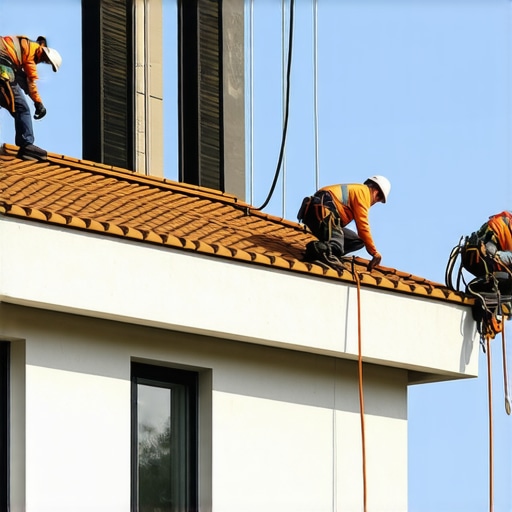
The Anatomy of a Failed Promise
I’ve spent a quarter-century smelling the damp stench of rot and listening to homeowners complain about leaks that shouldn’t exist. By the time I’m called to a job site, the ‘experts’ have already come and gone, leaving behind a trail of overpriced silicone and excuses. When we talk about how 2026 roofing companies handle 2026 roof gaps, we aren’t just talking about a hole in the plywood. We are talking about the failure of the building envelope in an era where materials are getting smarter, but the labor is getting lazier. If you think a new shingle is going to save you from poor physics, you’re already underwater.
“A roof is only as good as its flashing.” – Old Roofer’s Adage
My old foreman used to say, ‘Water is patient. It will wait for you to make a mistake.’ He was right. He’d stand on a 10-pitch roof in the middle of a biting November wind, pointing at a tiny gap in the step flashing with a gnarled finger. ‘That right there,’ he’d mutter, ‘that’s a five-thousand-dollar phone call in three years.’ He didn’t care about the square count or how fast the crew could rip off the old layers. He cared about the physics of the ‘gap’—the transition points where the roof meets something that isn’t a roof. In 2026, those gaps are being handled with more technology and less common sense.
The Physics of the 2026 Gap: Capillary Action and Thermal Bridging
In the North, where the air turns into a razor in January, the ‘gap’ isn’t just about water coming down; it’s about heat going up. Many modern roofing companies are obsessed with the surface, but they ignore the attic bypass. This is the forensic reality: warm air leaks from your living room into the attic through light fixtures and plumbing stacks. This air carries moisture. When it hits the underside of a cold roof deck, it flash-freezes into frost. Then, the sun hits the shingles, the frost melts, and you have a ‘leak’ that never saw a drop of rain. This is thermal bridging, and if your contractor isn’t talking about air sealing the attic floor, they aren’t a roofer—they’re a shingle applicator.
Then there’s capillary action. Water has a nasty habit of moving sideways and even upward. When a roofer leaves a gap between the shingles and the sidewall without a proper kick-out flashing, they are inviting disaster. Gravity pulls the water down the roof, but surface tension sucks it behind the siding. It finds a shiner—a nail that missed the rafter and is sticking through the deck—and hitches a ride down the shank. By the time you see a brown spot on your ceiling, that nail has been weeping for six months, and your structural headers are soft enough to poke a finger through.
Material Truth: The Synthetic Trap
We are seeing a surge in synthetic underlayments. They are marketed as ‘indestructible’ and ‘high-traction.’ Local roofers love them because they can leave them exposed for weeks. But here is the truth they won’t tell you: synthetics are non-breathable. In a cold climate, if you don’t have a perfectly balanced ventilation system (intake at the eaves, exhaust at the ridge), you have essentially wrapped your house in a plastic bag. I’ve performed autopsies on roofs where the plywood was black with mold because the 2026 roofing companies didn’t understand perm ratings. They closed the gaps to the outside but created a tomb for moisture on the inside.
“The roof is the most important part of the building, for it is the one that protects the rest from the elements.” – Vitruvius, De Architectura
Let’s talk about the ‘Lifetime Warranty.’ In 2026, this is the biggest marketing gimmick in the trade. These warranties cover the material, not the labor to fix a mistake. If a local roofer drives a nail too deep—blowing through the mat of the shingle—the warranty is void. If they don’t install a cricket behind your wide chimney to divert water, the warranty won’t pay for the rotted masonry. The gap between what the brochure says and what the crew actually does is where your money disappears.
The Reality of Local Roofers and Modern Standards
Why do so many roofing companies fail to handle these gaps correctly? It’s the ‘Trunk Slammer’ legacy. They show up with a ladder and a high-pressure sales pitch. They talk about ‘Total Protection Systems’ but they don’t know the difference between a Drip Edge and a Gravel Stop. A real forensic analysis of a 2026 roof reveals that the failure points are always at the penetrations. Look at your vent pipes. Are they using those cheap plastic ‘no-caulk’ boots? In five years, the UV rays will crack that rubber, and you’ll have a slow drip onto your insulation. A quality contractor uses lead boots or high-grade silicone collars, but those cost three times as much, so the ‘cheap’ guys skip them.
The Surgery: How to Properly Close the Gap
Fixing these issues isn’t about more caulk. Caulk is a temporary fix for a permanent problem. If you have a gap in your roof’s defense, you need surgery. That means tearing back the shingles to the bare deck. It means installing a self-adhering membrane (Ice and Water Shield) not just at the eaves, but in the valleys and around every penetration. It means ensuring the flashing is tucked under the house wrap, not just nailed over the siding. When I inspect a job, I’m looking for the ‘layered’ approach. Every layer must shed water to the layer below it without relying on a bead of sealant.
If you are hiring roofing companies in 2026, ask them about their ‘flashing detail.’ If they say they’ll ‘just reuse the old stuff if it looks good,’ fire them on the spot. Flashing is the connective tissue of your roof. Reusing old flashing is like getting a heart transplant and asking the surgeon to reuse the old valves. It’s a recipe for catastrophic failure. The cost of doing it right is high, but the cost of doing it twice is astronomical. Water is patient, and your roof is the only thing standing between your family and the elements. Don’t let a ‘shiner’ or a missing cricket be the reason you lose sleep when the clouds turn gray.