
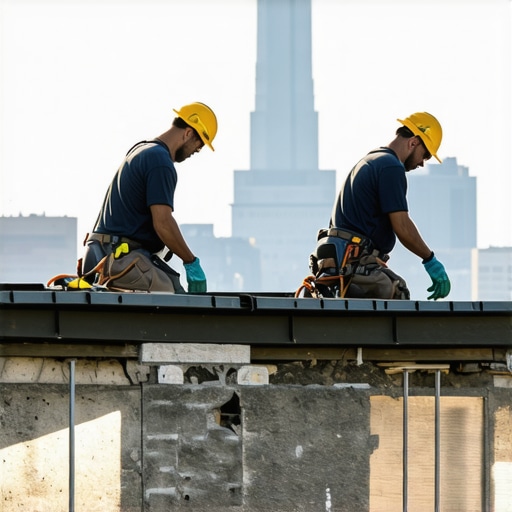
The Forensic Scene: Walking on a Scorched Sponge
Walking on that roof felt like walking on a sponge. I knew exactly what I’d find underneath before I even pulled my flat bar from my belt. It was a 115-degree afternoon in the desert, but on the roof deck, my infrared thermometer was screaming at 162°F. The granules under my boots weren’t just loose; they were swimming. The asphalt had liquefied to the point where the ceramic coating was sinking into the mat. This wasn’t a failure of the material—it was a failure of physics. When people ask why local roofers are suddenly struggling to keep up with the 2026 climate shifts, they’re usually looking for a simple answer. The truth is as messy as a bucket of hot tar.
The Physics of Failure: Why Your Roof is Cooking from the Inside
Most roofing companies are still installing systems based on 2010 weather patterns. They slap down some synthetic felt, nail a few squares of architectural shingles, and call it a day. But in the 2026 heat landscape, your roof isn’t just a shield; it’s a heat sink. We need to talk about thermal expansion and oxidative hardening. Every morning, the sun hits those shingles and they expand. By 2:00 PM, they are at their maximum physical footprint. Then, a sudden afternoon thunderstorm rolls in—a common occurrence in our shifting climate—and the temperature drops 40 degrees in ten minutes. That shingles’ molecular structure tries to contract instantly. That’s thermal shock. Over time, this creates micro-fractures in the asphalt matting. You won’t see them from the ground, but give it two seasons, and those shingles will be as brittle as a saltine cracker.
“A roof is only as good as its flashing, and in extreme heat, that flashing becomes a radiator that can melt the very sealants meant to keep water out.” – Old Roofer’s Adage
The Material Truth: Asphalt vs. The 2026 Sun
If you’re looking at roofing replacements, you have to look past the pretty colors on the brochure. Standard 3-tab shingles are effectively dead in high-heat zones. They don’t have the thermal mass to handle the radiation. Even many ‘Lifetime’ shingles are struggling. Why? Because the ‘Lifetime’ part of the warranty is a marketing gimmick that doesn’t cover ‘Acts of God’ or ‘Extreme Weather Events’—which is basically every Tuesday now. When local roofers try to sell you on a standard shingle, they are betting that you’ll sell the house before the roof fails in eight years. If you’re staying put, you need to look at polymer-modified (SBS) shingles. These are ‘rubberized’ asphalt. They can handle the expansion and contraction cycles without the matting tearing itself apart at the nails. I’ve seen ‘shiners’—those missed nails—literally work their way out of the deck because the thermal movement was so violent it backed the galvanized steel right out of the plywood.
The Attic Bypass: Your Ventilation is Lying to You
The biggest mistake I see roofing companies make isn’t the shingles; it’s the ventilation. You can have the best material in the world, but if your attic is 150 degrees, you’re baking your roof from the bottom up. Most houses have ‘passive’ ventilation—a few soffit vents and a ridge vent. In a 2026 heat wave, passive isn’t enough. You need to understand the ‘Chimney Effect.’ If your intake vents are blocked by insulation or bird nests, the ridge vent starts pulling air from the conditioned space of your house. You’re literally paying to air-condition your attic while your roof dies. We’re seeing a massive shift toward solar-powered active ventilation that can move 1,500 cubic feet of air per minute. Without it, the plywood decking undergoes ‘pyrolysis’—a slow chemical breakdown from heat that eventually turns the wood into something with the structural integrity of a digestive biscuit.
“Roof systems shall be designed and installed in accordance with this code and the approved manufacturer’s installation instructions.” – IRC Building Code R905.1
The Trap: Why the Lowest Bid is a Death Sentence
I’ve spent half my career fixing ‘cheap’ roofs. In 2026, the ‘cheap’ guy is skipping the starter strip or using a low-grade D-edge that warps the second it hits 100 degrees. They use staples instead of nails because it’s faster. In high heat, staples have zero holding power. When the wind picks up, those shingles will flap like a deck of cards. A professional roofing setup requires a holistic approach: a high-temp ice and water shield (even in the desert, because it handles heat better than standard felt), stainless nails to prevent galvanic corrosion, and a cricket behind the chimney that is flashed with more precision than a Swiss watch. If your contractor doesn’t mention ‘thermal bridging’ or ‘radiant barriers,’ they aren’t a roofing specialist; they’re a shingle-installer. There’s a massive difference.
The Final Verdict: Demand More from Your Local Roofers
Don’t let them tell you that ‘heat is just part of living here.’ The 2026 heat waves require a different breed of engineering. You need to look for local roofers who understand the chemistry of the products they are installing. Ask about the ‘Albedo Effect’ of the shingle granules. Ask how they plan to handle the expansion joints. If they look at you like you’re speaking Greek, show them the door. Your roof is the only thing between you and a very expensive interior renovation. Water is patient, but heat is aggressive. It will find the weakness in your valleys and your flashing before the first raindrop even falls. Protect your investment by choosing a system designed for the future, not the past.
This post really hits home about how much the climate shift is forcing us to rethink roofing materials and installation techniques. I recently had my own roof inspected, and I was surprised to learn that many traditional shingles simply aren’t built to withstand these new extremes. It’s interesting to see the emphasis on SBS polymer-modified shingles, which I’ve started hearing more about locally. Besides material upgrades, I think proper attic ventilation is often overlooked, yet it plays such a crucial role in maintaining roof integrity. Since I live in an area that has been experiencing more intense heat waves, I’ve been curious about how much difference active solar ventilation systems can make. Has anyone here installed these systems? Do they significantly extend the lifespan of your roof or reduce energy costs? I’d love to hear some real-world experiences or recommendations on what works best in these extreme conditions.