
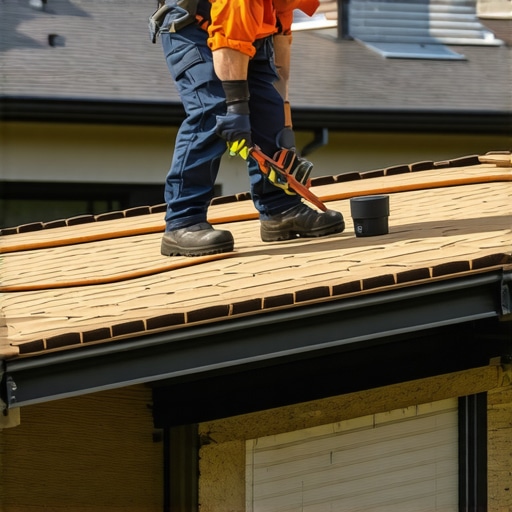
The Forensic Autopsy of a Failing Roof
The first sign isn’t usually a waterfall. It’s a single, rhythmic thwip-thwip-thwip hitting a mahogany dining table at 2:00 AM while a tropical depression churns outside. You look up, and there it is: a tea-colored stain spreading like a bruise on your ceiling. Most homeowners call local roofers and expect a bucket of tar to fix the problem. But as someone who has spent two and a half decades peeling back layers of rot, I can tell you that a leak is rarely about the shingles. It is almost always about the flashing—those thin strips of metal that are supposed to bridge the gaps where your roof meets a wall, a chimney, or a valley.
My old foreman used to say, ‘Water is patient. It will wait for you to make a mistake. It doesn’t need a hole; it just needs an invitation.’ That invitation is usually a poorly executed transition. In the humid, wind-battered climates of the Southeast, where rain doesn’t just fall—it attacks sideways at 60 miles per hour—those invitations lead to disaster. When I walk onto a roof and see a glob of caulk where a kick-out flashing should be, I don’t see a repair; I see a forensic crime scene in progress.
The Physics of Failure: Beyond the Shingle
To understand why roofing companies are changing their approach in 2026, you have to understand the physics of water movement. Most people think water moves straight down. In a laboratory, maybe. On a roof in a hurricane-prone zone, water is subject to capillary action and hydrostatic pressure. Surface tension allows water to ‘climb’ behind metal that isn’t properly lapped. When wind hits a vertical wall, it creates a high-pressure zone that forces moisture upward, underneath the shingles, and directly into your wall cavity.
I’ve seen ‘shiners’—those missed nails that hit the gap between the rafters—act like cold-conduits for moisture. In the heat of a 140°F attic, that moisture evaporates, hits the underside of the cold roof deck, and rains back down inside your insulation. By the time you see that spot on your ceiling, the structural header above your window has likely been wet for six months. It’s probably turned to the consistency of wet cardboard. This is the ‘oatmeal’ effect, and it’s why a ‘cheap’ roof is the most expensive thing you’ll ever buy.
“Flashings shall be installed in a manner that prevents moisture from entering the wall and roof through joints in copings, through moisture-permeable materials and at intersections with parapet walls and other penetrations.” – International Residential Code (IRC) R903.2
[IMAGE_PLACEHOLDER]
The 2026 Standard: How Elite Local Roofers Stop the Bleed
In 2026, the standard for roofing companies has shifted from ‘shedding’ water to ‘sealing’ against it. We no longer rely on simple galvanized steel that rusts through in ten years. We are moving toward Kynar-coated aluminum or stainless steel, especially in salt-air environments. But the material is only 10% of the battle. The real work happens in the integration.
Modern ‘Forensic’ roofing involves a three-layer defense at every transition. First, we install a high-temp, self-adhering secondary water resistance (SWR) membrane that extends at least 12 inches up the vertical wall. This isn’t your grandfather’s felt paper; this is a rubberized asphalt that ‘heals’ around the nail shank. Second comes the step flashing. Each piece of metal must be woven into the shingle courses, not just laid on top and smeared with ‘goop.’ If a contractor pulls out a caulk gun before a hammer, fire them on the spot.
The third layer is the counter-flashing. In 2026, we are seeing more roofing companies grinding ‘reglets’ into brick chimneys to tuck the metal inside. This creates a mechanical lock that wind-driven rain cannot bypass. We also focus heavily on the ‘cricket’—that small peaked structure behind a chimney. Without a properly sized cricket, water pools, creates a dam, and eventually finds a way through the smallest pinhole in the solder.
The Surgery vs. The Band-Aid
When you call local roofers for a repair, you are often offered a ‘sealant’ package. That’s a Band-Aid on a gunshot wound. If the flashing has failed, the only real fix is ‘The Surgery.’ This involves tearing off at least two squares of shingles around the affected area, removing the old, rusted metal, and checking the plywood for delamination. If that wood is soft, it must be replaced. You cannot nail new flashing into rotten wood; the nails won’t hold, and the next wind storm will vibrate the metal loose, starting the cycle all over again.
We also look for ‘thermal expansion’ issues. Metal and wood expand at different rates. In the desert heat of the Southwest or the humid afternoons of the South, a 10-foot piece of continuous flashing will buckle if it isn’t installed with expansion joints. That buckling creates ‘fish-mouth’ openings that suck in water during the next downpour.
“A roof is only as good as its flashing.” – National Roofing Contractors Association (NRCA)
The True Cost of Waiting
Many homeowners ignore a small leak because they are afraid of the price tag. But here is the cynical truth from a veteran: a $1,500 flashing repair today prevents a $15,000 mold remediation and structural rebuild next year. Water doesn’t just rot wood; it attracts termites, ruins R-value in your insulation, and creates the perfect dark, damp environment for black mold. If you see a local roofer who doesn’t talk about ‘wind-uplift ratings’ or ‘secondary water barriers,’ they aren’t a roofer—they’re a shingle flipper. Protect your investment by demanding forensic-level flashing standards.