
The Anatomy of a Quiet Disaster: Water in the Recessed Lighting
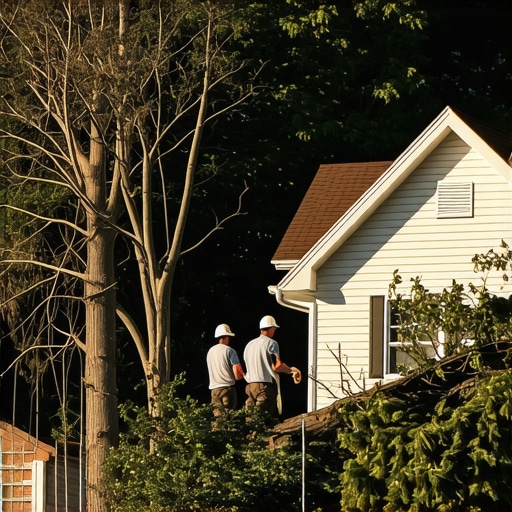
The call came in at 2:00 AM. Not from a storm, but from a clear night where the only sound was a steady drip-drip-drip inside a kitchen in a quiet suburb. When I arrived, the homeowner was pointing at a puddle on their granite island. I didn’t look at the ceiling first; I looked at the massive white oak hovering over the north slope of the house. Most local roofers will tell you a tree is just a shade provider, but after 25 years in the trades, I see them as siege engines. That tree was holding moisture against the shingles like a damp rag, and the cooling effect had created a micro-climate that turned the attic into a swamp. This isn’t just about ‘branches hitting the house’; this is forensic roofing in 2026, where we deal with the biological and physical fallout of urban forestry. My old foreman used to say, ‘Water is patient. It will wait for you to make a mistake.’ And that oak tree was the accomplice water needed to find the one shiner—a missed nail—that the original installer left behind a decade ago.
The Physics of Tree-Driven Failure: Mechanism Zooming
When we talk about roofing hazards, people imagine a trunk snapping in half. While that happens, the real profit-killer for homeowners is the ‘Slow Scour.’ As wind moves through a canopy, the smaller peripheral branches engage in a rhythmic scrubbing motion against the granule surface of your asphalt shingles. Think of it like 80-grit sandpaper. Once those ceramic granules are scrubbed off, the underlying bitumen (asphalt) is exposed directly to UV radiation. Without the granules to reflect the sun, the asphalt ‘cooks,’ becomes brittle, and cracks. This creates a capillary path. Water doesn’t just fall into your house; it uses capillary action to pull itself uphill under the shingle laps, especially when a layer of wet leaves acts as a dam. Roofing companies that know their salt look for these ‘bald spots’ during inspections because they are the precursors to total deck rot.
“A roof is only as good as its flashing, and no flashing can withstand the constant hydraulic pressure of a debris-clogged valley.” – Old Roofer’s Adage
The ‘Oak and Ice’ Belt: A Northeast Perspective
In colder regions, trees aren’t just a threat in the summer. They are the primary architects of the ice dam. A dense canopy prevents the sun from melting the snow-load on specific sections of the roof. Meanwhile, heat escaping from the attic bypasses—those little gaps around light fixtures and plumbing stacks—melts the snow from underneath. This melt-water runs down to the cold eaves, where the tree shade has kept the temperature well below freezing, and stays there. In 2026, local roofers are seeing an increase in ‘structural moss’—moss that grows so thick in these shaded, damp zones that its rhizoids actually lift the shingles. We’re not just talking about a green stain; we’re talking about biological organisms prying your roof apart to reach the plywood. Once that moisture hits the roof deck, the plywood turns to something resembling wet cardboard. Walking on it feels like walking on a sponge; you can feel the R-value of your insulation dying beneath your boots as it soaks up the liquid.
The Forensic Fix: Surgery Over Band-Aids
When a tree has compromised a section of the roof, you can’t just slap some caulk on it and call it a day. That’s the ‘Trunk Slammer’ method. True roofing repair involves what I call ‘The Surgery.’ We have to strip the affected squares down to the bare rafters. If the tree has caused long-term shading, we almost always find thermal bridging issues where the rafters themselves have started to check or twist from the constant humidity. We install a high-temp Ice & Water Shield—a self-adhering membrane that seals around every nail penetration—extending it at least six feet up from the eaves to combat the tree-shaded ice dams. Then, we look at the cricket. If you have a chimney or a large dormer near that tree, you need a custom-fabricated metal diverter to ensure that those falling leaves don’t stack up and create a backyard pond on your roof. Roofing companies in 2026 must be part-arborist, part-engineer.
“The building envelope must be viewed as a continuous system, where every penetration is a potential point of failure if the surrounding environment is not controlled.” – IRC Building Code Commentary
Protecting the Investment: The 2026 Contractor Reality
Don’t be fooled by a ‘Lifetime Warranty’ when a tree is involved. Most manufacturers have a ‘Force Majeure’ or ‘Act of God’ clause that lets them off the hook if a limb punctures the membrane. You need a contractor who understands uplift ratings and secondary water resistance. If your local roofers aren’t talking about stainless nails in high-corrosion zones or the static pressure of your attic ventilation, they are just selling you a commodity, not a solution. The cost of waiting for the tree to finish its job is always higher than the cost of a proactive valley clean-out and a strategic limb-trim. When you see that first sign of moss or that first ‘shiner’ leaking in the attic, the clock is already ticking. Your roof is a shield, but even the best shield fails if you let the enemy sit on top of it for a decade.