
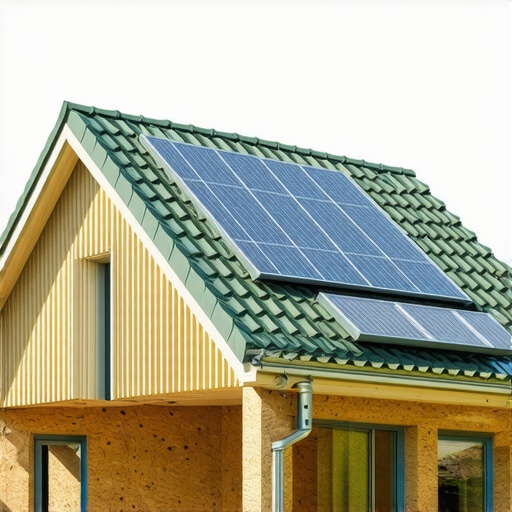
The 140-Degree Attic Autopsy: Why Your Roof Is Bleeding Cash
Walking on that roof felt like walking on a sponge soaked in boiling water. I knew exactly what I’d find underneath before I even pulled the first shingle. The homeowner was complaining about an AC bill that looked like a car payment, and as soon as I stepped onto the deck, the heat radiating through my work boots told the whole story. In places like Phoenix or Dallas, your roof isn’t just a lid; it’s a thermal battery. If it’s poorly designed, it’s charging up all day and dumping that heat directly into your living room all night. Most roofing companies will just slap on another layer of asphalt and call it a day, but that’s like putting a black sweater on a marathon runner in July. We’re going to talk about the physics of heat transfer—conduction, convection, and radiation—and why your current setup is probably failing all three tests.
“Thermal performance is not an additive of materials, but a systemic orchestration of airflow and reflectance.” – Modern Building Science Axiom
When we talk about ‘eco-friendly’ roofing, people get stars in their eyes thinking about solar panels. Forget the gadgets for a second. We need to talk about the Square—that 100-square-foot unit of measurement we live by. Every square of your roof is currently absorbing solar radiation. If you’re using traditional dark organic felt and cheap 3-tab shingles, you’re essentially baking your plywood deck until it becomes brittle. This is where thermal energy loss (or in the South, thermal gain) ruins your home’s efficiency. Let’s break down the three ways to actually stop the bleed.
1. The Reflective Shield: Fighting Radiant Heat at the Surface
The first line of defense is the most obvious but the most mismanaged. Most local roofers will try to sell you on ‘Cool Roof’ shingles. Here’s the trade truth: color matters, but chemistry matters more. Standard asphalt shingles are basically rocks held together by oil. Oil holds heat. When the sun beats down, that thermal mass stays hot long after the sun goes down. To truly lower heat loss, you need materials with high solar reflectance and high infrared emittance. We’re talking about metal roofs with Kynar 500 finishes or specialized warehouse roof cooling techniques applied to residential scales. These materials don’t just ‘stay cool’; they actively reject the energy back into the atmosphere before it ever touches the roof deck. If you’ve ever touched a silver car versus a black car in August, you understand the mechanism. By choosing a material that doesn’t act as a heat sink, you reduce the ‘Thermal Shock’ that causes shingles to curl and crack prematurely.
2. The Ventilated Buffer: Convection and the ‘Attic Chimney’ Effect
I’ve seen more roofs destroyed by a lack of air than by a surplus of water. In the Southwest, your attic is a pressure cooker. If you don’t have a proper Valley and ridge vent system, that heat has nowhere to go. It sits against the underside of your roof deck, cooking the wood from the inside out. This is where you’ll start to see hidden decking plywood decay because the extreme heat causes the resins in the wood to fail. To fix this, we use the stack effect. Cool air comes in through the soffits and hot air rises out the ridge. But here’s the catch: most roofing contractors don’t calculate the Net Free Vent Area (NFVA). They just cut a hole and pray. If the intake doesn’t match the exhaust, the air stagnates. You need a continuous flow to strip the heat away from the underside of the shingles. Think of it as a cooling vest for your house. Without it, your shingles are essentially being fried from both sides.
“A roof is only as good as its flashing.” – Old Roofer’s Adage
3. High-Performance Underlayment: The Thermal Break
This is where the ‘trunk slammers’ save money and you lose it. They use old-school #15 or #30 pound felt. That stuff is basically paper soaked in tar. It’s a heat conductor. If you want a real eco-friendly setup, you have to move to synthetic underlayment. These modern membranes act as a thermal break. Some even come with a radiant barrier backing that reflects up to 97% of radiant heat back out. When we install these, we’re looking for ‘Shiners’—nails that missed the rafter. In a poorly insulated roof, those shiners will actually collect condensation in the morning and drip, making you think you have a leak when you actually have a physics problem. A high-quality synthetic layer, combined with proper attic energy heat loss prevention strategies, creates a multi-layered defense that keeps the attic temperature within 10 degrees of the outside air, rather than 40 or 50 degrees higher.
The ‘Lifetime Warranty’ Trap and Choosing a Contractor
Don’t get suckered by the big ‘Lifetime Warranty’ stickers. Most of those warranties are prorated and don’t cover ‘Acts of God’—which apparently includes the sun in Arizona according to some fine print. If a contractor doesn’t mention crickets (those small peaks behind chimneys to divert water and heat) or fails to inspect your intake vents, they aren’t looking at your roof as a system; they’re looking at it as a paycheck. You need a crew that understands how to seal the envelope. When interviewing roofing companies, ask them about their plan for thermal energy loss. If they look at you sideways, move on. You want someone who understands that a cool roof is a dry roof. Heat is the catalyst for almost every type of material failure we see in the field. Solve the heat, and you solve the longevity. It’s not just about saving the planet; it’s about saving your roof deck from turning into charcoal over the next twenty years.