
The Anatomy of a Hidden Warehouse Disaster
Imagine walking into a 200,000-square-foot distribution center and hearing the rhythmic, heavy thud of water hitting a concrete floor. It is not raining outside. The sun is out, the sky is clear, but the roof is bleeding. This is the reality of poor commercial ventilation. My old foreman used to say, ‘Water is patient. It will wait for you to make a mistake.’ In the world of industrial flat roofs, that mistake is usually ignoring the physics of condensation and air pressure. When you have a massive expanse of flat seams, the roof becomes a giant drum, trapping warm, moist air that has nowhere to go but up into your insulation. If you do not give that air an exit strategy, it will turn your expensive polyisocyanurate into a soggy sponge.
“A roof system’s performance is inextricably linked to the management of air and moisture movement within the building envelope.” – NRCA Building Science Manual
In cold northern climates, the problem is intensified by the stack effect. Warm air from the warehouse floor rises, fueled by heaters or manufacturing processes, and carries moisture toward the cold underside of the roof deck. When that air hits the dew point inside your roof assembly, it liquefies. Without proper venting, this moisture causes [decking rot] that can compromise the structural integrity of the entire building. Local roofers often focus on the surface, but a forensic investigator looks at the ‘breathability’ of the seams. Most roofing companies suggest TPO for its reflectivity, but even the best membrane will fail if the deck underneath is drowning from within.
1. One-Way and Two-Way Pressure Relief Vents
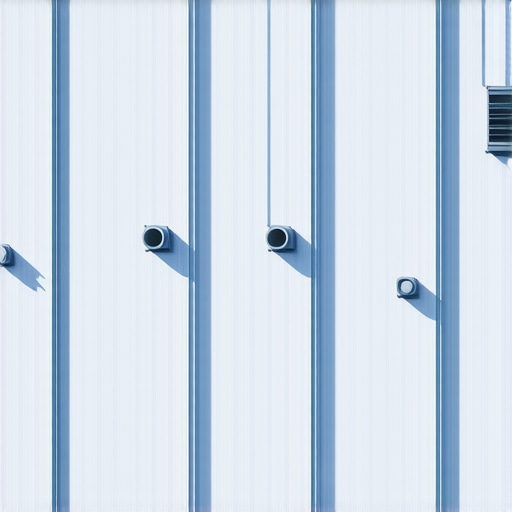
Pressure relief vents are the heavy lifters of the commercial world. These aren’t your standard residential ridge vents; they are rugged, aluminum or plastic stacks designed to equalize the pressure between the roof system and the atmosphere. In a flat seam environment, air gets trapped between the vapor retarder and the membrane. As the sun beats down on a summer day, that trapped air expands, creating ‘balloons’ or blisters in the membrane. These blisters eventually pull at the seams, leading to failure. By installing two-way vents, you allow the system to inhale and exhale. The mechanism here is simple but vital: as the external air pressure drops, the vent allows the internal high-pressure air to escape, preventing the ‘thermal pumping’ effect that stresses your PVC seam welding. Without these, you are essentially asking your roof to hold its breath for twenty years.
2. Parapet and Perimeter Breathing Systems
The edges of a warehouse roof are where the most turbulence occurs. If you don’t vent the perimeter, you’re inviting the air to find its own way out, which usually involves ripping the membrane off the fascia. Modern designs utilize vented nailers and specialized gravel stops that allow air to move from the eave up through the system. This ‘intake’ is critical because it creates a cross-flow under the membrane. If you see [fascia wear] or peeling paint near the roofline, it is a sign that moisture is trapped at the transition point. Local roofers who understand ‘Trade’ know that a ‘shiner’ (a missed nail) in the fascia can act as a bridge for moisture, but a properly vented perimeter mitigates that risk by drying the wood out before it can decay.
3. The Power of Mechanical Exhaust for High-Moisture Interiors
Sometimes, passive venting isn’t enough. If your warehouse involves food processing, large-scale laundry, or heavy machinery that produces heat, the volume of moisture is too high for simple stack vents. In these cases, we look at mechanical exhaust systems integrated into the roof curbs. These units actively pull air from the plenum space between the ceiling and the deck. This reduces the vapor pressure that drives moisture into the insulation. I once saw a roof in a paper mill where the plywood had turned to mush in five years because they relied on passive vents for an active moisture problem. You have to match the ‘venting horsepower’ to the interior environment. If the interior humidity stays above 40% in a cold climate, passive vents are just a suggestion; power venting is a requirement.
4. Sub-Membrane Ventilation Grids
This is the surgical approach to flat seam health. A sub-membrane grid involves creating air channels within the insulation layers, often using a dimpled board or a specialized drainage mat. This grid connects various sections of the roof to the relief vents. It ensures that moisture doesn’t get ‘pocketed’ in a valley or behind a large cricket. Since water follows the path of least resistance, these grids give it a pre-defined highway to the atmosphere. When local roofers find decking rot, it is usually in the low spots where the air was stagnant. By creating a grid, you ensure that every square of the roof is ventilated equally.
“Ventilation is not merely about moving air; it is about controlling the energy and moisture balance of the structure.” – Old Roofer’s Axiom
Ignoring these systems leads to the ‘Surgery’—a full tear-off that costs five times more than a proper venting install. If your current roofing quote doesn’t mention the words ‘air exchange’ or ‘vapor pressure,’ you are being sold a Band-Aid, not a solution. Real roofing is forensic; it is about understanding how the building moves, breathes, and fails. Don’t let your warehouse become a cautionary tale about the patience of water.
[image_placeholder]