
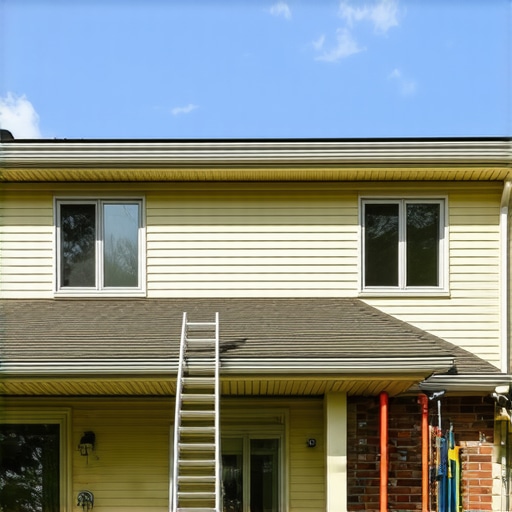
The Anatomy of a Failed Gutter: A Forensic Look at 2026
You hear that sound? It is not just rain hitting the pavement; it is the sound of your foundation slowly eroding because a five-inch piece of thin-gauge aluminum decided to quit. By the time 2026 rolls around, many of the systems installed during the post-2020 housing boom are going to hit a wall. As someone who has spent two and a half decades crawling on steep-slope assemblies and peeling back layers of rotten cedar, I can tell you that water is the most patient trespasser you will ever meet. My old foreman used to say, ‘Water is patient. It will wait for you to make a mistake.’ He was right. Most local roofers can slap a shingle down, but very few understand the hydraulic load requirements of a gutter system during a New England nor’easter.
When we talk about roofing, we often ignore the perimeter. But the gutter is the transition point where the roof’s job ends and the property’s safety begins. If that transition fails, you aren’t just looking at a leak; you are looking at a structural liability. Let’s zoom into the mechanics of why these systems are destined for the repair list.
1. Thermal Fatigue and the Expansion Gap Failure
Metal moves. In a climate like ours, where the temperature can swing sixty degrees in forty-eight hours, the aluminum in your gutters is constantly breathing. By 2026, many ‘seamless’ gutters installed today will have undergone hundreds of these expansion and contraction cycles. This creates a phenomenon known as fastener withdrawal.
“Gutters shall be sloped to promote the flow of water to a downspout and shall be installed in accordance with the manufacturer’s instructions.” – International Residential Code (IRC) R801.3
When the metal expands, it puts immense shear pressure on the spikes or screws holding it to the fascia. If your local roofers used cheap, thin-gauge spikes instead of heavy-duty screw-in hangers, the holes in the wood will eventually wallow out. Once that happens, the pitch is lost. A gutter without pitch is just a long, heavy birdbath hanging off your house. Water sits, it stagnates, and the weight increases exponentially, leading to a total system sag.
2. The ‘Shiner’ Problem and Fascia Rot
In the trade, we call a missed nail a ‘shiner.’ When roofing companies rush a gutter installation, they often miss the rafter tails behind the fascia board. They are essentially mounting the weight of a water-filled trough into nothing but 1-by-6 pine. Over time, the constant tension causes the fastener to pull away, creating a gap between the gutter and the fascia. This is where the physics of capillary action becomes your enemy. Water doesn’t just fall into the gutter; it follows the surface tension of the metal and wicks backward. It finds that gap and begins to soak into the end-grain of your fascia. I have seen plywood that felt like wet cardboard because a roofer forgot to install a proper drip edge. Without that metal flashing tucked into the gutter, the water travels behind the system, rotting the wood from the inside out. You won’t see it from the ground until the gutter literally falls off in a snowstorm.
3. Ice Dam Back-Pressure and Seam Separation
For those of us in the cold zones, winter is a brutal stress test. Ice dams don’t just sit on the roof; they expand into the gutter. When that ice forms, it exerts lateral pressure on the end caps and mitered corners. Most roofing companies use a basic tri-polymer sealant on these joints. By 2026, the UV radiation from the sun will have cross-linked that sealant to the point of brittleness. When the ice expands, it cracks the seal. You won’t notice it in the winter, but during the first heavy spring rain of 2026, you’ll see a steady stream of water pouring out of the corner, right onto your expensive landscaping or, worse, into your basement window well. This isn’t just a nuisance; it’s a hydraulic attack on your foundation.
4. Clogging and the ‘Levee Effect’
Every square of roofing sheds a massive amount of granules over its lifespan. These granules, mixed with organic debris like pine needles and oak tassels, create a heavy, anaerobic sludge in the bottom of the gutter. This sludge holds moisture against the aluminum, leading to pinhole corrosion even in ‘rust-proof’ materials. More importantly, it creates a levee. When the water can’t reach the downspout, it rises until it finds the path of least resistance. Usually, that path is over the back of the gutter and into your soffit vents. I’ve performed forensic inspections where the attic insulation was soaked, not because the roof leaked, but because the gutters were so full that the water ‘backed up’ the slope through hydrostatic pressure.
“A roof is only as good as its flashing and its ability to clear water from the building’s footprint.” – Old Roofer’s Adage
5. Downspout Force and Splash Block Displacement
The final reason for 2026 repairs is the simplest: the exit strategy. A standard 2×3 downspout can move hundreds of gallons during a severe storm. If that water isn’t directed at least six feet away from the foundation, you are essentially hydraulic-mining your own basement. Over five years, the vibration of the water hitting the splash block can shift it, or the soil can settle. Local roofers often skip the transition to underground drainage because it’s ‘not their job.’ But if that water pools at the corner of your house, the soil saturates, the pressure against your foundation wall increases, and eventually, the basement cracks. By 2026, many homeowners who ignored their downspout extensions will be calling a foundation expert instead of a roofer.
The Solution: Don’t Wait for the Collapse
If you wait until you see a waterfall from your second-story eaves, the damage is already done. You need a forensic look. Check your hangers—are they every 24 inches or did the installer cheat and go 36? Look at your drip edge—is it tucked inside the gutter or is it hovering an inch above it? These are the details that separate a ‘trunk slammer’ from a craftsman. If you want to avoid a massive bill in 2026, start looking at your gutters during the next heavy rain. If they are bouncing, sagging, or leaking at the corners, it’s time to fix the physics before you have to fix the structure.