
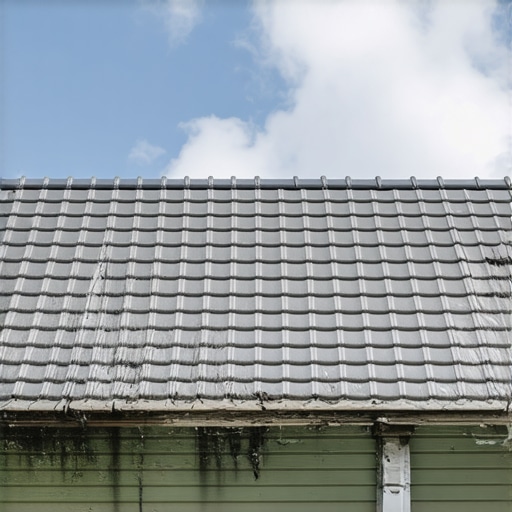
The Smell of a Failing Investment
You never forget the smell. It’s a heavy, cloying scent—a mix of wet potting soil and ancient basement. When I climb a ladder for a forensic inspection and that odor hits me before my head even clears the gutter line, I already know what local roofing companies will find once the shingles are stripped. We are currently seeing a massive spike in premature failures, and by 2026, the industry is bracing for a literal collapse of roof decks that were installed just a decade ago. It isn’t just ‘bad luck’; it is a failure of physics.
My old foreman used to say, ‘Water is patient. It will wait for you to make a mistake.’ He was right. Water doesn’t need a hole the size of a fist; it just needs a microscopic path and a little bit of surface tension. In the cold climates we handle, where the temperature delta between a 70°F living room and a -10°F February night is massive, those mistakes become catastrophic. Most roofing companies are great at ‘slapping and nailing,’ but they are terrible at managing the thermodynamics of a roof deck.
Reason 1: The ‘Vapor Drive’ and the Plastic Bag Effect
The first reason we are seeing a 2026 rot crisis is the misuse of synthetic underlayments. For years, roofing companies transitioned from traditional #30 felt to fancy, high-tech synthetics. These are great for keeping the crew dry during a rain delay, but they have a dark side: they don’t breathe. In our northern climate, warm, moist air from your shower and your stove leaks into the attic through ‘attic bypasses’—tiny gaps around chimney flues or recessed lighting. This is called thermal bridging.
Once that warm air hits the underside of the cold plywood, it reaches its dew point. It turns into liquid water. In the old days, a bit of moisture could escape through the felt. Now, with a non-permeable synthetic ‘plastic bag’ wrapped over the deck, that water is trapped. It soaks into the OSB (Oriented Strand Board). I’ve seen decks where the glue holding the wood chips together has completely emulsified, turning the structural deck into something with the structural integrity of oatmeal. This is the result of vapor drive moving from the warm interior to the cold exterior, hitting an impenetrable wall. When the wood stays at 20% moisture content for more than a few weeks, the fungi Serpula lacrymans begins its feast.
“The roof shall be designed and constructed to prevent the accumulation of water.” – International Residential Code (IRC) R903.1
Reason 2: The ‘Shiner’ Epidemic and Capillary Action
If you want to know why your local roofers are busy, look at their nail guns. A ‘shiner’ is a nail that misses the rafter. It’s a common sight: a bright, galvanized shank sticking out of the plywood in the attic. During a cold snap, these nails become frost magnets. Because they are connected to the cold exterior shingles, they act as tiny heat sinks. Frost builds up on the nail inside the attic, and when the sun hits the roof, that frost melts, dripping directly into the plywood surrounding the nail hole.
This is where capillary action takes over. Water is a polar molecule; it wants to climb. It gets sucked into the end-grain of the plywood. Over a few seasons, the wood around the nail rots, the nail loses its ‘grip,’ and you get a shingle that flaps in the wind. This isn’t just a leak; it’s a systemic failure of the structural interface. By 2026, the millions of shiners driven during the post-pandemic housing boom will have had enough cycles to completely hollow out the surrounding wood. When roofing companies tell you that you need a full deck replacement, this is why—you can’t nail a new roof into Swiss cheese.
Reason 3: The Death of the ‘Cricket’ and Valley Neglect
The third reason for the 2026 rot surge is the ‘dead valley.’ Modern architecture loves complex rooflines with multiple gables. Every time two roof planes meet, they form a valley. If that valley terminates into a vertical wall without a cricket (a small false roof designed to divert water), you have a recipe for disaster. Roofing companies often skip the cricket because it’s time-consuming to frame.
Without it, water doesn’t just flow; it damps. It pools against the siding, works its way behind the step flashing, and begins to rot the fascia boards and the deck from the edge inward. I’ve performed ‘surgery’ on roofs where the homeowner thought they had a small gutter leak, only to find that the hydrostatic pressure of standing water had pushed moisture six feet up the slope under the shingles. This isn’t a band-aid fix; it’s a full-scale tear-off. You can’t just caulk your way out of a structural drainage error.
“A roof is only as good as its flashing.” – Old Roofer’s Adage
The Surgery: Fixing the Rot
If you suspect your deck is soft, don’t wait for a ceiling stain. By the time water shows up on your dining room table, the wood has been rotting for three years. A quality contractor won’t just offer a cheap overlay. They will insist on a forensic strip-down to inspect the substrate. We look for ‘spongy’ spots during the walk-through—if the deck gives under my boot, it’s a goner. The fix involves removing the compromised squares of plywood, addressing the attic ventilation to stop the ‘plastic bag’ effect, and ensuring every valley has the proper diversion geometry. It’s expensive, yes. But replacing a roof on top of rotten wood is like putting a new engine in a rusted-out frame. It’s a waste of money that won’t last the next storm cycle.