
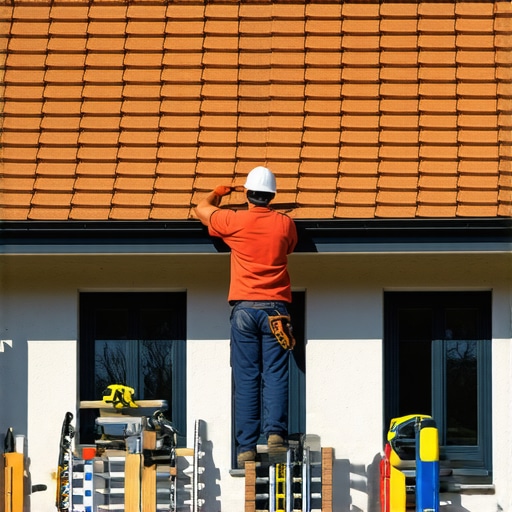
The Marketing Gloss vs. The Roof Deck Reality
You are standing in your driveway, squinting at a glossy brochure while a salesman in a polo shirt talks about ‘performance’ and ‘curb appeal.’ I’ve spent twenty-five years on the roof deck, and I can tell you that the brochure won’t keep your living room dry when a tropical depression decides to park itself over your zip code. My old foreman, a man who had calluses thicker than a standard three-tab shingle, used to say, ‘Water is patient. It will wait for you to make a mistake.’ He wasn’t talking about a hurricane; he was talking about the microscopic gaps left by local roofers who prioritize speed over seal. In the Southeast, we aren’t just fighting rain; we are fighting humidity that wants to turn your plywood into a petri dish and UV radiation that cooks asphalt until it’s as brittle as a soda cracker. Choosing a shingle for 2026 isn’t about color—it’s about understanding the forensic failure of the materials that came before.
“A roof is only as good as its flashing.” – Old Roofer’s Adage
1. The Physics of Hydrostatic Pressure and Capillary Action
When you look at a shingle, you see a flat piece of material. When I look at it, I see a potential highway for water. In 2026, the best shingle selection focuses on the ‘bond line.’ Most local roofers will tell you that the weight of the shingle keeps it down. They’re wrong. It’s the thermal sealant strip. If that strip doesn’t engage because of dust during installation or poor manufacturing, you’re inviting capillary action. This is the mechanism where water literally defies gravity, pulling itself upward between the overlapping layers of shingles. Once it clears the top of the shingle, it hits the underlayment. If your roofing companies used cheap felt instead of a synthetic high-perm wrapper, that moisture stays there. It sits against the nail shank, following it down like a silver thread into your decking. By the time you see a brown spot on the ceiling, the ‘shiner’—that missed nail—has been rusting for two seasons, and the wood around it is the consistency of wet cardboard.
2. The SBS-Modified Bitumen Revolution
Standard oxidized asphalt is a 20th-century relic. For 2026, if you aren’t looking at SBS-modified shingles (Styrene-Butadiene-Styrene), you’re buying a roof that’s already aging out. Think of SBS as adding rubber bands to the asphalt matrix. In our climate, where the roof surface can hit 160°F by noon and then get slammed by a 70°F rain shower in ten minutes, thermal shock is the silent killer. Standard shingles expand and contract so violently that the granules lose their grip and wash into your gutters like black sand. An SBS-modified shingle has ‘memory.’ It stretches and recovers. This flexibility is what prevents the hairline fractures that allow UV rays to reach the internal fiberglass mat. Once that mat is exposed, the shingle’s structural integrity is gone. You want a material that behaves like a gasket, not a ceramic plate.
3. The Algae War: Beyond the 10-Year Promise
Those black streaks on your neighbor’s roof aren’t dirt; they’re Gloeocapsa magma. It’s a cyanobacteria that eats the calcium carbonate in your shingles. Most local roofers sell ‘algae-resistant’ shingles that rely on a thin coating of copper. The problem? That copper washes off in about seven years. For 2026, look for shingles with high-density copper granules embedded throughout the layer. You want a steady release of copper ions over twenty years, not a quick burst that leaves you with a zebra-striped roof before the mortgage is paid off. When interviewing roofing companies, ask specifically about the granule density. If they look at you like you’ve grown a second head, they’re just ‘trunk slammers’ looking for a quick buck.
“The building envelope must be viewed as a system of integrated components, where the failure of one leads to the catastrophic degradation of the whole.” – Architectural Axiom
4. Wind Uplift and the Secondary Water Barrier
In the Southeast, wind doesn’t just blow; it sucks. The Bernoulli effect creates a vacuum over your roof during high-wind events, trying to peel those shingles back like a banana. The 2026 selection process must prioritize ‘Class H’ wind ratings, but more importantly, the installation of a self-adhering secondary water resistance (SWR) layer. In the trade, we call this the ‘safety net.’ If the wind manages to rip a square—that’s 100 square feet—of shingles off, the SWR keeps the house dry. Without it, you’re one missing tab away from a total interior loss. Local roofers who skip the SWR to save five hundred dollars on their bid are gambling with your attic. I’ve seen attics where the heat was so intense it delaminated the plywood because the ventilation was choked, and when the shingles finally blew, the wood just disintegrated.
5. The Warranty Trap: Decoding the Fine Print
Every salesman loves the word ‘Lifetime.’ In the roofing world, ‘Lifetime’ usually means ‘until we decide it’s too old.’ Most warranties are pro-rated, meaning after ten years, they cover about 20% of the material cost and zero percent of the labor. For 2026, the only warranty worth the paper it’s printed on is a manufacturer-backed ‘No-Dollar-Limit’ (NDL) warranty that includes labor. To get this, you must use a certified contractor who installs a complete system from one manufacturer: the starter strip, the drip edge, the underlayment, the shingles, and the ridge vents. If you mix and match brands, the manufacturers will point fingers at each other the moment a leak develops. Don’t let local roofers ‘frankenstein’ your roof with leftover rolls of valley tin and cheap ridge caps.
Final Forensic Thoughts
The sound of a properly installed roof in a storm is a dull thud, not a flapping shingle. It’s the sound of peace of mind. If you choose based on the lowest bid, you’re just pre-paying for your next repair. Find a contractor who talks about ‘hydrostatic head’ and ‘thermal bridging’ rather than one who just wants to show you a color chart. A roof is a machine designed to shed energy and water. Make sure yours is built for the 2026 climate, not the 1990s standards.