
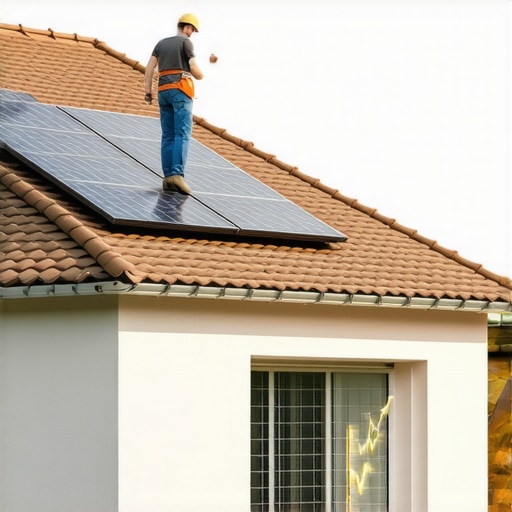
The Forensic Scene: Why Your Roof is Shouting Before You Listen
Walking on that roof felt like walking on a sponge. I knew exactly what I’d find underneath before I even pulled my hammer. The homeowner was talking about solar savings and 2026 tax credits, but his decking was screaming for mercy. In the high desert heat, I’ve seen 30-year shingles turn into brittle potato chips in less than a decade. You see, the sun doesn’t just shine here; it assaults the molecular structure of your home. Most local roofers will slap a quote on your desk and walk away, but a forensic vet knows that if you put solar panels over a dying roof to save a buck, you’re just burying a time bomb under a $30,000 glass investment. When the asphalt starts to off-gas and the oils migrate out of the shingle, you lose the ability to shed water. That’s when the thermal shock sets in. Every day at 2:00 PM, your roof hits 160°F, then it drops to 60°F at night. This expansion and contraction pull at every nail, every shiner, and every valley. Before we talk about the 2026 rebates, we have to talk about whether your roof can survive the surgery.
“A roof is only as good as its flashing.” – Old Roofer’s Adage
1. The Physics of the Substrate: Decking and Thermal Expansion
The first way to identify true solar savings is to look through the shingles, not at them. Most roofing companies focus on the top layer, but the real story is in the plywood. In regions like Texas or Arizona, the attic is a furnace. If your local roofers didn’t install a radiant barrier or if your ventilation is choked, that heat has nowhere to go but up through the wood. Over time, the lignin in the plywood breaks down. When you mount solar racking, you’re adding point-load stress to a material that’s already lost its structural ‘fight.’ If you see ‘crow’s feet’ or sagging between the rafters, your 2026 savings will be eaten by the cost of removing the panels just to fix a rotted deck. I’ve seen squares of roofing that looked fine from the ground but were held together by nothing but habit and gravity. You need a contractor who understands capillary action—the way water gets sucked uphill under a shingle when a solar bracket interrupts the natural flow. If they aren’t talking about double-flashing those penetrations, they aren’t saving you money; they’re inviting the rain to stay for dinner.
2. The Ventilation Gap: Why Solar Shading Isn’t Always a Win
Common wisdom says solar panels shade the roof, making the house cooler. That’s true, but it changes the physics of how the roof breathes. When local roofers install a system, they often ignore the ridge vents or the intake at the soffit. In the desert, airflow is the only thing keeping your shingles from baking from the inside out. If the solar array creates a pocket of stagnant, super-heated air, it can actually accelerate the degradation of the surrounding shingles. We look for ‘thermal bridging’ where the heat from the panels transfers through the mounts into the attic. A pro will check your attic for ‘bypass’ leaks—places where conditioned air from your house escapes into the attic, meeting that desert heat and causing dry rot. The 2026 solar incentives are designed to make your home an energy fortress, but if your roofing setup doesn’t account for this altered airflow, you’re just creating a greenhouse effect under your shingles. I always tell the young guys: water is patient, but heat is relentless. It will find the weak link in your starter strip or your drip edge and exploit it until your insulation is a soggy mess.
“Adequate ventilation shall be provided to the attic space by means of vents in the exterior walls or roof of the building.” – International Residential Code (IRC) R806.1
3. Material Longevity vs. Marketing Hype: The 2026 Reality
The third way to identify savings is to ignore the ‘Lifetime Warranty’ stickers. In the trade, we know those warranties are written by lawyers to protect the manufacturer, not your wallet. If you’re eyeing the 2026 solar window, you need a material that matches the 25-year lifespan of the panels. Putting panels on a 15-year-old asphalt roof is a disaster. You want to see roofing companies recommending high-reflectivity shingles or, better yet, concrete tile or standing seam metal for high-UV zones. These materials handle the thermal expansion without the granular loss that plagues cheap asphalt. Look at your crickets—those little diversions behind the chimney. If they’re rusted or full of debris, your roof is already failing. Local roofers who know their craft will insist on a full tear-off down to the bones. They’ll look for shiners—those nails that missed the rafter and now act as cold-conduits for condensation. Every one of those is a potential leak point once the solar rack starts vibrating in the wind. To actually capture those 2026 savings, you have to ensure the interface between the solar foot and the roof deck is bulletproof. That means no ‘caulk and walk’ jobs. It means real metal flashing, integrated into the valley and the drip edge. Anything less is just a temporary patch on a permanent problem.