
The Anatomy of a Midnight Disaster
The sound usually starts as a rhythmic tapping, a slow metronome of misery against your drywall. By the time you notice the yellow stain blossoming on your ceiling, the battle is already lost. I have spent twenty-five years peeling back layers of failed promises left behind by local roofers who prioritize speed over physics. Walking on that roof felt like walking on a sponge. I knew exactly what I’d find underneath: a graveyard of rotted OSB and rusted nails that had long since surrendered their grip. This isn’t just about ‘leaks’ anymore; we are heading into 2026 facing a massive wave of flashing failures that will catch most homeowners completely off guard. Most roofing companies are still installing systems based on 1990s climate data, ignoring the reality of thermal cycling and material fatigue that defines our modern environment.
The Physics of the Failure: Mechanism Zooming
To understand why your roof is destined to fail, you have to understand how water behaves at the microscopic level. Water is patient, and it is governed by capillary action. This is the process where liquid is drawn into small spaces—like the gap between a shingle and a poorly installed piece of step-flashing—without the assistance of, or even in opposition to, external forces like gravity. When a roofer misses a cricket installation behind a wide chimney or fails to properly seat the metal against the masonry, they aren’t just leaving a gap; they are creating a straw that sucks moisture directly into your attic. In the cold North, this issue is magnified ten-fold. When snow accumulates against a wall, the bottom layer melts due to heat loss from the house—what we call an attic bypass. That water then hits the cold flashing, freezes, expands, and physically pries the metal away from the wood. This cycle repeats thirty times a winter until the ice and water shield is shredded.
“A roof is only as good as its flashing. Without proper integration between the drainage plane and the structural penetrations, the highest-grade shingle becomes little more than expensive wallpaper.” – Old Roofer’s Adage
Reason 1: The Curse of Galvanic Corrosion
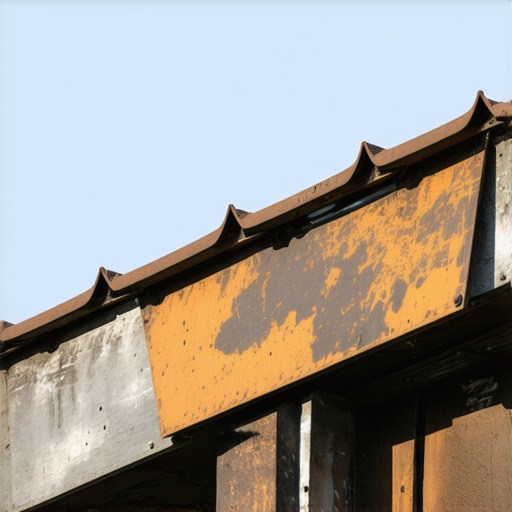
One of the primary reasons we are seeing failures spike is the improper mixing of metals. Many roofing companies are trying to cut costs by using standard galvanized steel flashing with copper components or high-end aluminum gutters. In the presence of moisture—especially in areas with high salt content or acidic rain—these metals undergo a chemical reaction. The more ‘noble’ metal will literally eat the other one. I have seen valleys where the flashing had turned to a lace-like mesh because the installer used the wrong nails. If you aren’t using stainless steel fasteners in high-corrosion zones, you are building a ticking time bomb. A square of roofing might look fine from the street, but underneath, the fasteners are turning back into iron ore.
Reason 2: Reliance on ‘The Goop’ Instead of Mechanical Bonds
Modern roofing has become obsessed with sealants. If a joint looks tricky, the average installer just squeezes a tube of polyurethane caulk into the hole and calls it a day. But here is the trade secret: caulk is a maintenance item, not a permanent building material. In the extreme temperature swings of the Northeast, where a roof can go from -10°F to 140°F in the span of a few months, the thermal expansion of the metal flashing is vastly different from the expansion of the wood or masonry it is attached to. This difference in movement creates a shearing force that tears the sealant apart within three to five years. By 2026, the ‘miracle’ caulks applied during the post-2020 building boom will have reached their limit. Proper flashing requires a mechanical bond—a reglet cut into the brick or a true counter-flashing that allows the materials to move independently without breaking the water seal.
“The building envelope must be designed to shed water through gravity and overlapping layers, not through the chemical adhesion of sealants.” – Principles of Forensic Architecture
Reason 3: The ‘Shiner’ Epidemic and Fastener Fatigue
When you hire cheap local roofers, you are often paying for speed. This leads to shiners—nails that were driven blindly and missed the rafter, or worse, were driven through the flashing at the wrong point. A nail through the face of the flashing is a direct conduit for water. Over time, the constant vibration of the wind causes the shingle to flap, which pulls at the nail. This creates an enlarged hole in the metal. Because the flashing is hidden under the shingles, you won’t see the wood rot until your foot goes through the deck during a routine inspection. We are seeing more of this now because the OSB (Oriented Strand Board) used in modern homes doesn’t handle moisture as well as the old-growth plywood of forty years ago. Once it gets wet, it loses its structural integrity and becomes about as strong as a wet cardboard box.
The Solution: The Surgery Over the Band-Aid
If you suspect your flashing is failing, do not let a contractor tell you they can ‘reseal’ it. You need a forensic approach. This means tearing off the shingles around the penetration, inspecting the wood for ‘oatmeal’ texture, and reinstalling the metal using the proper overlapping technique. Make sure they install a kick-out flashing at the end of every wall-to-roof intersection to divert water away from the siding. This small piece of metal is the difference between a dry house and a $20,000 structural repair bill. Don’t settle for ‘good enough’ when it comes to the most vulnerable parts of your roofing system. You want a veteran who understands that water is a patient predator, always looking for a way in.