
The Autopsy of a Silent Failure: Why Your Roof is Lying to You
Walking into a home where the homeowner is pointing at a yellowish-brown ring on their ceiling is like being a detective at a crime scene where the body has already been moved. Most local roofers walk in, look at the stain, walk outside, and quote you for a full replacement. That isn’t an inspection; that’s a sales pitch. After 25 years of pulling up shingles that were ‘supposed’ to last a lifetime, I can tell you that water is the most patient enemy you will ever face. It doesn’t need a hole; it just needs an invitation. My old foreman used to lean against his beat-up truck and tell me, ‘Water is patient. It will wait for you to make a mistake.’ He was right. It waits for the one nail that was driven a fraction of an inch too deep, or the one piece of step flashing that wasn’t tucked quite right behind the siding. In the cold climates of the North, where ice dams turn gutters into anchors and condensation turns attics into rainforests, you can’t rely on a quick glance from a ladder. You need a forensic approach. We are seeing a massive shift in how the best roofing companies operate. The ‘trunk slammers’ are being left behind because they can’t see what the new generation of tools can. We’re talking about the difference between guessing where a leak starts and knowing exactly how the hydrostatic pressure is forcing moisture through a microscopic fissure in your valley. If you aren’t using these 2026-spec tools, you aren’t inspecting; you’re just wishing.
“A roof is only as good as its flashing.” – Old Roofer’s Adage
1. High-Definition Thermal Radiometry: Seeing the Heat Signature of Failure
The first tool that has changed the game for roofing companies is advanced thermal radiometry. This isn’t just a heat gun. In places like Chicago or Boston, where thermal bridging can sap the R-value of your home faster than a broken window, thermal imaging is the only way to find ‘the ghost.’ During the day, your roof absorbs a massive amount of solar radiation. When the sun drops, the dry materials—your shingles and plywood—cool down quickly. But water? Water has a high specific heat capacity. It holds onto that heat. A forensic inspector using a FLIR-integrated drone or a handheld high-resolution sensor can see the ‘bloom’ of heat where moisture is trapped in the insulation or the decking. It’s a literal roadmap of the rot. I’ve seen roofs that looked pristine from the surface, but the thermal scan showed a massive dark plume of moisture crawling up from a poorly installed chimney cricket. Without that tool, a roofer would have just patched the flashing, leaving the delaminated mush underneath to grow mold for another three years. We aren’t just looking for leaks; we are looking for the thermal lag that proves the structural integrity of the roof deck has been compromised by an attic bypass or a warm air leakage that’s feeding an ice dam cycle.
2. AI-Driven Photogrammetry: The End of the ‘Shiner’
The second tool is AI-driven photogrammetry. When we talk about a ‘square’ of roofing (100 square feet), there are hundreds of nails. A ‘shiner’—a nail that missed the rafter and is sticking out into the cold attic air—is a disaster waiting to happen. In the winter, that cold metal nail becomes a condensation point. A frost bulb forms on it, and when the attic warms up, it drips. Homeowners think they have a leak; really, they have a ventilation and nailing problem. New 2026 inspection software takes thousands of high-res photos from a drone and uses computer vision to identify every single fastener. It can spot a high nail or an over-driven shingle from 30 feet in the air. This level of detail is something no human on a 10/12 pitch roof is going to catch at 4 PM on a Friday. It forces local roofers to be honest. You can’t hide a poorly seated starter strip or a botched valley weave when the software is highlighting every deviation from the manufacturer’s spec in bright red on a 3D model. This technology is finally putting an end to the ‘tailgate warranty’ where the contractor’s guarantee expires the moment his truck’s tailgate disappears around the corner.
3. Moisture Impedance Mapping: Testing the Substrate Without Surgery
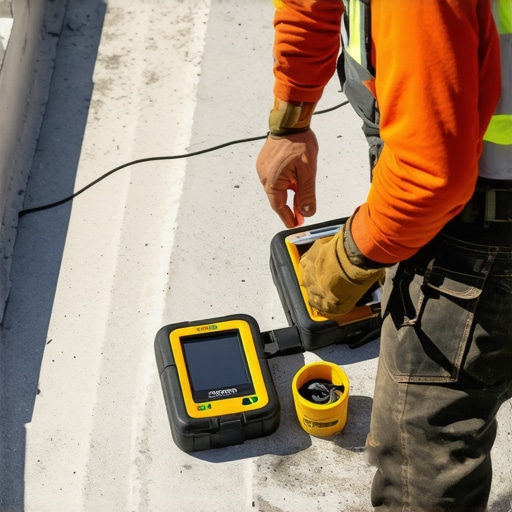
The third essential tool is the non-destructive moisture impedance meter. In the past, the only way to know if your plywood was ‘oatmeal’ was to tear off the shingles or use a probe that poked holes in your waterproofing. That’s like a doctor stabbing you to see if you’re bleeding. Modern impedance meters send a low-frequency signal through the shingles and into the substrate. It measures the electrical impedance, which changes drastically when moisture is present. We use this to map the ‘capillary creep.’ Water doesn’t just go down; it moves sideways through capillary action, pulled by the surface tension between the felt and the shingle. You might see a leak over your kitchen, but the impedance meter shows the entry point is actually 15 feet away at a poorly installed ridge vent. This tool is how we avoid ‘Band-Aid’ repairs. If the impedance map shows the moisture has spread across three squares of the roof, a simple patch is a waste of money. You’re looking at a surgical replacement of the affected area, including the ice and water shield, to ensure the thermal envelope is restored.
“The moisture content of wood in a building should not exceed 19 percent.” – International Residential Code (IRC)
4. Augmented Reality (AR) Structural Load Analysis
The final tool in the 2026 arsenal is AR structural analysis. For those of us in heavy snow zones, the weight of the roof isn’t just about the shingles. It’s about the dead load and the live load. When you’re inspecting an older home, you need to know if the rafters can handle a new layer of heavyweight architectural shingles or if the previous ‘cheap’ roofer ignored a sagging ridge board. AR allows us to overlay the original structural geometry against the current state of the roof. We can see the deflections—the ‘belly’ in the roof—that indicate failing trusses or weight-bearing issues caused by years of ice damming. This is the difference between a roofing company and a roofing professional. A pro looks at the whole system: the ventilation, the insulation, the structural load, and the drainage. If the cricket behind your chimney isn’t sized correctly for the pitch of your roof, water will pool, hydrostatic pressure will build, and eventually, the laws of physics will win. These tools allow us to prove to the homeowner—and the insurance adjuster—that the damage isn’t just cosmetic; it’s a systemic failure. Stop hiring guys who only carry a hammer and a ladder. If they aren’t bringing the lab to your roof, they aren’t giving you the truth. They’re just giving you a price. In the world of forensic roofing, the truth is found in the data, not the pitch.