
The Squishy Roof Autopsy: When Insulation Kills a Good Shingle Job
Walking across that roof deck in the crisp autumn air felt exactly like stepping onto a wet sponge. It wasn’t the shingles—those were high-end architectural laminates, barely five years old. From the ground, any homeowner would think their roofing was solid. But under my boots, the 7/16-inch OSB was flexing and groaning. When we finally peeled back the squares, the underside of the wood was black with Cladosporium. The plywood had the structural integrity of a wet graham cracker. This wasn’t a leak from the sky. This was a slow-motion suicide caused by a botched insulation job. This is what happens when local roofers and ‘trunk slammers’ ignore the physics of the attic. They throw more R-value at a problem without understanding the ‘Attic Bypass’ or the stack effect. In the trade, we call this ‘attic rain,’ and in 2026, with tighter building codes and more extreme temperature swings, your insulation strategy will either save your home or rot it from the inside out.
[IMAGE_PLACEHOLDER]
The Physics of Failure: Why Your Attic is Sweating
To understand why your roof is failing, you have to look at the hydrothermal dance happening over your head. In cold climates, the air inside your house is a sponge for moisture—from your showers, your pasta pots, and even your breath. Because of the stack effect, that warm, moist air is under pressure. It’s hunting for a way out. It finds it through every ‘shiner’ (a nail that missed the rafter) and every unsealed top plate. When that moisture hits the freezing cold underside of your roof deck, it reaches the dew point. It turns from gas to liquid.
“Attic ventilation and insulation are not separate systems; they are two halves of a single thermal envelope that must be balanced to prevent structural decay.” – NRCA Manual
This isn’t just a ‘crucial’ detail; it is the fundamental law of building science. If you insulate the floor of your attic but leave the bypasses open, you are just concentrating the heat and moisture against the wood. Capillary action then pulls that condensation into the grain of the plywood, eventually rusting out the nails and turning your attic into a mold factory.
Tip 1: The Air Seal is More Important Than the R-Value
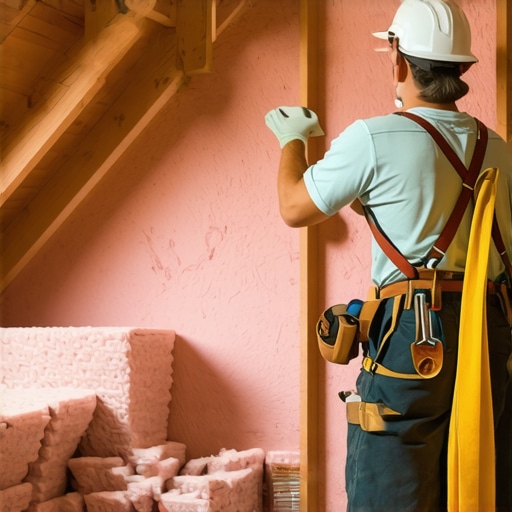
In 2026, we’re moving past the obsession with just ‘more pink fluff.’ The first thing real local roofers look for isn’t the thickness of the batts, but the integrity of the air seal. You can have R-60 insulation, but if you have a plumbing stack or a recessed light fixture leaking air into the attic, that insulation is functionally useless. It’s like wearing a heavy wool coat but leaving it unzipped in a blizzard. You need to pull back the existing material and use two-part spray foam or fire-rated caulk to seal every wire penetration and top plate. We’re talking about stopping the air movement entirely. If the air can’t move, the moisture can’t hitch a ride to your roof deck. This is where most roofing companies fail; they want to lay shingles and leave, not crawl into the dusty corners of a 140-degree attic to find a hidden bypass.
Tip 2: Baffles are the Lungs of Your Roof
I can’t count how many times I’ve seen a ‘professional’ crew blow in loose-fill cellulose right over the soffit vents. They effectively choked the house to death. Your roof needs to breathe from the bottom up. Ventilation works on a simple pressure differential: cool air enters the soffits, warms up, and exits the ridge vent. If you block those eaves with insulation, you break the cycle. In 2026, the standard is a continuous baffle system. These plastic or foam channels must be stapled directly to the roof deck, running from the eaves up past the insulation line. This ensures a dedicated one-inch air gap. Without this, that stagnant air just sits there, cooking your shingles from underneath and voiding your manufacturer’s warranty faster than you can sign the check.
Tip 3: The ‘Shiner’ Investigation
When you’re up there, look for the ‘shiners’—those silver nails sticking through the deck that aren’t embedded in wood. In the winter, these become tiny ice pops. They are thermal bridges. They get colder than the wood around them, attracting frost. When that frost melts, it drips onto the insulation, creating a ‘leak’ that hasn’t rained a drop. A forensic roofer will nip those nails or coat them to prevent the moisture cycle. It’s a trade secret that separates the veterans from the guys who just bought a ladder last week. If you see rusted nail heads in your attic, your ventilation-to-insulation ratio is fundamentally broken.
Tip 4: Manage the Humidity with 2026 Tech
We are entering an era where your attic should be ‘smart.’ 2026 projects should include wireless hygrometers. These sensors sit in the attic and ping your phone when the humidity levels cross the 60% threshold. If the humidity is high but it hasn’t rained, you have an insulation bypass issue. Local roofers who embrace this technology provide more than a roof; they provide a diagnostic system. This is especially vital in homes that have been retrofitted with heat pumps or high-efficiency furnaces, which change the pressure dynamics of the house.
“A roof is only as good as its flashing, but a house is only as healthy as its attic.” – Old Roofer’s Adage
Tip 5: The Thermal Bridging Trap
Wood is a decent insulator, but it’s nowhere near as good as actual insulation. Every rafter in your attic is a thermal bridge—a highway for heat to escape. In 2026, we are seeing a shift toward ‘over-insulating’ the rafters themselves or using specialized foam strips. When you see those melted stripes on a frosted roof in the morning, those are your rafters leaking money. A top-tier roofing contractor will suggest cross-battening or adding a layer of rigid board over the joists to break that thermal bridge. It’s the difference between a roof that lasts 20 years and one that fails in 12 because of constant expansion and contraction of the deck boards.
The Cost of the ‘Cheap’ Fix
Ignoring these details might save you three grand today, but it will cost you thirty grand in five years when you have to replace the entire deck along with the shingles. When you interview roofing companies, don’t ask about the shingles. Ask about the baffles. Ask about the air sealing. Ask them to explain the dew point. If they look at you like you’re speaking Greek, show them the door. You want a roofer who understands that the shingles are just the skin; the insulation and ventilation are the heart and lungs of the home. Don’t let your 2026 project become another forensic autopsy on my YouTube channel.