
The Flat Roof Curse: Why Traditional Methods Are Failing in the Humidity
In the trade, we have a saying: there are two types of flat roofs—those that leak and those that are about to. If you are managing a commercial property or a flat-roofed residence in the humid, storm-battered Southeast, you know the sound. It is that steady, rhythmic drip-drip-drip hitting a plastic bucket in the middle of a midnight thunderstorm. My old foreman used to say, ‘Water is patient. It will wait for you to make a mistake.’ He was right. Water doesn’t sleep, and it doesn’t get tired. It just looks for the path of least resistance, often finding it in the failed seams of a ten-year-old Modified Bitumen roof or the dried-out cracks of an EPDM membrane. Local roofing companies are tired of chasing these ghosts. That is why the industry is shifting toward high-solids 2026 silicone sealants. This is not the cheap ‘silver coat’ your uncle used to slap on his shed. This is a forensic-grade solution to the physics of failure.
The Physics of the ‘Ponding’ Problem
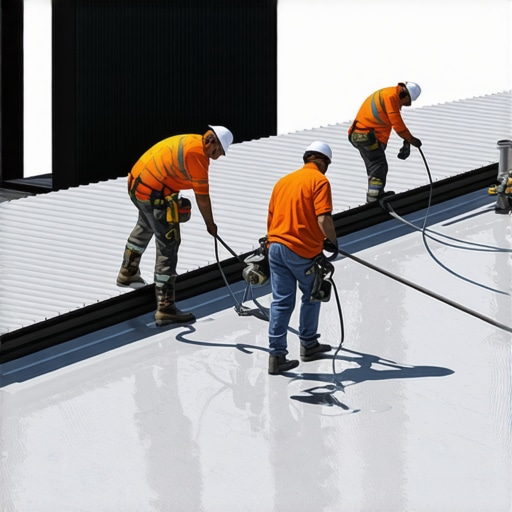
When we talk about roofing in tropical climates, the number one killer isn’t the wind—it’s the heat followed by the standing water. Most roofing materials are organic. They are made of oils and polymers that start to break down the second the sun hits them. This process, known as photo-oxidation, turns your flexible roof into a brittle potato chip. When the afternoon rains hit, the roof expands. When the sun comes back out, it shrinks. This ‘thermal shock’ tears at the seams and the ‘crickets’ designed to divert water. Once those seams pop, you have capillary action pulling moisture under the membrane, rotting the wood deck until it feels like walking on a wet sponge. Silicone, however, is inorganic. It doesn’t care about UV rays, and it doesn’t care about ponding water. [image_placeholder_1]
“Ponding water is defined as water that remains on a roof for more than 48 hours after a rain event.” – National Roofing Contractors Association (NRCA)
1. Permanent Resistance to Ponding Water
Most roofing warranties are written with a massive loophole: if water sits on the roof for more than 48 hours, the warranty is void. That’s a problem when your drainage is slightly off or your ‘scuppers’ are clogged with debris. Traditional acrylic coatings will re-emulsify—meaning they turn back into liquid—if they stay submerged. The 2026 silicone sealants are different. Because they are moisture-cure products, they actually use the humidity in the air to harden into a rubberized, monolithic shield. Even if you have a low spot that holds water for a week, the silicone won’t break down. It creates a ‘hydrostatic’ barrier that refuses to let a single molecule of H2O through. For local roofers, this means fewer callbacks for ‘nuisance leaks’ in the valleys.
2. High-Albedo Cooling and UV Stability
In the high-heat zones of the South, a black roof can reach 160°F by noon. That heat doesn’t stay on the roof; it migrates into the building, forcing your HVAC system to work until it dies an early death. This is called ‘thermal bridging.’ 2026 silicone sealants are designed with high-albedo ratings, reflecting up to 88% of the sun’s radiation. This isn’t just about saving a few bucks on the electric bill; it is about protecting the substrate. By keeping the roof surface within 10 degrees of the ambient air temperature, you stop the violent expansion and contraction that causes ‘shiners’ (nails backing out) and perimeter failure. It turns your roof from a heat-soak into a heat-shield.
3. The ‘Tear-Off’ Alternative: Saving the Landfill
One of the biggest scams in the roofing industry is the unnecessary tear-off. Most roofing companies want to sell you a full replacement because that is where the big margins are. They tell you that you have to rip everything down to the deck. But if your insulation is dry and the structure is sound, a 2026 silicone restoration is often the superior choice. By applying a silicone coating over the existing roof, you avoid the massive cost of labor, the risk of exposing your interior to a sudden storm during the project, and the thousands of dollars in landfill fees. It’s a surgical strike instead of an amputation. You are essentially building a new, custom-fitted rubber roof on top of your old one, without a single seam for water to exploit.
4. Superior Elongation and Recovery
Roofs move. They breathe. If your sealant is rigid, it will crack. The 2026 formulations are engineered for extreme ‘elongation’—the ability to stretch—and ‘recovery’—the ability to snap back to the original shape. When the building settles or the wind creates uplift pressure, the silicone moves with it. It behaves more like a skin than a shell. This is vital around ‘curbs’ and ‘penetrations’ (like HVAC units and plumbing vents), where most leaks actually start. Instead of relying on ‘goop in a bucket’ or messy caulking that dries out in six months, a professional application of silicone creates a permanent, flexible bond at these critical failure points.
“A roof is only as good as its flashing.” – Old Roofer’s Adage
5. Rapid Application and ‘Rain-Safe’ Technology
Time is the enemy of any roofing project. In tropical climates, you might have a clear sky at 10:00 AM and a monsoon by 2:00 PM. Old-school coatings needed 24 hours to dry. If it rained, the coating washed off into the parking lot, ruined the paint on the cars below, and cost the contractor a fortune. The latest 2026 silicone technology is rain-safe in as little as 15 minutes. This allows roofing companies to work in tighter windows, ensuring your building is never left vulnerable. It is about efficiency and risk management. For a property owner, this means less time with a crew on your roof and a faster path to a waterproofed asset.
The Reality Check: It Isn’t Magic in a Can
Don’t let a ‘trunk slammer’ tell you that you can just roll silicone over a dirty, wet roof and call it a day. The ‘forensic’ part of roofing requires a clean substrate. If there is grease, oil, or loose granules, the silicone won’t ‘wet out’ properly, and it won’t bond. You need a contractor who understands ‘mil thickness’—the measurement of how thick the coating is applied. If it’s too thin, it won’t last. If it’s too thick without the right reinforcement, it can fail. You want a crew that checks the ‘pull-test’ adhesion before they start. A ‘Lifetime Warranty’ is just a piece of paper if the company that gave it to you disappears after the first big hurricane. Look for local roofers who have been around long enough to see their own work age ten years. That is the only real test of quality. “,