
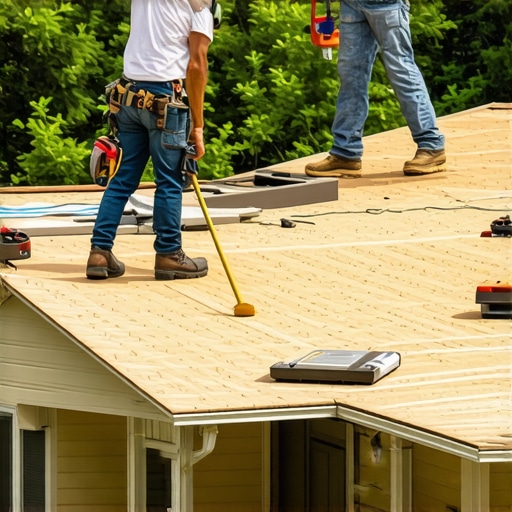
The Forensic Scene: A Sponge Under the Shingles
Walking on that roof felt like walking on a sponge. I knew exactly what I’d find underneath before I even pulled my flat bar from my belt. It was a crisp November morning, the kind where you can smell the damp earth from two blocks away, but on this roof, the scent was different—it was the cloying, sweet-rot smell of delaminated OSB. As I peeled back a single square of asphalt, the horror story revealed itself. The plywood didn’t just crack; it disintegrated into a gray, fibrous mush. This wasn’t a manufacturer defect. This was a slow-motion execution caused by a roofer who didn’t understand the physics of a cold-climate attic. By 2026, we are going to see a massive wave of these failures hitting the residential market, and if you don’t know why, you’re the one who will be holding the bucket when the ceiling finally gives way.
1. The Geometry of Failure: Capillary Action and the ‘Shiner’
Most roofing companies can nail a shingle down, but very few understand the microscopic behavior of water. In our northern climate, water doesn’t just fall; it moves sideways through capillary action. Think of it like this: when two surfaces are pressed close together—like a shingle over an unsealed starter strip—water can actually climb uphill between the layers. If your local roofers missed the mark by even a half-inch on their nail placement, creating what we call a ‘shiner’ (a nail that misses the rafter and hangs exposed in the attic), you have a thermal bridge. During a deep freeze, that nail head becomes an icicle inside your attic, drawing moisture from the warm air escaping your house. When the sun hits the roof the next morning, that icicle thaws, dripping directly onto your insulation. Over five years, that tiny drip-dry cycle destroys the R-value of your fiberglass and rots the deck from the inside out. By 2026, those Covid-era ‘rush jobs’ where nails were flying blindly will have reached their saturation point.
“A roof is only as good as its flashing.” – Old Roofer’s Adage
2. The Ice Dam Epidemic: Beyond the Ice & Water Shield
We see it every winter: homeowners think they are safe because they paid for six feet of Ice & Water Shield. But water is patient. In a poorly ventilated attic, heat escapes through ‘attic bypasses’—tiny gaps around light fixtures or plumbing stacks. This heat warms the roof deck, melting the snow from the bottom up. That melt-water runs down to the cold eave, where it refreezes, creating a massive ice dam. The physics here is brutal. The dam creates a pool of standing water that sits directly above the transition point. Eventually, the hydrostatic pressure becomes too much for the shingle laps to handle. If your roofing professional didn’t install a proper drip edge or failed to integrate the underlayment into the gutter apron, that water isn’t going into the downspout; it’s going into your fascia boards and your soffit. By 2026, the cumulative wood rot from these seasonal dams will necessitate emergency structural repairs for thousands of homes.
3. The Dead Valley and the Cricket Crisis
Every roof has a ‘valley’—the intersection where two roof planes meet. But the real killer is the ‘dead valley,’ a flat spot behind a chimney or where a gable meets a wall. Without a ‘cricket’—a small peaked structure designed to divert water—these areas become collection ponds. I’ve seen roofing companies try to solve this with a gallon of mastic or ‘bull,’ but caulk is a band-aid, not a solution. Water kinetic energy is relentless. When you have three gallons of water per second hitting a dead valley during a summer thunderstorm, it creates a turbulent vortex. If the flashing isn’t stepped properly or if the counter-flashing into the brick mortar is missing, the water will find the path of least resistance. Usually, that path leads directly to your dining room chandelier.
“Flashing shall be installed at wall and roof intersections, in valleys and around roof openings… to prevent moisture from entering the wall and roof through joints in copings, through moisture-permeable materials and at intersections with dissimilar materials.” – International Residential Code (IRC) R903.2
4. Thermal Bridging and the R-Value Collapse
It’s not just about the shingles; it’s about the air. In 2026, we are going to see a spike in ‘ghost leaks.’ These aren’t leaks from the outside, but massive condensation events caused by improper R-value balance. When local roofers install a new roof but fail to address the intake ventilation at the soffits, the attic becomes a vacuum. It pulls conditioned air from your living space, carrying moisture with it. That moisture hits the cold underside of the new, tight roof deck and turns to frost. This is ‘thermal bridging’ in action. You don’t need a hole in your roof to have a flood; you just need a failure of thermodynamic logic. If your contractor didn’t perform a calculation of Net Free Venting Area (NFVA), they didn’t finish the job—they just set a timer on your roof’s lifespan.
5. The ‘Trunk Slammer’ Warranty Trap
The final reason for the 2026 emergency surge is the expiration of ‘labor warranties’ from fly-by-night contractors. Many roofing companies offer a ‘lifetime warranty’ that isn’t worth the paper it’s printed on because the company won’t exist in five years. Forensic investigation of these roofs usually reveals ‘over-driven’ nails where the high-pressure pneumatic guns blew right through the shingle mat. When the wind picks up, those shingles don’t have the pull-through resistance to stay attached. They flap, they crease, and eventually, they sail into the neighbor’s yard. A ‘square’ of shingles is heavy, but it’s no match for the lift created by a 60-mph gust if the mechanical fastening is compromised. By 2026, the shingles installed with poor pressure settings will have undergone enough thermal expansion and contraction to finally fail. Don’t be the homeowner who discovers their ‘lifetime’ contractor has a disconnected phone number when the water starts pouring in. Invest in forensic-level quality now, or keep an emergency roofer on speed dial for later.