
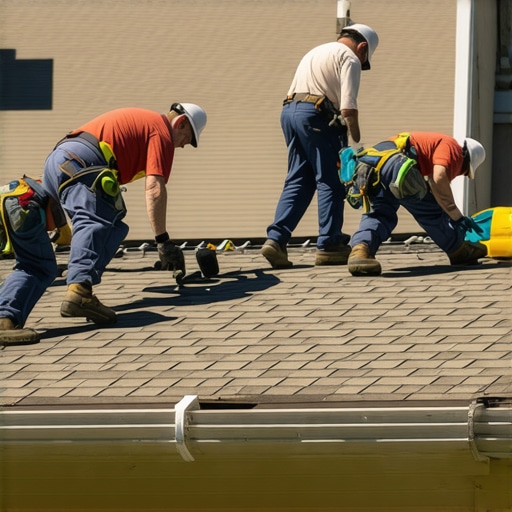
The Midnight Drip: A Forensic Autopsy of the Modern Roof Leak
You hear it before you see it. A rhythmic, metallic tink-tink-tink echoing in the attic. By the time that brown ring appears on your bedroom ceiling, the crime has already been committed. As a forensic roofing investigator with over a quarter-century of tearing off shingles, I can tell you that most roofing companies are better at sales than they are at physics. They look for the obvious, but water is far more insidious. It doesn’t just fall; it migrates, it wicks, and it siphons.
When we talk about ‘leaky roof joints,’ we aren’t just talking about a hole. We are talking about a systemic failure of the flashing and the underlayment to manage the physics of fluid dynamics. In 2026, as our weather patterns become more erratic with flash-freezes and torrential bursts, the standard ‘code-minimum’ install is no longer enough. If you want to stop the bleed, you have to understand the forensic reality of why a joint fails.
The Narrative of Failure: Lessons from the Old Guard
My old foreman, a man who had more tar under his fingernails than blood in his veins, used to growl at me every time I reached for a caulk gun. He’d say, ‘Water is patient. It will wait for years just for you to make one mistake.’ He was right. He taught me that a roof isn’t a solid shield; it’s a series of overlapping sheds designed to shed water through gravity. The moment you rely on a bead of sealant to do the work of a piece of metal, you’ve already lost the war. I’ve spent the last decade investigating local roofers who think a ‘lifetime warranty’ covers up the fact that they didn’t know how to properly kick out a flashing piece. They leave behind ‘shiners’—nails that missed the rafter and sit there like cold, metal heat-sinks, dripping condensation into your insulation every winter.
“A roof is only as good as its flashing.” – Old Roofer’s Adage
Fix 1: The Chimney Cricket and the Geometry of Diversion
The most common failure point I see in the field is the upslope side of a chimney. In the cold North, this area is a death trap. Snow piles up against the masonry, melts from the heat of the flue, and then refreezes into a solid block of ice. This creates a dam. When the next layer of snow melts, the water has nowhere to go but backward, underneath your shingles. Roofing companies often skip the ‘cricket’—a small, peaked false roof behind the chimney designed to divert water to the sides. Without a cricket, you have a ‘dead valley.’ Forensic evidence shows that 90% of chimney leaks in homes built before 2020 are due to the lack of this simple geometric fix. In 2026, you shouldn’t just want a cricket; you need it clad in high-grade ice and water shield that extends three feet up the roof deck and six inches up the masonry. This isn’t just a repair; it’s an architectural necessity to prevent hydrostatic pressure from forcing moisture into your mortar joints.
Fix 2: The Capillary Break in Valley Intersections
Let’s talk about ‘Mechanism Zooming.’ Look closely at where two roof planes meet. This is the valley. Most local roofers use a ‘woven’ valley because it’s faster. But here’s the forensic truth: as shingles age, they curl. This creates tiny gaps. Through capillary action, water is pulled sideways, uphill, into those gaps. It’s the same physics that allows a paper towel to soak up wine. In 2026, the only acceptable fix is an ‘Open Metal Valley.’ We use a heavy-gauge W-channel metal. Why the ‘W’? Because that center rib breaks the speed of the water rushing down from one side, preventing it from ‘jumping’ the valley and washing up under the shingles on the opposite side. If your roofer isn’t talking about capillary breaks, they aren’t fixing your leak; they’re just hiding it for the next guy to find.
“The roof shall be covered with approved roof coverings secured to the building or structure in accordance with the provisions of this code.” – International Residential Code (IRC) R903.1
Fix 3: The ‘Shiner’ Eradication and Step Flashing Overhaul
When I walk a roof and see ‘step flashing’ that is rusted or, worse, missing, I know I’m looking at a ‘trunk slammer’ job. Step flashing is the series of L-shaped metal pieces that weave into every shingle course where the roof meets a wall. The forensic failure happens when a roofer drives a nail too close to the corner. This ‘shiner’ becomes a conduit. During the freeze-thaw cycles of a Chicago or Boston winter, the nail head expands and contracts. Eventually, it backs out just enough to let a single drop of water through. One drop becomes a hundred. Within three years, your plywood deck has the consistency of oatmeal. The 2026 fix is simple but labor-intensive: every single piece of step flashing must be replaced during a re-roof, never reused, and fastened at the very top edge to keep the nail as far from the water channel as possible.
Fix 4: The Pipe Boot Evolution (Moving Beyond Rubber)
The weakest link on 99% of roofs is the plumbing vent. You know the one—the little pipe sticking out of the roof. Traditional roofing companies use a plastic boot with a rubber gasket. In high-UV environments or areas with heavy snow-load, that rubber cracks in five years. The forensic result? Water runs straight down the outside of the PVC pipe, into your attic, and onto your drywall. The modern fix for 2026 is the ‘Lead Boot’ or a high-grade silicone collar. Lead doesn’t rot. It doesn’t crack. It can be molded around the pipe to create a permanent, weather-tight seal. It’s more expensive, yes, but it’s the difference between a roof that lasts 30 years and one that fails when the first heatwave hits. We don’t want ‘good enough.’ We want ‘impermeable.’
Conclusion: The Cost of the ‘Cheap’ Fix
If you are looking for roofing solutions, stop looking for the lowest bid. A cheap roof is the most expensive thing you will ever buy. When you hire local roofers, ask them about the ‘cricket,’ ask them about ‘thermal bridging’ in the attic, and ask them how they handle ‘capillary migration’ in the valleys. If they look at you like you’re speaking a foreign language, show them the door. Your home is a machine, and the roof is its most vital component. Don’t let a ‘shiner’ be the reason your investment rots from the inside out. Be forensic, be demanding, and stay dry.