
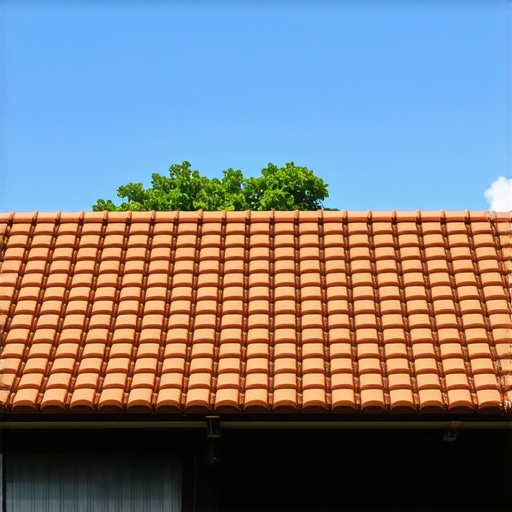
The High-Tech Gimmick or the Future of the Roof Deck?
I walked onto a job site last summer where the air was so thick with smog you could almost chew it. The homeowner was convinced his roof was leaking, but when I got up there, the plywood wasn’t just wet—it was weeping. The previous crew had installed a heavy tile system without accounting for the dead load or the micro-ventilation required in high-humidity zones. Walking on that roof felt like walking on a sponge; I knew exactly what I’d find underneath before I even pulled a single pry bar. It wasn’t just a leak; it was a systemic failure of physics. Now, in 2026, we are seeing a massive push toward carbon-capturing tiles. But before you let local roofers sell you on the ‘eco-dream,’ you need to understand the trade-off between saving the planet and keeping your living room dry.
“A roof is only as good as its flashing.” – Old Roofer’s Adage
The Physics of Smog-Eating Materials
When we talk about carbon-capturing tiles, we aren’t talking about magic. We are talking about photocatalytic science. Most of these tiles use a thin layer of titanium dioxide (TiO2). When UV rays hit the tile, it triggers a chemical reaction that breaks down nitrogen oxide (NOx) gases from car exhaust and industrial pollution into harmless nitrates. Imagine the surface of your roof as a giant chemical refinery, working silently while you drink your morning coffee. But here is the catch that roofing companies rarely mention: if that surface gets covered in bird droppings, debris, or salt spray from the coast, the chemical reaction stops. You’re left with a very expensive, very heavy piece of concrete that isn’t doing its job.
1. The Photocatalytic Concrete Giant
The first material gaining traction is the high-density photocatalytic concrete tile. These aren’t your grandfather’s heavy slabs. In the heat of a 140°F attic, these tiles act as a thermal battery. The carbon-capturing coating is integrated into the top 3mm of the tile. Mechanism Zooming: As the sun beats down, the TiO2 particles act as a catalyst. They don’t get used up; they just facilitate the change. Water vapor in the air reacts with the activated surface to create hydroxyl radicals, which then snag NOx molecules out of the air. When the rain hits, it washes those nitrates down the gutter. If your local roofers don’t install a proper cricket behind your chimney, all those nitrates and grit will pool and eat through your flashing in a decade. You need a clean exit for the water, or the ‘green’ tech becomes a ‘black’ mold nightmare.
2. The Mineralized Limestone Hybrid
Next up are the tiles that actually bake CO2 into their DNA. Some manufacturers are now using a process that injected captured carbon into the concrete mix during the curing phase, effectively turning the tile into a synthetic limestone. This makes the tile incredibly dense. From a forensic perspective, density is a double-edged sword. It’s great for thermal expansion—the tile doesn’t wiggle as much when the sun goes down and the temperature drops 40 degrees. However, if the installer misses the mark and leaves a shiner (a nail that missed the rafter and is just hanging out in the attic space), that dense tile will vibrate against the deck and turn that tiny hole into a gushing leak during the first tropical downpour.
3. The Recycled Polymer-Carbon Composite
These are the lightweights of the group, often favored by roofing companies looking for a faster install. They use recycled plastics mixed with carbon-sequestering minerals. They look like slate but weigh a fraction of the cost. The danger here is uplift ratings. In coastal zones, wind-driven rain doesn’t just fall; it moves sideways and upward. If the head-lap (the portion of the tile covered by the one above it) isn’t calculated correctly, the wind will push water right under the tile through capillary action. Water is patient. It will wait for a tiny gap in your underlayment and then soak into your rafters until they have the structural integrity of a wet cracker.
“The roof shall be covered with materials that are compatible with each other and with the building’s structure.” – International Residential Code (IRC)
The Warranty Trap: Don’t Get Burned
You’ll hear local roofers throw around terms like ‘Lifetime Warranty’ or ‘Carbon-Neutral Certification.’ Let me tell you, as someone who has spent twenty-five years looking at failed assemblies: a warranty is a piece of paper designed to protect the manufacturer, not your ceiling. Most warranties are voided if the ventilation isn’t perfect. If your attic is screaming at 150 degrees because the intake vents are clogged with insulation, those high-tech tiles will cook from the bottom up. The adhesive bonds in the underlayment will fail, and the ‘smog-eating’ tiles won’t save you from a $20,000 deck replacement.
How to Choose Local Roofers Who Actually Know Their Craft
When you interview roofing companies, don’t ask about the tiles first. Ask about the valleys and the starter course. If they can’t explain how they handle the transition from a steep slope to a low slope, they shouldn’t be touching a carbon-capturing system. These tiles require precision. You need stainless nails in coastal areas to prevent galvanic corrosion, and you need a crew that understands that a square (100 square feet) of these tiles weighs significantly more than standard asphalt. If they don’t check your truss 1-load-bearing capacity, walk away. Your house wasn’t built to hold a mountain, even if that mountain is helping the environment.