
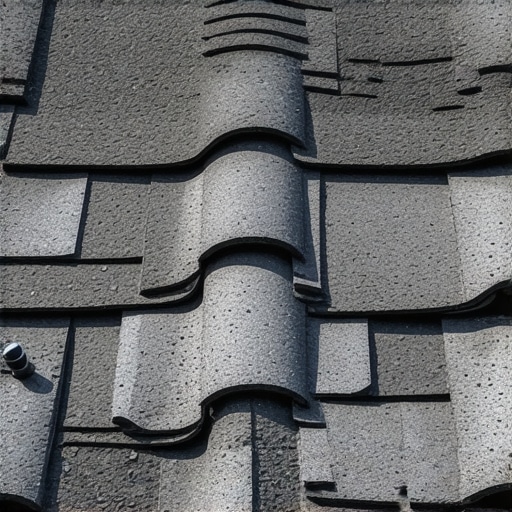
The Invisible Failure: Why Your Roof is Only as Strong as a Two-Cent Nail
My old foreman used to say, ‘Water is patient. It will wait for you to make a mistake.’ He wasn’t talking about the shingles themselves; he was talking about the guys who think a nail is just a nail. After twenty-five years of pulling up ‘failed’ roofs across the humid, hurricane-prone coastlines, I can tell you that 90% of the disasters I see aren’t caused by the material. They are caused by the tiny pieces of metal holding them down. When you hire local roofers, you aren’t just paying for the labor; you are paying for their choice of fastener. In the heat of a 140°F attic, or the salt-heavy air of the Southeast, a cheap nail is a ticking time bomb.
The Physics of the Pull-Out: Mechanism Zooming
Let’s talk about Mechanism Zooming. Most homeowners look at a roof and see a shield. I see a series of pressure differentials. When wind hits your gable end, it creates a vacuum—a lift force. Underneath that shingle, the asphalt mat is constantly expanding and contracting. If the fastener is smooth-shanked and poorly coated, the friction between the nail and the plywood deck degrades. We call this ‘creep.’ Over five years, that nail backs out just a fraction of an inch. Now, you have a ‘shiner’—a nail that missed the rafter or backed out enough to let water travel down the shaft via capillary action. This isn’t a leak you see today; it’s the rot in your decking you find five years too late.
“Fasteners shall be driven flush with the shingle surface and shall not be over-driven or under-driven. A fastener that penetrates the wood too deeply reduces the wind-resistance of the entire assembly.” – NRCA Manual
1. 316 Grade Stainless Steel: The Coastal Standard
In 2026, if you are within ten miles of the ocean, there is no debate. 316 Stainless Steel is the only fastener that survives the galvanic corrosion caused by salt-laden air. I’ve seen roofing companies use electro-galvanized nails in Houston, and three years later, the heads are rusted to the size of a pinhead. When the next storm hits, the shingle just zips right over the head. Stainless steel doesn’t just resist rust; it maintains the integrity of the ‘clinch’—the way the nail bites into the OSB or plywood. [image_placeholder_1]
2. High-Carbon Polymer-Coated Ring Shanks
For those inland but still facing high wind loads, the industry is moving toward high-carbon steel with a polymer topcoat. This isn’t your grandfather’s zinc coating. The polymer acts as a lubricant during the drive and then ‘sets’ as it cools, creating a thermal bond with the wood fibers. The ‘ring shank’ refers to the ridges along the nail. Think of it like a screw that you drive with a hammer. The withdrawal resistance is nearly 40% higher than a smooth nail. When roofing pros use these, they are ensuring that even if the shingle mat softens in the blistering summer sun, the fastener stays put.
3. Double-Dipped Hot Zinc (HDG) Fasteners
Not all galvanization is equal. Most ‘trunk slammers’ use electro-galvanized nails because they are cheap and shiny. But forensics show they have a zinc layer so thin it’s practically cosmetic. Double-dipped hot-dipped zinc fasteners are submerged in a molten bath, creating a thick, jagged layer that physically bonds with the steel. When these are driven into the roof, the zinc actually ‘heals’ minor scratches in the coating. It’s the difference between a cheap suit and a suit of armor.
4. The 2026 Hybrid ‘GripSert’ Fastener
The latest tech we are seeing in 2026 is the hybrid fastener—a cross between a pneumatic nail and a structural screw. These require specialized guns but offer the highest uplift ratings in the history of residential roofing. They eliminate the ‘over-driven’ nail syndrome. If a roofer sets his compressor too high, he blows the nail right through the shingle, effectively creating a hole rather than a connection. These hybrids have a depth-sensing flange that stops the drive perfectly flush every time.
“The roof is the most vulnerable part of the building envelope, yet it is often the most neglected in terms of fastener specification.” – International Residential Code Axiom
The Warranty Trap: Why Fine Print Matters
Don’t get fooled by ‘Lifetime Warranties.’ If you read the fine print on a standard asphalt shingle warranty, it usually excludes ‘improper installation.’ If your local roofers used a 1-inch nail where a 1.25-inch was required, or if they used nails that corroded due to proximity to the coast, the manufacturer will laugh you out of the room. They will blame ‘environmental factors’ or ‘contractor error.’ You need a forensic-level contract that specifies the fastener grade. If they won’t put ‘316 Stainless’ or ‘HDG’ in writing, they are planning to use the cheap stuff to save $300 on your $15,000 project.
The Anatomy of a ‘Shiner’
Whenever I do a tear-off, I look for the shiners. A shiner is a nail that missed the roof deck or the rafter and is sticking through into the attic space. In a cold climate, these act as thermal bridges. In a humid climate, they are the first place condensation forms. You’ll see a drop of water on the tip of the nail in the attic and think you have a leak. You don’t. You have a ventilation and fastener problem. The fastener is literally pulling moisture out of the air and dripping it onto your insulation. This is why roofing companies that understand building science are worth their weight in gold. They know that fasteners, ventilation, and insulation are a single, breathing system.
Conclusion: Don’t Compromise on the Small Stuff
Next time you get a quote from local roofers, don’t just look at the shingle brand. Ask them about the shank. Ask them about the coating. Ask them how they calibrate their pneumatic guns for the specific temperature of the day. If they look at you like you’re crazy, find someone who speaks the language of forensics. Your roof is a system of thousands of tiny connections. If those connections fail, the whole shield falls. Don’t let a two-cent nail ruin a twenty-thousand-dollar investment.