
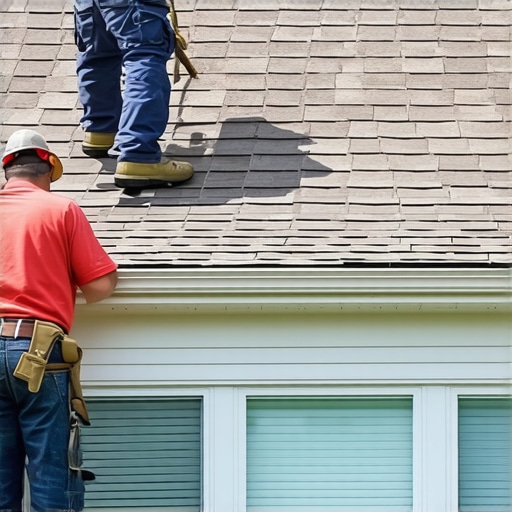
The Knock on the Door: Why Your Porch Is the Front Line
The sound usually starts about forty-eight hours after the hail stops. It’s the rhythmic thud of work boots on your front porch and the insistent ring of a doorbell. Outside stands a guy in a polo shirt, holding a drone controller or a ladder, promising you a ‘free roof.’ As a forensic investigator who has spent three decades diagnosing why shingles fail, I can tell you that these storm chasers are often the first sign of a much deeper problem. They aren’t looking for damage; they are looking for a signature on a contingency agreement. Walking on a roof lately has felt like walking on a sponge in some of these neighborhoods. I knew exactly what I’d find underneath—the OSB had reached its saturation point because the original installers treated the valley like a suggestion rather than a critical water-shedding component.
By 2026, the roofing industry has shifted significantly. We are seeing more ‘impact-resistant’ shingles than ever, but that doesn’t mean they are invincible. It just means the damage looks different. If you want to know if your home actually needs the help of professional local roofers or if you’re just being sold a bill of goods, you have to understand the physics of failure. You have to look past the surface and understand how water, gravity, and thermal expansion collaborate to destroy your biggest investment. Most roofing companies won’t tell you the truth because the truth doesn’t always lead to a full replacement claim.
1. The Granule Migration: More Than Just ‘Sand’ in the Gutters
When you look into your gutters and see a thick layer of ceramic-coated granules, you aren’t just looking at debris. You are looking at the sunscreen of your home. In the 2026 landscape of asphalt technology, manufacturers are using higher concentrations of polymer-modified bitumen. This makes the shingle flexible, but it also changes how it sheds its protective layer. A ‘bruise’ from a hailstone doesn’t always break the matting immediately. Instead, it creates a localized area of compression where the granules lose their bond. Over the next six months, the UV rays from the sun bake that exposed bitumen, causing it to crack and curl.
“A roof is only as good as its flashing, and its longevity is dictated by the integrity of its surface armor.” – Old Roofer’s Adage
If you see ‘bald spots’ on your shingles, that is functional damage. It’s not just an aesthetic issue. The moment the asphalt is exposed to direct sunlight, it begins to volatilize—losing the oils that keep it waterproof. When those oils are gone, the shingle becomes brittle. One good wind gust, and you’ll have a ‘square’ or two of material sitting in your neighbor’s yard. Local roofers who know their trade will look for these microscopic fractures rather than just looking for the obvious ‘craters’ that everyone expects to see after a storm.
2. The ‘Shiner’ and the Hidden Leak: Diagnostic Forensic Evidence
One of the most common failures I see during an inspection isn’t caused by the weather; it’s caused by a guy named ‘Lefty’ who was in a hurry five years ago. We call it a ‘shiner.’ This is a nail that was driven into the wrong spot—usually missing the framing or the reinforced nailing zone—leaving the metal shank exposed inside the attic space. During the winter months in the Hail Belt, these nails become ice-cold. When the warm, moist air from your house hits that cold metal, it condenses. It drips. It looks like a roof leak, but it’s actually a ventilation and installation failure.
By 2026, the IRC (International Residential Code) has tightened up on how we handle these penetrations. If your roofing companies aren’t talking about ‘thermal bridging’ or ‘attic bypasses’ when they inspect your storm damage, they aren’t doing a thorough job. A real pro will crawl into that 140°F attic crawlspace, smelling the damp rot and feeling for the ‘crunch’ of compromised plywood. They are looking for the watermark on the rafters that tells the story of where the water has been traveling. Water is patient; it will wait for the smallest gap in your ‘cricket’—that small peak behind a chimney designed to divert water—and it will exploit it until your ceiling boards are oatmeal.
3. Mechanical Uplift and the ‘Flapping’ Shingle
In 2026, we are seeing more high-wind events that don’t necessarily come with hail. This creates ‘mechanical uplift.’ Most people think a roof is damaged only if the shingles are gone. The reality is much more insidious. High winds can break the sealant strip—that line of tar that bonds the shingles together—without actually tearing the shingle off. Once that bond is broken, the shingle flaps like a loose shutter. It rubs against the nails, widening the holes, and eventually, the wind-driven rain gets pushed uphill underneath the shingle. This is known as capillary action, and it’s the silent killer of roofing systems.
“Building codes represent the legal minimum; a quality roof should always exceed the code to account for the unpredictability of nature.” – NRCA Technical Manual
When you are vetting local roofers, ask them to perform a ‘manipulation test’ on several areas of the roof. If the shingles lift easily with a finger, the system is compromised. It doesn’t matter if the roof looks ‘new.’ If the seal is gone, the roof is functionally dead. This is where the conflict with insurance adjusters usually begins. They will call it ‘wear and tear’ or ‘poor installation.’ You need a contractor who understands the physics of uplift and can document the loss of adhesion to ensure your claim is handled correctly. Don’t let them tell you a bit of caulk will fix it; you can’t ‘band-aid’ a structural failure of the sealant system.
How to Handle the Insurance Adjuster Without Losing Your Mind
When the adjuster arrives, they are looking for reasons to say ‘no.’ They see ‘cosmetic’ damage where you see a leak. This is why you never meet an adjuster alone. You need a veteran roofer who knows the difference between a ‘scuff’ and a ‘strike.’ In 2026, many insurance companies are using AI and satellite imagery to deny claims before a human even sets foot on your property. You need physical evidence: photos of the ‘bruised’ matting, samples of the granules in the gutters, and a thermal map of the moisture in the decking. Protecting your deductible starts with having a professional who can speak the same language as the adjuster and back it up with code requirements. If your local roofers aren’t referencing the specific manufacturer’s installation guidelines or the latest building codes, they are leaving your money on the table.
The Reality of Warranties in 2026
The phrase ‘Lifetime Warranty’ is the most abused term in this industry. Most of these warranties are pro-rated and only cover manufacturing defects—not ‘acts of God’ like wind or hail. Furthermore, if the roof wasn’t installed with the correct ventilation or the right number of nails per square, the warranty is void before the crew even leaves your driveway. When selecting from roofing companies, don’t look at the brochure. Look at their workmanship warranty. A company that stands behind their labor for 10 or 20 years is a company that didn’t leave ‘shiners’ in your attic. They are the ones who installed a proper ‘cricket’ and ensured the valleys were lined with ice and water shield. In this business, you get exactly what you pay for, and the cheapest bid is usually the one that costs the most in the long run.