
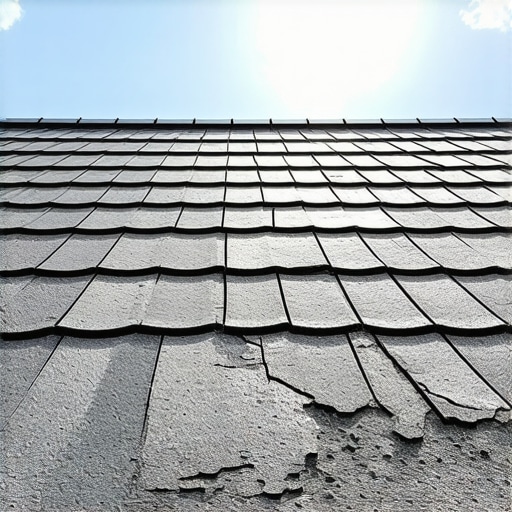
The Brutal Reality of the Southwest Sun
I once stepped onto a roof in the high desert of Nevada where the shingles didn’t just feel old—they felt like burnt toast. I took one step toward the valley and heard a sound that makes every forensic roofer wince: the sharp, metallic crack of fiberglass matting snapping under my boot. The homeowner was worried about a small leak in the kitchen, but the reality was far worse. The sun had literally cooked the life out of the bitumen. This wasn’t just a repair job; it was a forensic autopsy of a system that had reached its thermal limit. When you live in a climate where the roof deck routinely hits 160 degrees Fahrenheit, you aren’t just fighting gravity; you are fighting a molecular war against UV radiation. Local roofers often see this as a ‘simple replacement,’ but if you don’t understand the physics of heat aging, you’re just putting a new timer on a ticking bomb.
1. Accelerated Granule Migration and Oil Bleeding
The first sign of terminal heat aging is what I call the ‘Desert Bald Spot.’ Most homeowners look at their gutters and see a pile of ceramic granules and think it’s just from a heavy rain. It’s not. Asphalt shingles are essentially a high-viscosity liquid held in place by a fiberglass mat. As the UV rays pelt the surface, they break down the volatile oils that keep the asphalt pliable. When those oils evaporate—a process we call ‘off-gassing’—the asphalt shrinks. This shrinking breaks the bond with the granules. Once those granules slide off into your gutters, your roof has lost its armor. Without that protective stone layer, the sun hits the raw asphalt directly, accelerating the decay by ten times. If you look up and see a shiny, blackish sheen on your shingles during the high-noon sun, that is oil bleeding. It’s the lifeblood of your roof literally leaking out of the shingles. Professional roofing companies know that once you reach this stage, the shingle is no longer shedding water; it’s absorbing heat and becoming brittle. A single square of shingles can lose pounds of granules in a single summer if the attic ventilation isn’t pulling that heat away from the underside of the deck.
“The roof is the most vulnerable part of the building envelope, subjected to the most extreme temperature fluctuations and ultraviolet exposure.” – National Roofing Contractors Association (NRCA)
2. Thermal Shock and the Curling of the Fiberglass Mat
Thermal shock is the silent killer of roofing systems in 2026. Think about the physics: during a July afternoon, your roof expands as it absorbs heat. Then, a sudden monsoon or a rapid desert sunset drops the temperature by 40 degrees in an hour. The materials contract violently. Over fifteen years, this constant expansion and contraction causes the fiberglass mat inside the shingle to fatigue. You’ll see this as ‘fish-mouthing’ or curling at the edges. This isn’t just an aesthetic issue. When the edges curl, they catch the wind. A shingle that was rated for 110 mph winds suddenly becomes a sail, and the next gust will rip it right off the nails, often leaving a ‘shiner’—a missed or exposed nail—that creates a direct path for water into your attic. If your local roofers are just ‘nailing over’ these curled shingles, they are committing malpractice. You cannot flatten a thermally shocked shingle; the molecular structure is permanently deformed. You are looking at a total loss of structural integrity.
3. The Hidden Killer: Underlayment Dehydration
The most dangerous sign of heat aging isn’t even visible from the ground. It’s the state of the underlayment—the felt or synthetic layer sitting directly on the plywood. In high-heat zones, the attic acts like an oven. If your ventilation isn’t perfect, the heat stays trapped against the bottom of the roof deck. I’ve performed tear-offs where the asphalt shingles looked ‘okay’ from the street, but the #30 felt paper underneath had turned into black potato chips. It was so dry it crumbled between my fingers. This happens because of a lack of a radiant barrier or poor intake at the soffits. When your underlayment fails, your secondary water barrier is gone. One small crack in a shingle or a slightly backed-out nail near a chimney cricket, and the water goes straight to the wood. By the time you see a brown spot on your ceiling, the plywood has likely been soaked for months. Roofing companies that don’t inspect the attic space are only seeing half the story.
“Proper ventilation is the prerequisite for material longevity; without it, the warranty is merely a piece of paper.” – Old Roofer’s Adage
The Material Truth: Asphalt vs. The Southwest Reality
Let’s be honest about the ‘Lifetime Warranty’ marketing. Most of those warranties have more holes than a rusted-out valley. They cover manufacturing defects, not ‘weathering,’ and in our zone, everything is weathering. If you are replacing a heat-aged roof, you have to choose your weapon wisely. Standard 3-tab shingles are a joke in this heat; they don’t have the mass to resist thermal deformation. Architectural shingles are better because of their multi-layered thickness, but even they have a ceiling. If you truly want to beat the 2026 heat trends, you look at concrete tile or standing seam metal. Concrete tile has a high thermal mass, meaning it takes much longer to heat up, and it allows for air to circulate under the tiles, cooling the deck. Metal, specifically with a ‘cool roof’ Kynar finish, reflects the UV rays rather than absorbing them. Yes, the upfront cost is higher, but when you factor in that you won’t be hiring local roofers again in twelve years, the math starts to favor the premium materials.
How to Pick a Contractor Who Won’t Disappear
The roofing industry is full of ‘trunk slammers’ who show up after a heat wave or a storm, slap on some shingles, and vanish. When you’re dealing with heat-related failures, you need a forensic approach. Ask them about ‘NFA’ (Net Free Area) for your ventilation. Ask them how they handle thermal expansion at the flashing points. If they can’t explain how they are going to keep your attic within 20 degrees of the ambient outdoor temperature, they aren’t the right company for the job. You want someone who understands that a roof is a system, not just a covering. The bottom line is that the heat isn’t getting any lower, and your roof is the only thing standing between your HVAC bill and a total system collapse. Don’t wait for the leak; look for the signs of aging before the wood starts to rot.