
The Anatomy of a Slow Death: Why Your Roof is Rotting from the Inside Out
I walked into a house last week where the homeowner was complaining about a musty smell in her daughter’s bedroom. She thought it was a plumbing leak. I didn’t even need to look at the pipes. I climbed the ladder, pushed aside the hatch, and was hit by a wall of humid, stagnant air that felt like a swamp in July. The underside of the roof deck was covered in what we call ‘black sugar’—a thick, fuzzy layer of mold that has a sweet, sickening scent. This wasn’t a failure of the shingles; it was a failure of the lungs. Most roofing companies can nail a shingle down straight, but they don’t understand the physics of a house as a living, breathing organism.
My old foreman used to say, ‘Water is patient. It will wait for you to make a mistake.’ He wasn’t just talking about rain. He was talking about the vapor produced by your morning shower, your pasta water, and even your own breath. In a poorly ventilated attic, that moisture has nowhere to go. It migrates upward through the drywall, hits the cold plywood of the roof deck, and undergoes phase change—turning from a gas back into a liquid. That liquid sits there, feeding the mold and turning your structural sheathing into something with the structural integrity of a wet cardboard box.
“The total net free ventilating area shall be not less than 1/150 of the area of the space ventilated.” – International Residential Code (IRC) R806.2
1. The Intake Artery: Clearing the Soffit Blockage
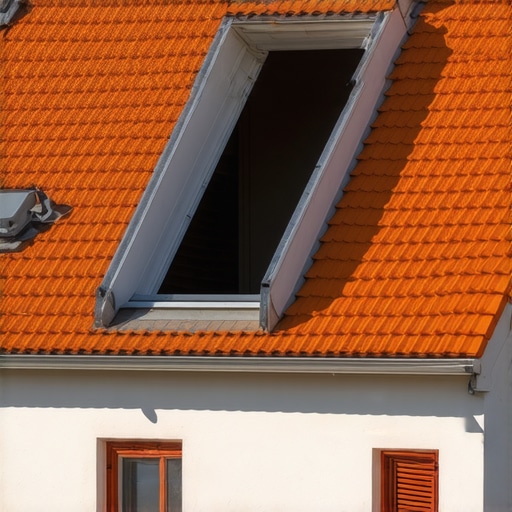
If you want to understand how local roofers fail you, look at your eaves. Airflow follows the path of least resistance. To get the hot, moist air out of the ridge, you have to pull cool, dry air in from the bottom. This is the ‘Stack Effect.’ Most older homes have soffit vents that have been painted over ten times or, worse, are completely buried under three feet of blown-in fiberglass insulation. [image_placeholder_1] When the intake is blocked, the exhaust vents at the top of your roof start to act like a vacuum. They can actually pull conditioned air from your living space through recessed lights and top plates, spiked with moisture. In 2026, the standard for a high-performing roof involves more than just cutting a hole; it requires the installation of oversized baffles. A baffle is a plastic or foam tray that ensures a clear channel between the insulation and the roof deck. Without these, your attic is suffocating. I’ve seen ‘professionals’ jam insulation right into the bird-mouth of the rafter, effectively killing the roof on day one.
2. The Balanced Ratio: Calculating Net Free Area
Physics doesn’t care about your ‘good deal’ from a trunk-slammer. Many roofing companies think that more ventilation is always better. They’ll install a ridge vent and then add three ‘turtle’ vents or a power fan nearby. This is a catastrophic mistake. When you mix different types of exhaust vents, you create a ‘short circuit.’ The power fan will pull air from the ridge vent instead of the soffit, leaving the rest of the attic stagnant. We call this ‘ventilation cannibalism.’ You need a balanced system. If you have 500 square inches of exhaust, you need 500 square inches of intake. This is where the ‘Mechanism Zooming’ comes in: consider the capillary action of humid air. Moist air is less dense than dry air. It wants to rise. If the intake is restricted, that moist air swirls in the corners of the attic, where it finds a ‘shiner’—a nail that missed the rafter. That cold steel nail acts as a thermal bridge, condensing the moisture into a drip that eventually rots your fascia boards.
“Proper attic ventilation is a critical component of the roof system; its absence leads to premature shingle failure and deck deterioration.” – National Roofing Contractors Association (NRCA)
3. Thermal Management: Beyond the Shingle
In the world of forensic roofing, we look at the ‘Delta T’—the temperature difference between the attic and the outside. In the summer, an unventilated attic can hit 160°F. That heat doesn’t just stay in the attic; it radiates downward, forcing your A/C to work double-time. But more importantly for the roof, that heat ‘bakes’ the shingles from underneath. It boils the volatiles out of the asphalt, making them brittle. By 2026, we are seeing a shift toward smart ventilation systems. These aren’t your grandfather’s whirlybirds. We’re talking about solar-powered fans with built-in humidistats and thermostats. They only run when the attic reaches a specific moisture threshold. This prevents the ‘over-venting’ that can happen in winter, which can actually pull too much heat out of the house and cause ice dams in northern climates. When the snow melts on the warm upper part of the roof and refreezes at the cold eave, it creates a dam. Water backs up under the shingles, and suddenly you have a waterfall in your living room.
4. Air Sealing: The Forgotten Step
The best local roofers are the ones who tell you to call an insulation contractor. You can have the best ridge vent in the world, but if your attic floor is full of ‘bypasses’—holes for wires, pipes, and chimneys—you are fighting a losing battle. Those bypasses are like open windows. They allow warm, humid air from your kitchen and bathroom to dump directly into the attic. In the trade, we look for ‘shiners’ that are rusted. That’s a dead giveaway that the air sealing is failed. A true 2026 attic upgrade includes foam-sealing every penetration point on the attic floor. This stabilizes the microclimate. If you ignore this, you’re just venting the air you paid to heat or cool, and your ‘new roof’ will be an expensive hat on a crumbling head. Don’t let a contractor tell you that a new ‘cricket’ or a fancy shingle will fix a moisture problem. The physics of airflow is the only thing that will save your plywood from turning into oatmeal.