
The Forensic Reality of the Modern Roof Deck
Walking on that roof felt like walking on a sponge. I knew exactly what I’d find underneath before I even pulled my pitch gauge or reached for a shingle ripper. In my twenty-five years of forensic investigation, I’ve seen this scene play out in a thousand different ways across the humid coastal regions. The homeowners complained about a small brown spot on the master bedroom ceiling, but the real story was happening in the dark, 140°F attic. The OSB decking had turned into something resembling wet cardboard, all because the previous roofing companies prioritized speed over physics. Water is patient, as we say in the trade, and it will wait years for a single shiner—a missed nail—to start its slow-motion destruction of your home’s structural integrity.
The roofing industry is currently at a breaking point. We are seeing a massive shift in how local roofers approach protection, specifically moving away from the thirty-year asphalt shingle that rarely survives twelve years in a high-UV, high-moisture environment. As we look toward the 2026 metal systems hitting the market, we aren’t just talking about a different aesthetic; we are talking about a total departure from the disposable housing mindset. These new systems address the fundamental failures of traditional roofing: thermal shock, fastener fatigue, and the inherent weakness of organic matting.
“A roof is only as good as its flashing.” — Old Roofer’s Adage
1. Advanced Thermal Decoupling and the Death of Heat Sink
The primary enemy of a roof in a warm, storm-prone climate isn’t just the rain; it’s the sun. Traditional asphalt acts as a giant heat sink, absorbing solar radiation and radiating that heat directly into the attic. By 2026, metal systems have perfected the Thermal Break. Unlike old-school tin roofs that were nailed flat to the deck, these modern systems use a clip-and-rail architecture that creates a ventilated air gap between the metal skin and the underlayment. This isn’t just for show. This gap allows for convective cooling, where hot air rises and escapes through the ridge vent, pulling cooler air in from the soffits before that heat can ever penetrate your R-value-rated insulation.
When you look at the engineering of these panels, you see ‘Mechanism Zooming’ at its finest. The coatings now utilize infrared-reflective pigments that don’t just block the light you see, but the heat energy you feel. This reduces the ‘Thermal Expansion Loop’—the constant growing and shrinking of materials that eventually shears off the heads of cheap fasteners and tears at the valleys of your roof. In a 2026 metal system, the panel is allowed to float, moving independently of the structure, which eliminates the stress fractures common in rigid roofing installations.
2. Integrated Hydrostatic Pressure Resistance
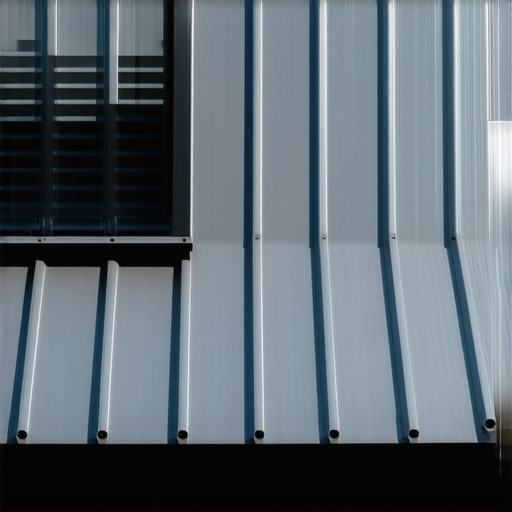
Most roofing companies fail because they don’t understand hydrostatic pressure. When wind-driven rain hits a vertical surface or a steep slope, it doesn’t just run down; it gets pushed up and sideways. Standard shingles rely on gravity and a prayer. 2026 metal systems utilize a mechanical ‘Snap-Lock’ or ‘Field-Seamed’ standing seam that creates a monolithic barrier. We are talking about a continuous piece of metal from the ridge to the eave. There are no horizontal laps for water to penetrate via capillary action—the physics trick where water climbs uphill through tight spaces.
3. The Evolution of the Secondary Water Barrier
If you rip off a roof today, you’ll likely see a thin layer of felt paper. It’s antiquated technology. The 2026 standard for metal installations involves high-temp, self-healing synthetic underlayments. These materials are designed to withstand the intense heat generated under metal panels without drying out or becoming brittle. If a fastener does penetrate this layer, the rubberized asphalt core of the underlayment squeezes around the shank, creating a gasket. This is the difference between a roof that ‘shouldn’t’ leak and a roof that ‘cannot’ leak. When local roofers talk about ‘systems,’ this is the invisible layer that dictates whether your plywood stays bone-dry for fifty years or rots out in ten.
“Roofing systems shall be designed and installed in accordance with this code and the approved manufacturer’s installation instructions.” — International Residential Code (IRC)
4. Fastener Technology: Moving Beyond the ‘Back-Out’
One of the most common forensic failures I investigate is the ‘backed-out nail.’ In a standard asphalt roof, the constant vibration of wind and the expansion of the wood deck eventually push nails upward. These ‘shiners’ then poke through the shingle above them, creating a direct conduit for water. 2026 metal systems solve this with concealed fastener technology. No screw is ever exposed to the elements. Every clip and every fastener is tucked neatly under the overlapping seam of the next panel. This protects the most vulnerable part of any roof—the hole made during installation—from the corrosive effects of salt air and UV radiation.
5. Lifecycle Economics vs. The ‘Cheap’ Trap
Homeowners often get sticker shock when they see the price of a high-end metal system compared to what some ‘trunk slammer’ contractor quoted them for shingles. But the forensic math doesn’t lie. A 2026 metal system is a fifty-to-eighty-year asset. When you factor in the avoided cost of a tear-off every twelve years, the lower insurance premiums due to higher wind-uplift ratings, and the energy savings from a cooler attic, the ‘expensive’ roof is actually the cheapest option over the life of the home. You have to ask yourself: do you want to pay for one roof, or do you want to pay for three and a new set of rafters in thirty years? The ‘cricket’ at the back of your chimney and the complex valleys of your gables demand a material that doesn’t rely on caulk, which fails after three years of sun exposure. Metal is the only material that provides a permanent mechanical solution to a fluid problem.