
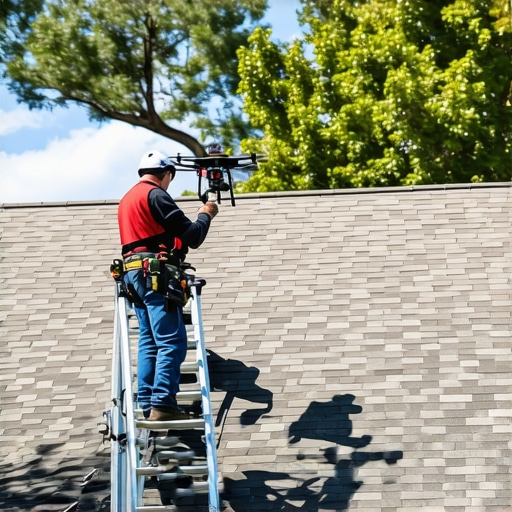
The Anatomy of a Failed Roof: Why Visual Inspections Are History
Walking onto a steep-slope residential roof in late November feels different when you’ve spent three decades sniffing out rot. I remember one specific job last winter; the homeowner thought they just had a small leak near the chimney. When I stepped onto the decking near the transition, my boot didn’t hit solid wood—it sank two inches. Walking on that roof felt like walking on a wet sponge. I didn’t need to tear anything off to know the plywood had turned into a mushroom farm. The local roofers they hired the year before had just ‘recovered’ the old shingles, ignoring the fact that the attic was a literal sauna, baking the wood from the inside out. They missed the thermal bypasses that were melting snow and feeding ice dams. In 2026, if your roofing companies aren’t using more than just a ladder and a pair of eyes, they are guessing with your biggest investment.
The Physics of Failure: Why Capillary Action Destroys Decking
Most roofing companies talk about shingles as the primary defense, but a roof is a system of managed water movement. When a ‘shiner’—that’s a nail that missed the rafter and hangs into the cold attic space—starts to sweat, it’s the beginning of the end. In cold climates, warm air escapes from the living space into the attic, hitting those cold nails and condensing. That water drips onto the insulation, killing your R-value, but the real nightmare is at the eave. Ice dams aren’t just ‘ice on the roof.’ They are a failure of the thermal envelope. Water backs up under the shingles through capillary action—the physical phenomenon where liquid flows into narrow spaces without the assistance of, or even in opposition to, external forces like gravity. It finds the nail holes, the un-flashed valleys, and the poorly taped seams. This is why forensic tools are no longer optional for roofing professionals.
“Water is the most common cause of building envelope failure. A roof must be designed to shed water, but also to breathe, or it will destroy itself from within.” — National Roofing Contractors Association (NRCA) Guidelines
Tool 1: AI-Driven Drone Photogrammetry and 3D Modeling
Gone are the days when a tech would walk every square of a roof with a tape measure. High-end roofing companies now deploy autonomous drones equipped with AI-driven photogrammetry. These aren’t hobbyist toys; they capture thousands of high-resolution images to create a digital twin of the structure. We’re looking for ‘granule loss’ patterns that suggest hail impact or simple UV degradation. The AI can identify every ‘cricket’—those small peaked structures behind chimneys designed to divert water—and tell me if the slope is sufficient to prevent ponding. If the 3D model shows a dip in the ridge line, I know I’ve got structural sag before I even set foot in the attic. This level of data prevents the ‘oops’ factor when a crew discovers mid-job that they need six more squares of material or ten sheets of plywood they didn’t bid for.
Tool 2: FLIR Thermal Imaging for Moisture Detection
Thermal bridging is the enemy of a cold-weather roof. Using FLIR (Forward-Looking Infrared) cameras, expert roofing companies can see exactly where heat is leaking out of your house. In the winter, these ‘hot spots’ are the birthplaces of ice dams. But the real magic is in moisture detection. Wet insulation retains heat longer than dry insulation. By scanning a roof at dusk, we can see the glowing ‘thermal signatures’ of trapped water beneath the shingles or membrane. It’s like an X-ray for your house. I can pinpoint the exact square where the flashing failed around a plumbing vent, saving the homeowner from a full tear-off when a surgical repair would suffice. If your contractor isn’t checking the thermal health of your attic, they aren’t doing a real inspection; they’re just looking for a sale.
Tool 3: Non-Destructive Moisture Impedance Meters
You can’t always see rot, and you certainly can’t always feel it through a thick layer of architectural shingles. Moisture impedance meters allow roofing companies to test the moisture content of the roof deck without poking holes in the waterproofing layer. These tools emit a low-frequency electronic signal into the roof system. If there’s water hidden in the substrate, the impedance changes. This is vital for flat roofs or low-slope sections where water can travel thirty feet from the actual leak point before it shows up on your ceiling. When I find a reading that screams ‘saturated,’ I know the structural integrity of the roof is compromised. This is the difference between a roof that lasts thirty years and one that collapses under a heavy snow load because the rafters were hidden under a layer of damp ‘oatmeal’ wood.
Tool 4: Smart Attic Sensors and Anemometers
The best roofing companies now look at the ‘lungs’ of the house. Proper ventilation requires a balance of intake at the soffits and exhaust at the ridge. Using digital anemometers, we measure the actual airflow (CFM) moving through your attic. If the air is stagnant, your shingles will bake in the summer and rot in the winter. We are now installing smart sensors during the inspection phase that track humidity and temperature over 48 hours. If the dew point in the attic consistently matches the attic temperature, you have a moisture bomb waiting to go off. These tools prove to the homeowner—and the insurance company—that the problem isn’t just the shingles; it’s a systemic ventilation failure that must be corrected during the next roofing project.
“The building code requires a minimum of 1 square foot of net free ventilating area for every 150 square feet of attic floor space.” — International Residential Code (IRC) R806.2
Don’t Get Burned by ‘Trunk Slammers’
The roofing industry is full of ‘trunk slammers’—guys who show up with a hammer and a ladder and offer a ‘great deal.’ They don’t own drones, they don’t understand thermal bridging, and they wouldn’t know a ‘shiner’ if it hit them in the head. They sell you a ‘Lifetime Warranty,’ but in five years, when your decking is rotted out because they covered up blocked soffit vents, that warranty won’t be worth the paper it’s printed on. When vetting local roofers, ask for a copy of their forensic inspection report. If it doesn’t include thermal imagery or moisture data, keep looking. A real roofing professional knows that the shingles are just the skin; the inspection tools of 2026 allow us to see the bones. Waiting until you see a brown spot on your ceiling is the most expensive mistake you can make. By the time the water shows up inside, the damage has been done for years. Get a high-tech inspection now, or prepare to pay for the ‘surgery’ later.