
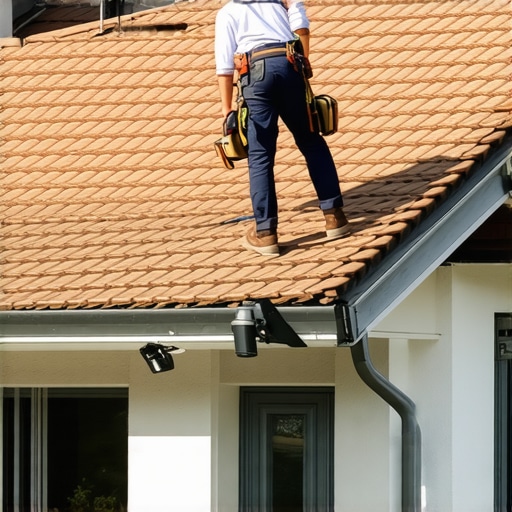
The Anatomy of a Midnight Ceiling Collapse
It usually starts with a sound like a wet towel hitting a tile floor. Then, the rhythmic plink-plink-plink against the dining room table. By the time you call one of those local roofers you found on a frantic search, the damage isn’t just a leak; it is a structural failure. I have spent a quarter-century crawling through sweltering 140-degree attics and peeling back layers of moldy cedar to find the ‘why’ behind the ‘wet.’ Most roofing companies want to talk about shingle colors and curb appeal. I want to talk about hydrostatic pressure and the relentless patience of water. Water doesn’t sleep, and it doesn’t abide by your mortgage schedule. It finds the smallest ‘shiner’—that missed nail protruding through the decking—and uses it as a highway into your insulation.
My old foreman, a man who smelled like hot tar and cheap coffee, used to tell me, ‘Water is a thief that doesn’t need a door; it just needs a reason to move.’ That reason is almost always poor drainage. As we head into 2026, the storms are getting heavier, the rain is coming down in sheets that would drown a fish, and the old ways of slapping up a five-inch gutter and calling it a day are officially dead. If your roofing strategy doesn’t account for the way water clings to surfaces through surface tension, you are just building a very expensive sponge.
“To provide a durable roof system, the designer and contractor must ensure that the roof assembly is capable of shedding water effectively under the most extreme anticipated conditions.” – National Roofing Contractors Association (NRCA) Manual
Tip 1: The Physics of the Valley and Capillary Action
Most roofing failures occur where planes meet. In the valley, water doesn’t just flow down; it rushes. But here is the forensic secret: water often moves sideways. Through a process called capillary action, water can actually climb up and under your shingles if the valley isn’t ‘bleeding’ correctly. If your local roofers are using ‘closed-cut’ valleys with standard asphalt shingles in a high-precipitation zone, they are setting you up for rot. By 2026 standards, an open-metal valley is the only way to go. A heavy-gauge W-swale diverts the flow, preventing the water from one slope from overshooting and forcing its way under the shingles of the opposite slope. Without that metal diverter, the water creates a hydraulic jump that pushes moisture past the underlayment and into your plywood, turning it into something that resembles wet cardboard within five years.
Tip 2: The ‘Cricket’ is Not Negotiable
I recently inspected a commercial-to-residential conversion where the chimney was wider than thirty inches. The back of that chimney was a dam. It had accumulated five inches of wet leaves and a small ecosystem of moss. When I pushed my pry bar into the decking, it went through like a knife through soft butter. The IRC building codes are clear, but often ignored:
“A cricket or saddle shall be installed on the ridge side of any chimney greater than 30 inches wide… crickets shall be covered with sheet metal or the same material as the roof.” – International Residential Code (IRC) R903.2.2
A cricket is a small peaked structure built behind a chimney or any roof projection to divert water to the sides. If your roofing company tells you that ‘extra flashing’ is enough, they are lying. Without a cricket, water pools, the chemicals in the debris eat through the galvanized coating of your flashing, and the wood underneath begins its slow, silent transition into compost.
Tip 3: Upsizing the Gutters for 100-Year Storms
The standard 5-inch K-style gutter is a relic of a calmer climate. In the forensic world, we look at ‘scouring’ around the foundation as a sign of roof failure. If your gutters overflow, the water hits the ground with enough force to erode the soil and crack your foundation. For 2026, we are recommending 6-inch or even 7-inch oversized gutters paired with 3×4 inch downspouts. Why? Because a small downspout is a choke point. If a single maple seed gets stuck in the opening of a standard downspout, the entire system backs up. The water then ‘wicks’ back up the fascia board, rots out the rafter tails, and eventually creates an entry point for squirrels and raccoons. When you hire local roofers, ask them to calculate the square footage of your roof and match it to the local rainfall intensity charts. If they look at you like you are speaking Greek, find a new contractor.
Tip 4: The Drip Edge and the Surface Tension Trap
Hold a glass of water and pour it out slowly; notice how the water wants to run down the side of the glass rather than falling straight down? That is surface tension. On a roof, water wants to wrap around the edge of the shingle and run down your fascia board. This is why a proper drip edge is the most undervalued component of the entire roofing system. A forensic investigator looks for ‘dark’ spots on the wood at the very edge of the roof. If the drip edge isn’t installed correctly—over the underlayment at the eaves and under it at the rakes—water will eventually find its way behind the gutter. It will sit against the wood, never drying out, until the fascia is so soft you can pull the gutter spikes out with your bare hands. We call these ‘floaters,’ and they are the hallmark of a cheap roofing job.
Tip 5: Managing the ‘Dead Level’ and Internal Drains
If you have a flat or low-slope section of your roof, you aren’t dealing with roofing; you are dealing with waterproofing. There is no such thing as a truly ‘flat’ roof that works. Every roof must have a pitch. If a roof has ‘ponding’ water—water that stays for more than 48 hours after a rain—it is a failed system. In these cases, we look at the internal drains or scuppers. By 2026, we are seeing a shift toward tapered insulation systems that create artificial slopes on flat surfaces. This ensures every drop of water is guided toward a scupper. If those scuppers aren’t lined with a secondary water resistance (SWR) membrane, the transition between the roof and the wall becomes a sieve. I have seen million-dollar homes ruined because a roofer forgot to heat-weld the membrane into the scupper throat. It is a $50 mistake that causes $50,000 in structural damage.
How to Hire Local Roofers Without Getting Burned
The ‘trunk slammer’ will give you a quote on a cocktail napkin. The professional will give you a forensic breakdown of your drainage. When interviewing roofing companies, ask them about ‘thermal bridging’ and ‘ventilation-driven drainage.’ A roof that can’t breathe is a roof that will sweat, and a sweating roof is a rotting roof. Don’t just look for a new layer of shingles; look for a comprehensive system that respects the physics of water. Remember, the cheapest bid is usually just an installment plan for a future catastrophe. You can pay for the surgery now, or the autopsy later.