
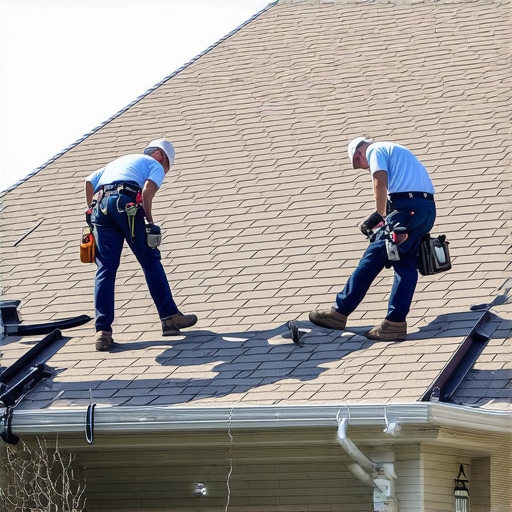
The Forensic Scene: When Your Roof Becomes a Sponge
Walking on that roof felt like walking on a sponge. I knew exactly what I’d find underneath before I even pulled my flat bar from my tool belt. The homeowner told me they only noticed a small brown spot on the drywall in the guest room, but as a forensic roofer with 25 years in the trenches, I know that by the time you see the spot, the crime has been in progress for months. I peeled back a few courses of shingles near the eave and there it was: the plywood deck had the consistency of wet cardboard, and the scent of damp rot hit me instantly. This wasn’t a shingle failure. This was a gutter failure. Roofing companies often focus on the shingles, but the gutter system is the first line of defense against the slow, patient erosion of your home’s structural integrity. If you are looking at the calendar and wondering if your drainage can survive another three seasons, here are five cold, hard reasons why 2026 is the hard deadline for your gutter replacement.
1. The Physics of Capillary Action and the Drip Edge Gap
Most local roofers see a gutter as a simple bucket that catches rain. I see it as a high-stakes pressure valve. When your gutters are clogged or incorrectly pitched, water doesn’t just sit there; it migrates. Through a process called capillary action, water can actually travel upward, defying gravity to find a way into your fascia and soffit. If your gutters are old and pulling away from the house, that gap becomes a vacuum for moisture.
“A roof is only as good as its flashing, and the gutter is the final stage of that flashing system.” – Old Roofer’s Adage
In cold climates like the Northeast, this water freezes, expands, and pushes its way under the starter course of shingles. By the time 2026 rolls around, those micro-expansions will have turned your sturdy eaves into a buffet for wood-destroying fungi.
2. The Ice Dam Lever: A Structural Nightmare
In regions where the thermometer stays below freezing, gutters act as a shelf for ice. When your attic leaks heat—what we call an attic bypass—it melts the snow on the roof. That water runs down to the cold gutter and freezes solid. Now, you have a 400-pound bar of ice hanging off your fascia. This creates a leverage effect, pulling on the gutter spikes. Many times, these spikes miss the rafter tails—we call those “shiners” in the trade—and are only held in by the thin grain of the fascia board. After years of this cycle, the wood is stripped of its holding power. Replacing gutters in 2026 isn’t just about the metal troughs; it’s about inspecting the underlying wood before the next heavy snow turns your gutter into a projectile that takes the siding down with it.
3. Granule Accumulation and the Shingle Sand-Trap
Go look at your gutter outlets. Do you see a pile of colored sand? Those are asphalt granules. Your shingles lose these over time due to UV radiation and thermal shock. By the time a roof is ten years old, those granules have settled into the bottom of your gutters, creating a heavy, abrasive sludge. This sludge traps moisture against the aluminum or steel, leading to pinhole corrosion from the inside out. When roofing companies do a tear-off, they often ignore the fact that the old gutters are filled with three squares worth of shingle debris. This weight causes the troughs to sag, ruining the pitch and ensuring that water stays stagnant. Stagnant water is a breeding ground for mosquitoes and a death sentence for your paint job.
4. The Inadequacy of 5-Inch Systems in the Modern Climate
We are seeing heavier, more violent rain events than we did twenty years ago. The old standard was the 5-inch K-style gutter. For many modern roof designs with steep pitches and long runs into a single valley, a 5-inch gutter is like trying to drain a swimming pool with a straw. The water simply overshoots the gutter, pounding into the soil at your foundation.
“The gutter system shall be capable of performing its intended function without damage to the structure or its components.” – International Residential Code (IRC)
By upgrading to 6-inch oversized troughs in 2026, you increase the capacity by nearly 40%. This prevents the hydrostatic pressure from building up around your foundation, which is the primary cause of basement seepage and cracked slabs.
5. The Caulk Trap and the Myth of the Lifetime Seal
The biggest lie in the industry is that you can just ‘re-caulk’ a leaky gutter corner. Most gutters have seams at the miters. Over time, the expansion and contraction of the metal (thermal expansion) tears the sealant. Once that seal is broken, local roofers will try to slap some cheap silicone over it. But water is patient. It will find the path of least resistance. The only real fix is a move to continuous troughs that eliminate seams entirely. If your gutters are currently leaking at every joint, they are already failing. Waiting past 2026 means you aren’t just replacing gutters; you’re replacing the siding, the rotted rafter tails, and potentially the cricket flashings that were compromised by the backup. Don’t let a $1,500 gutter job turn into a $15,000 structural repair. Inspect the pitch, look for the rust, and get ahead of the decay before the sponge under your shingles gets any softer.