
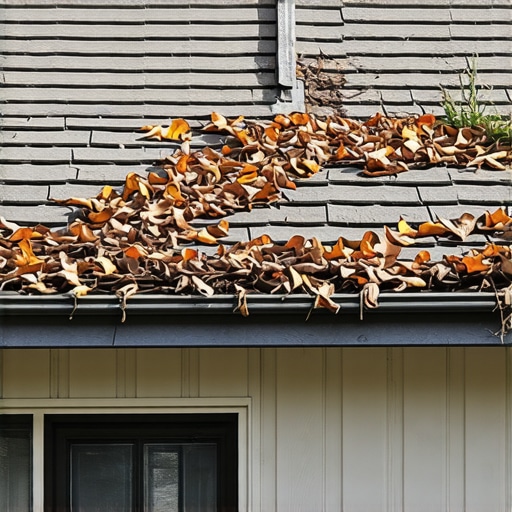
The 2 AM Nightmare: When Your Gutters Turn Into Waterfalls
You hear it before you see it. That rhythmic, heavy thwack against the soil right outside your bedroom window. It is not the soothing sound of rain; it is the sound of five gallons of water per minute cascading over your gutter lip because the system has completely choked. By the time most homeowners call one of the local roofers, the damage has already migrated from the aluminum trough into the very bones of the house. I have spent twenty-five years crawling into attics where the air smells like a damp basement because a simple drainage failure turned into a forensic disaster. Most roofing companies will sell you a shiny new cover and walk away, but they never explain the physics of why your 2026-era roof is shedding its skin like a dying snake.
My old foreman, a man we called ‘Salty’ Mike who had knees like gravel, used to tell me every morning: ‘Water is patient. It will wait for you to make a mistake, and then it will rot your house from the inside out while you sleep.’ He was right. A gutter isn’t just a piece of metal; it is a high-stakes management system for hydrostatic pressure. When that system fails, the water doesn’t just sit there. It uses capillary action to climb upward, defying gravity to find the edge of your starter strip and the raw edge of your plywood deck.
Reason 1: The Granule Avalanche and the ‘Sand-Dam’ Effect
The first reason for the massive clogging we are seeing in 2026 isn’t actually leaves—it’s the roof itself. We are currently hitting the ‘expiration cliff’ for millions of asphalt shingles installed during the building booms of previous decades. These shingles are losing their ceramic granules at an accelerated rate. When these granules wash down, they don’t just disappear. They settle in the bottom of the gutter, creating a heavy, abrasive silt that acts like a dam.
‘The primary function of a roof is to shed water as quickly as possible, away from the foundation.’ – Manual of Low-Slope Roof Systems
This silt builds up around every screw head and joint. Once you have a half-inch of ‘shingle sand’ in the trough, a single leaf can snag on a shiner—one of those missed nails poking through the soffit—and start a localized flood. This creates a weight load that most gutter spikes weren’t designed to handle. You aren’t just looking at a clog; you are looking at a structural anchor pulling your fascia board away from the rafters.
Reason 2: The Physics of the ‘Drip Edge Gap’ and Surface Tension
The second reason involves a failure of geometry. Many roofing companies skip the proper installation of a wide-flange drip edge. In the trade, we call this ‘cutting corners on the tuck.’ When the rain hits the edge of the shingle, surface tension pulls that water backward, underneath the shingle, rather than letting it drop cleanly into the center of the gutter. If your gutters are even slightly backed up with debris, this water creates a ‘bridge.’ It travels along the underside of the shingle, hits the fascia board, and starts the slow process of turning your wood into oatmeal. I have seen valleys where the water velocity is so high it bypasses the gutter entirely, shooting over the edge and excavating a hole in the foundation. This isn’t just a clog; it’s a hydraulic failure. The water finds the cricket—that small peak meant to divert water—and if it’s blocked by 2026-era debris, it backs up into the square of the roof, causing leaks that look like pipe bursts but are actually just poor drainage physics.
Reason 3: The Bio-Slime Ecosystem and Urban Heat
The third reason is something most local roofers won’t mention because it’s gross. We are seeing a massive increase in organic ‘bio-slime’ in gutters. As urban areas get hotter, the stagnant water trapped by small clogs becomes a petri dish for algae and lichen. This slime acts like a glue, trapping every piece of pollen and helicopter seed that hits the roof. By 2026, the atmospheric particulates have increased to the point where this slime creates a waterproof seal over the downspout strainers.
‘A roof is only as good as its flashing and its ability to breathe.’ – Old Roofer’s Adage
When this happens, the gutter fills to the brim, and the water begins to ‘wick’ into the soffit vents. This is how you end up with mold in your attic. It’s not a roof leak; it’s a gutter-induced atmospheric bypass. The heat from a 140°F attic warms the water in the clogged gutter, creating a localized humidity zone that rots the rafter tails faster than a direct leak ever could. Stop looking for a ‘miracle’ gutter guard and start looking at the physics of how your roof sheds its load. If your contractor doesn’t talk about ‘flashing’ and ‘pitch,’ they are just a salesman in a truck.
This post really sheds light on some often overlooked issues with gutters and roof aging. I never realized how much the asphalt shingle deterioration could impact gutter clogging over time, especially with the ‘sand-dam’ effect caused by granule loss. I live in an older neighborhood where many roofs are nearing that ‘expiration cliff,’ so this info is quite relevant. I’ve noticed similar buildup in my gutters, but now I understand the real cause might be more complex than just leaves or organic debris. I’m curious—has anyone tried specific gutter maintenance routines or upgrades that effectively mitigate these issues? For example, how effective are the more advanced gutter guards at preventing the ‘bio-slime’ formation or shingle granule runoff from clogging the system? It seems like a multifaceted problem that needs a comprehensive approach, not just quick fixes. Would love to hear tips or experiences from other homeowners who’ve tackled this problem proactively.