
The Anatomy of a Porch Failure: Why Water Always Wins
My old foreman used to lean against his truck, spitting sunflower seeds, and say, ‘Water is patient. It will wait for you to make a mistake. It’ll wait ten years for a single nail to rust out, then it’ll move in and eat your house.’ After twenty-five years as a forensic roofer, I’ve seen that patience pay off in the form of rotted subfascia, moldy soffits, and porch ceilings that look like they’ve been through a war zone. Porches are the red-headed stepchild of roofing. They usually have a lower pitch than the main house, meaning water doesn’t run off; it lingers. When you call local roofers, most will try to slap the same shingles they used on your 10:12 pitch main roof onto a 2:12 pitch porch. That is a death sentence for your plywood. At a 2:12 slope, shingles aren’t waterproof; they are just water-shedding. Capillary action—that annoying bit of physics where water travels uphill between two tight surfaces—pulls moisture under the shingle laps. Within five years, that moisture turns your deck into a sponge. This is why choosing the right material for 2026 isn’t about curb appeal; it’s about hydrodynamics.
“A roof is only as good as its flashing.” – Old Roofer’s Adage
[IMAGE_PLACEHOLDER]
1. Standing Seam Metal: The 50-Year Fortress
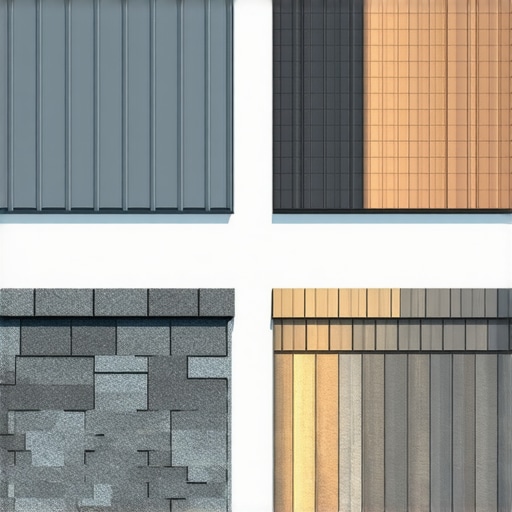
If you want to sleep through a monsoon, standing seam is the only answer. Unlike exposed-fastener panels where the screws eventually back out due to thermal expansion, standing seam uses hidden clips. The metal can slide back and forth as it heats to 160°F in the sun and cools at night without stressing the fasteners. In Northern climates, this is vital for resisting ice dams. When heat leaks from your front door onto the porch, it melts the snow, which then refreezes at the cold gutter edge. A shingle roof will let that water back up under the courses. A standing seam roof, with its 2-inch vertical ribs, acts like a series of impenetrable canals. The roofing companies that know their salt will tell you that a ‘mechanical lock’ is superior to a ‘snap-lock’ for porch slopes below 3:12. You’re paying for the lack of holes. Every hole in a roof is a future liability.
2. TPO and EPDM: Bringing Commercial Tech Home
Most homeowners cringe when I suggest ‘rubber roofs’ for a porch, thinking of a greasy parking garage. But in 2026, high-reflectivity TPO (Thermoplastic Polyolefin) is the smartest move for flat or low-slope porches. It’s essentially a thick, reinforced waterproof skin that is heat-welded at the seams. While roofing shingles rely on gravity, TPO relies on chemistry. If your porch is a ‘dead valley’—a spot where two roof planes meet and dump water into a flat area—shingles will fail in twenty-four months. TPO handles standing water without blinking. The secret is the ‘scupper’ or the ‘cricket.’ A ‘cricket’ is a small peaked structure we build behind a chimney or at a wall join to divert water. If your contractor doesn’t mention crickets for a flat porch, show them the door. They aren’t local roofers; they’re laborers with a ladder.
3. Modified Bitumen: The Multi-Layer Tank
Often called ‘torch-down’ (though we mostly use self-adhered ‘peel-and-stick’ now for fire safety), modified bitumen is the direct evolution of the old built-up coal tar roofs. It uses a polyester or fiberglass mat infused with rubberized asphalt. For a porch, we install it in two or three layers. The base sheet provides the first defense, and the cap sheet has granules to protect against UV radiation. The Mechanism Zooming here is the ‘selvage edge.’ Each roll has a factory-primed edge where the next roll bonds at a molecular level. It’s thick, it’s ugly, and it’s damn near bulletproof. In roofing circles, we call this the ‘peace of mind’ roof for porches that have heavy tree debris falling on them. It can take a beating from a branch that would puncture a TPO membrane.
“Roofing materials shall be compatible with each other and with the materials to which they are applied.” – International Residential Code (IRC), Section R904.1
4. Synthetic Slate and Shake: Aesthetics Without the Weight
If your porch is the face of your home, you might want the look of cedar or stone. Natural slate is too heavy—it’ll bow the rafters of a standard porch within a decade. Synthetic polymers are the 2026 workaround. These are engineered to resist the ‘thermal shock’ of the Southwest and the ‘ice-jacking’ of the North. However, the ‘trap’ is the underlayment. Because these are decorative, the real roofing work is done by the synthetic underlayment and the ice-and-water shield beneath them. I’ve seen roofing companies charge $20,000 for ‘lifetime’ synthetic slate but use a cheap $30-a-roll felt underneath. That’s like putting a tuxedo on a guy who hasn’t showered in a month. When that synthetic tile expands and contracts, a cheap underlayment will tear around the fasteners, creating a ‘shiner’—a missed or exposed nail that carries water directly into your ceiling joists.
How to Spot a ‘Trunk Slammer’ Contractor
When searching for local roofers, look for the ‘flashings.’ Any hack can nail a shingle, but only a pro can wrap a post or a wall-to-roof transition. Ask them how they handle the ‘kick-out flashing.’ If they look at you sideways, they don’t know the code. The kick-out flashing is the most important six inches of metal on your house; it’s what prevents water from running down the wall and behind your siding where it rots the rim joist. Don’t be fooled by ‘Lifetime Warranties.’ Most only cover the material, not the labor to fix the ‘shiner’ that’s been dripping in your attic for three years. You want a workmanship warranty that is backed by a manufacturer certification (like a Master Elite or Select ShingleMaster status). If they can’t provide a certificate of insurance with your name on it, they aren’t a company; they’re a liability. Your porch is an investment in your home’s structural integrity—don’t let a ‘water is patient’ mistake turn it into a demolition project.