
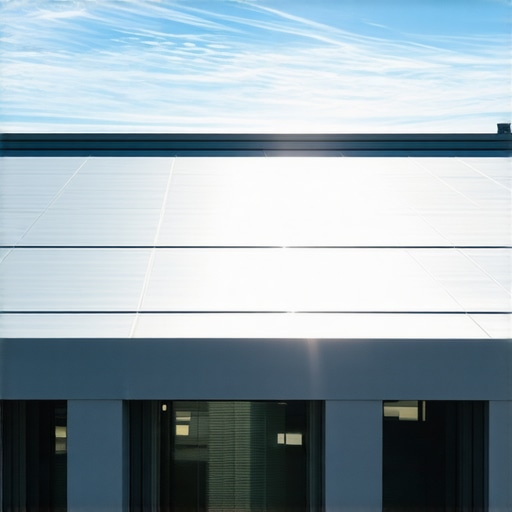
The Slow-Motion Fire of the Desert Sun
Walking across a standard modified bitumen roof in the middle of a July afternoon in the Southwest isn’t just uncomfortable; it is a forensic study in material degradation. I have spent twenty-five years watching the sun turn flexible membranes into brittle crackers. My old foreman, a man we called ‘Pops,’ used to stand on those blistering decks and say, ‘The sun is a slow-motion fire. It doesn’t burn the house down in a day; it cooks it for thirty years until there is nothing left but dust.’ He was right. When you are looking at your roofing options, you are really looking at how to manage heat. That is where the 2026 generation of cool roof coatings comes into play. These are not the cheap ‘white paint’ buckets you find at a big-box store. We are talking about high-solids silicone and advanced acrylic hybrids designed to combat the physics of thermal destruction. Local roofers are seeing more failures due to thermal shock than ever before, and these coatings are the surgical intervention needed to save a structural deck from the landfill.
1. Mitigating the Violence of Thermal Shock
Most property owners think a roof just sits there. It doesn’t. It is a living, breathing thing that expands and contracts with every sunrise and sunset. In the desert, you might see a 70-degree temperature swing in twelve hours. This is what we call thermal shock. When a dark roof hits 160°F and then a sudden monsoon rain drops it to 80°F in minutes, the molecular bonds in the material scream. This leads to ‘fish-mouths’ at the seams and ‘shiners’ where nails start to back out of the deck. The 2026 cool roof coatings utilize a high-elongation polymer chain. By reflecting up to 88% of solar radiation, the actual surface temperature stays within a few degrees of the ambient air. This keeps the roof ‘quiet.’ If the roof doesn’t move, the seams don’t rip. If the seams don’t rip, the water stays out. It is the difference between a rubber band that stays supple and one that has been left on a dashboard for a year.
“A roof is only as good as its flashing, but its longevity is dictated by its ability to shed heat.” – Forensic Roofing Institute
2. Protecting the Plasticizer Secret
If you have ever seen an old PVC or TPO roof that is covered in tiny spiderweb cracks, you are looking at plasticizer migration. Manufacturers add oils and chemicals to roofing sheets to keep them flexible. The UV rays from the sun are like tiny hammers that shear these chemical bonds, causing the oils to evaporate. Once those plasticizers are gone, the roof is ‘dead.’ You can’t patch it because the new material won’t bond to the brittle substrate. The benefit of the latest 2026 coatings is that they act as a sacrificial UV blockade. These coatings are engineered with inorganic pigments that do not degrade under ultraviolet bombardment. By applying a coating, you are essentially putting a permanent sunscreen over the expensive ‘skin’ of your building. This preserves the internal oils, keeping the underlying membrane functional for decades longer than its original rating.
3. The HVAC Preservation Strategy
Roofing companies often focus only on the deck, but a forensic investigator looks at the whole system. When your roof is 160°F, your attic space or plenum becomes a massive radiator. Your HVAC units have to work twice as hard to overcome the heat radiating downward through the insulation. This ‘Heat Flux’ is a silent killer of expensive rooftop units (RTUs). By switching to a high-reflectivity coating, you are reducing the intake air temperature for those HVAC units. Instead of sucking in 140°F air from the roof surface, they are breathing 90°F air. This lowers the head pressure in the compressors and extends the life of the cooling system. It is not just about the roofing bill; it is about the mechanical bill you won’t have to pay in five years when your compressor would have otherwise burned out.
4. Stopping the Capillary Action at the Scupper
Water doesn’t just fall into a building; it is pulled in. Through a process called capillary action, moisture can travel sideways under a loose lap or up through a poorly sealed flashing. This is common around scuppers and drains where water ‘ponds’ for a few days. Traditional roofing materials eventually soften and rot under standing water. The 2026 silicone coatings are ‘hydrophobic.’ They don’t just shed water; they repel it at a molecular level. Unlike older acrylics that would emulsify and turn back into a milky liquid if submerged, these new coatings are moisture-cured. They actually become stronger in the presence of humidity. For local roofers, this means fewer callbacks for leaks in those difficult ‘low-spot’ areas where the geometry of the roof makes perfect drainage impossible.
“The primary function of a building envelope is to separate the interior environment from the exterior elements, with the roof being the most vulnerable plane of that separation.” – International Building Code (IBC) Commentary
5. The Asset Lifecycle Revolution
The old way of roofing was ‘Tear-off and Replace.’ It is messy, expensive, and fills up local landfills with petroleum-based waste. It is a ‘trunk slammer’ special. The 2026 approach is the ‘Restore and Maintain’ model. Because these coatings are technically ‘maintenance,’ they can often be expensed in a single tax year rather than capitalized over twenty years. More importantly, they allow you to avoid the ‘oatmeal plywood’ scenario. If you catch a roof while the deck is still structurally sound, you can apply a coating system and reset the clock. It is a renewable warranty. Every ten or fifteen years, you simply clean the surface and apply a thin ‘top-off’ layer. You never have to tear off the roof again. This is the ultimate financial shield for any property owner who plans to hold an asset for more than a decade.
The Trap: Why DIY and Cheap Labor Fail
I have seen guys try to save a buck by hiring a ‘bucket brigade’ to slop this stuff on. It is a disaster. Prep is 90% of the job. If you don’t use a turbo-nozzle to clear the embedded silt, or if you don’t treat the ‘rust bloom’ on a metal deck, the coating will peel off like a bad sunburn. You need to verify the ‘dry mil thickness.’ If it is applied too thin, the UV will eat through it in three years. If it is too thick, it will ‘mud-crack.’ Professional roofing companies use mil-gauges to ensure the application matches the manufacturer’s spec. Don’t fall for the ‘Lifetime Warranty’ marketing fluff unless the contractor can show you the adhesion test results from your actual roof deck. In this trade, you get what you pay for, and what you are paying for is the forensic attention to detail that keeps the water on the outside and the cool air on the inside.