
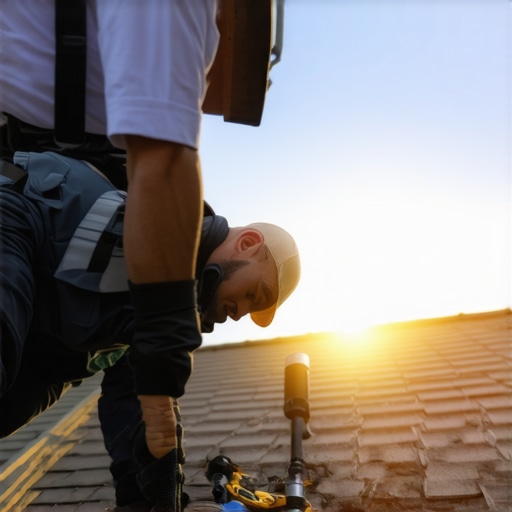
The Anatomy of a Slow-Motion Disaster
Most homeowners think a roof leak is a sudden event, like a pipe bursting. It isn’t. By the time you see a yellow ring on your living room ceiling, the structural components of your home have likely been losing a silent war for three to five years. As a forensic roofer who has spent twenty-five years peeling back the layers of botched installs, I can tell you that the leaks of 2026 are being born right now, in the dark corners of your attic and the hidden overlaps of your shingles. Walking on that roof felt like walking on a sponge. I knew exactly what I’d find underneath. When my boot sank three inches into a spot that looked perfectly fine from the driveway, I didn’t need a moisture meter to tell me the OSB had turned to mulch. It was a classic case of what I call the ‘Capillary Trap’—a failure of physics that most roofing companies ignore because they’re too busy racing to the next job.
1. The ‘Shiner’ and the Physics of Condensation
The first way to identify a future 2026 leak is to look for ‘shiners’ in your attic. A shiner is a roofing nail that missed the rafter and is sticking out of the plywood deck into the cold attic space. In regions like the Northeast, where the temperature differential between your heated home and the 20°F air outside is massive, these nails act as heat sinks. Warm, moist air from your bathroom or kitchen escapes into the attic—an attic bypass—and finds that cold metal nail. The water vapor undergoes a phase change, turning into liquid frost on the nail. When the sun hits the roof the next day, that frost melts, drips onto the insulation, and freezes again the next night. Over two or three winters, this constant moisture cycling rots the surrounding wood. You won’t see a drop in your bedroom until 2026, when the wood is finally saturated enough to let the water travel. This isn’t a shingle problem; it’s a ventilation and air sealing problem that local roofers often overlook during a quick ‘rip and flip’ replacement.
“A roof is only as good as its flashing.” – Old Roofer’s Adage
2. Capillary Action and the Lateral Water Shift
The second indicator is the hidden lateral movement of water. Most people assume water only moves down. In reality, water is a master of siphoning. When shingles are ‘short-lapped’ or when roofing companies fail to use a proper starter strip, water can be pulled sideways or even upward through capillary action. Imagine two glass slides with a drop of water between them; the water spreads because of surface tension. On a roof, if the shingles are nailed too low—creating what we call ‘low nails’—water hits the nail head, follows the shank through the shingle, and starts the rotting process from the inside out. By the time 2026 rolls around, the nail has rusted through completely, creating a direct hole for every rainstorm. This is why forensic inspection focuses on nail patterns. If I see a square of shingles where the nails are hitting the ‘common bond’ incorrectly, I know that roof is on a countdown to failure.
3. The Kick-out Flashing and the Chimney Cricket
The third way to spot a 2026 leak is to look at the ‘dead zones’—the places where a roof slope meets a vertical wall or a chimney. Most local roofers will slap some caulk on a piece of step flashing and call it a day. But caulk is a temporary sealant that dries out under UV radiation within 24 months. If your roof lacks a cricket (a small peaked structure behind a chimney to divert water) or a kick-out flashing at the gutter line, water is being funneled directly behind your siding or into the fascia board.
“The roof shall be shed of water to prevent accumulation… Flashing shall be installed in such a manner as to prevent moisture from entering the wall.” – International Residential Code (IRC) R903.2
During a heavy downpour, the sheer volume of water creates hydrostatic pressure. Without a physical diverter, that water will find the path of least resistance, which is usually behind your house wrap. It takes years for that water to rot the structural studs, but by 2026, you’ll be looking at a five-figure bill for structural repair, not just a simple roofing fix.
The Band-Aid vs. The Surgery
When you call roofing companies to look at a leak, most will offer a ‘Band-Aid’—a tube of mastic and a few new shingles. This is a waste of money. If the underlying physics of your roof is broken, you need surgery. You need to tear off the affected area, inspect the deck for ‘oatmeal’ rot, and install a Secondary Water Resistance barrier. Don’t let a ‘trunk slammer’ tell you a little tar will fix a shiner or a missing kick-out flashing. Water is patient. It will wait for you to make a mistake, and it will wait for the exact moment in 2026 when your warranty has just expired to reveal its damage. Real roofing isn’t about the shingles you see from the street; it’s about the physics of what you can’t see underneath.