
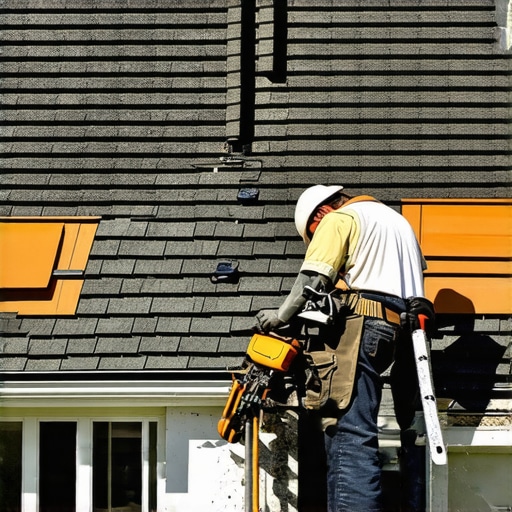
The Autopsy of a Coastal Roof: Why Your Ceiling is Currently Bleeding
You probably noticed that small, tea-colored ring on your living room ceiling during the last tropical depression and figured it was just a loose shingle. As someone who has spent two and a half decades tearing off failures, I can tell you that the stain isn’t the problem; it is the final symptom of a multi-year metabolic breakdown. In our humid, salt-saturated air, your roof isn’t just a shield; it is a living chemical reactor. By the time that water reaches your drywall, the plywood deck underneath likely has the structural integrity of a wet graham cracker. I have crawled through enough 140-degree attics to know that most roofing companies are racing to the bottom on price, which means they are skipping the physics that actually keep a house dry.
The Mentor’s Warning: Water is Patient
My old foreman, a man who had more scars from roofing knives than he had teeth, used to grab me by the tool belt and say, ‘Water is patient, kid. It doesn’t need a hole. It will wait for you to make a mistake, and then it will use physics to climb uphill just to spit in your eye.’ He was talking about capillary action. If local roofers don’t understand the surface tension of water, they are just laying down expensive trash. Water can actually pull itself upward into the gaps between shingles if they aren’t lapped with enough offset. It defies gravity, crawling under the courses until it finds a shiner—a nail that missed the rafter—and then it hitches a ride straight into your insulation.
“A roof is only as good as its flashing; the shingle is merely the aesthetic skin that masks the true waterproof assembly.” – Old Roofer’s Adage
1. Defeating Capillary Action and Hydrostatic Pressure
The first way to stop the decay projected for 2026 is to address how water moves when it isn’t falling. Most homeowners think roofing is about shedding water downward. That is only half the battle. When wind-driven rain hits a vertical surface, like a chimney or a dormer, it creates hydrostatic pressure. This pressure forces water behind the shingles. If your contractor didn’t install a cricket—that small, peaked diversion roof behind the chimney—the water pools. This standing water finds the tiniest pinhole in the sealant and, through capillary action, sucks itself into the substrate. You need a kick-out flashing at every wall-to-roof intersection. Without it, the water runs down the siding and directly into the wall cavity, rotting your headers before you even see a drip.
2. The Silent Killer: Thermal Shock and Material Migration
In our climate, your roof isn’t just getting wet; it is being cooked. During a typical July day, your shingles hit 160°F. Then, a sudden afternoon thunderstorm drops that temperature to 80°F in three minutes. This is thermal shock. The asphalt shingles expand and contract violently. Over time, the volatile oils in the asphalt migrate out, leaving behind a brittle limestone skeleton. This is why you see those granules in your gutters; that is the roof’s ‘skin’ shedding because it can no longer hold onto its protective UV coating. Many local roofers will tell you a 30-year shingle lasts 30 years. That is a marketing myth. In high-UV zones, that ‘lifetime’ shingle is often biologically dead by year 12 because the thermal expansion has sheared the seal strips, leaving the tabs to flap in the wind like a deck of cards.
3. Secondary Water Resistance (SWR) is Not Optional
If you are looking at roofing companies for a replacement, ask them about their underlayment. If they say ‘felt paper,’ fire them on the spot. Synthetic underlayment and self-adhering modified bitumen membranes (often called Ice and Water Shield, though here we use it for rain) are your last line of defense. The International Residential Code (IRC) is the bare minimum, and the bare minimum is usually a failing grade in a hurricane zone.
“The building envelope shall be designed and constructed to prevent the accumulation of water within the wall assembly.” – IRC Section R703.1
You want a ‘sealed roof deck.’ This means every seam in the plywood is taped, or the entire deck is covered in a peel-and-stick membrane. This way, if the shingles blow off during a 100-mph gust, your house stays dry. Without SWR, you are one windstorm away from a total interior loss.
4. Attic Ventilation: The Lungs of the House
The final way to stop decay is to look under the roof. If your attic isn’t breathing, your roof is rotting from the inside out. Improper ventilation leads to heat buildup that bakes the shingles from below. More importantly, it traps moisture. In our humidity, that moisture turns into ‘attic rain.’ I have seen roofs where the plywood was covered in black mold because the local roofers blocked the soffit vents with insulation. You need a balanced system: intake at the eaves and exhaust at the ridge. If you don’t have enough net free ventilating area, your roof will literally sweat itself to death, causing the wood to delaminate and the nails to rust out from the underside, a phenomenon we call ‘galvanic suicide’ when the salt air gets involved.