
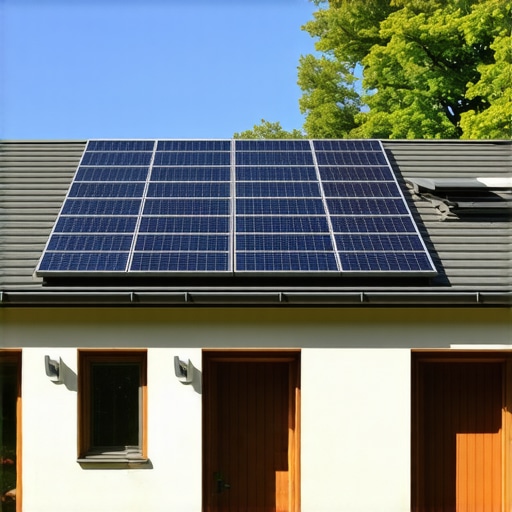
The Autopsy of the Racked Roof: Why 2026 Changes Everything
Walking on a roof in the 115-degree heat of a Phoenix July felt like walking on a sponge soaked in motor oil. I knew exactly what I’d find before I even pulled the first shingle. The homeowner was complaining about a mystery leak that three different roofing companies couldn’t find. I climbed up, bypassed the expensive silicon-caulked ‘fixes’ around the solar stanchions, and started digging. Underneath those heavy, old-school solar racks, the asphalt shingles had literally cooked. The trapped heat between the panel and the roof deck had accelerated the outgassing of the bitumen, leaving the shingles brittle enough to snap like a dry cracker. Worse, the thermal expansion of the metal racking had backed out the lag bolts, creating ‘shiners’ that funneled monsoon rain directly into the trusses. This wasn’t a product failure; it was a system failure. This is why the industry is shifting. By 2026, the era of bolting heavy glass boxes onto fragile shingles is ending, replaced by integrated solar systems that treat the photovoltaic layer as the actual skin of the building.
“Roofing assemblies shall be designed and installed in accordance with this code and the manufacturer’s installation instructions such that the roof assembly shall serve to protect the building.” – International Residential Code (IRC), Section R905.1
1. Structural Harmony vs. Dead Weight
When local roofers install traditional solar, they are adding roughly 3 to 4 pounds per square foot of dead load onto a structure that was likely designed for the bare minimum. In the Southwest, where thermal shock causes materials to expand and contract violently between a 140-degree afternoon and a 60-degree night, that weight becomes a hammer. Integrated solar in 2026 removes the middleman. Instead of a shingle, then a gap, then a rack, the solar cell is the primary water-shedding surface. This eliminates the ‘sail effect’ where high winds catch under traditional panels and rip the decking right off the rafters. By integrating the cells directly into the roofing material—whether it’s a sleek metal standing seam or a reinforced composite—you reduce the total weight on the trusses, preventing the structural sag that leads to interior drywall cracking and door frames that won’t square up.
2. The End of the 50-Penetration Nightmare
The biggest headache for any forensic investigator is the penetration point. A standard 6kW solar array requires about 40 to 60 holes drilled directly through your brand-new roof. Each one is a potential entry point for water. Roofing companies have spent decades trying to ‘flash’ these holes, but rubber boots dry out and caulk fails under UV radiation. Integrated solar utilizes a ‘flashing-in’ method where the solar components overlap just like traditional shingles or tiles. Water follows the path of gravity over the joints rather than being invited in by a bolt. In 2026, the ‘wet-seal’ reliance is gone. We are looking at mechanical bonds that use the same physics as a standard valley or ridge cap, ensuring that the waterproofing layer remains uncompromised by secondary installers who don’t know a cricket from a cant strip.
“A roof is not a collection of separate parts, but a single, integrated system designed to shed water and manage energy.” – National Roofing Contractors Association (NRCA) Guidelines
3. Thermal Management and the ‘Attic Oven’ Effect
Most people think solar panels cool a house by shading it. In reality, traditional panels often create a stagnant pocket of superheated air against the roof deck. This heat migrates downward, turning your attic into a 150-degree oven that kills your HVAC efficiency and rots your plywood from the inside out through sheer heat degradation. 2026 integrated systems are engineered with rear-side ventilation channels. These systems use the ‘stack effect’—as the air behind the integrated panel heats up, it rises and pulls cool air in from the eave vents, naturally cooling the underside of the solar cells. Since solar efficiency actually drops as the cells get hotter, this integrated cooling doesn’t just save your roof deck; it increases your power production during the peak of the day when you need it most.
4. Unified Warranty: Ending the Finger-Pointing Game
I’ve stood in the middle of a leaking living room while a solar installer blamed the roofer and the roofer blamed the solar installer. It’s a classic trade standoff that leaves the homeowner holding a bucket. With 2026 integrated solar, the roofing companies are the solar installers. The entire assembly—the waterproofing, the flashing, and the power generation—is covered under a single master warranty. If the roof leaks, there is one phone call. You aren’t dealing with a ‘trunk slammer’ who disappeared after the tax credits cleared. You are dealing with local roofers who understand that the solar cell is just another piece of the building envelope. This shift forces a higher standard of care; you can’t just slap a panel over a ‘shiner’ and hope for the best when you’re the one on the hook for the next 25 years.
[image placeholder]
5. Aesthetic Value and the Death of the ‘Eyesore’
Let’s be honest: traditional solar racks look like an after-thought. They break the architectural lines of a home and can even lead to issues with HOAs or resale value. Integrated solar in 2026 is virtually indistinguishable from a high-end metal or slate roof. By utilizing the full ‘square’ of the roof rather than just a patch of blue-black glass, these systems create a uniform look. This isn’t just about vanity. In the forensic world, we see ‘orphaned’ solar systems—older racks that homeowners refuse to maintain because they hate how they look, leading to clogged valleys and debris dams behind the rails. A smooth, integrated surface allows leaves and desert dust to wash away naturally during a rain, preventing the organic buildup that leads to rot. When the roof looks like a single unit, it gets treated like a single unit, and that’s the only way to ensure it actually lasts its intended lifespan.